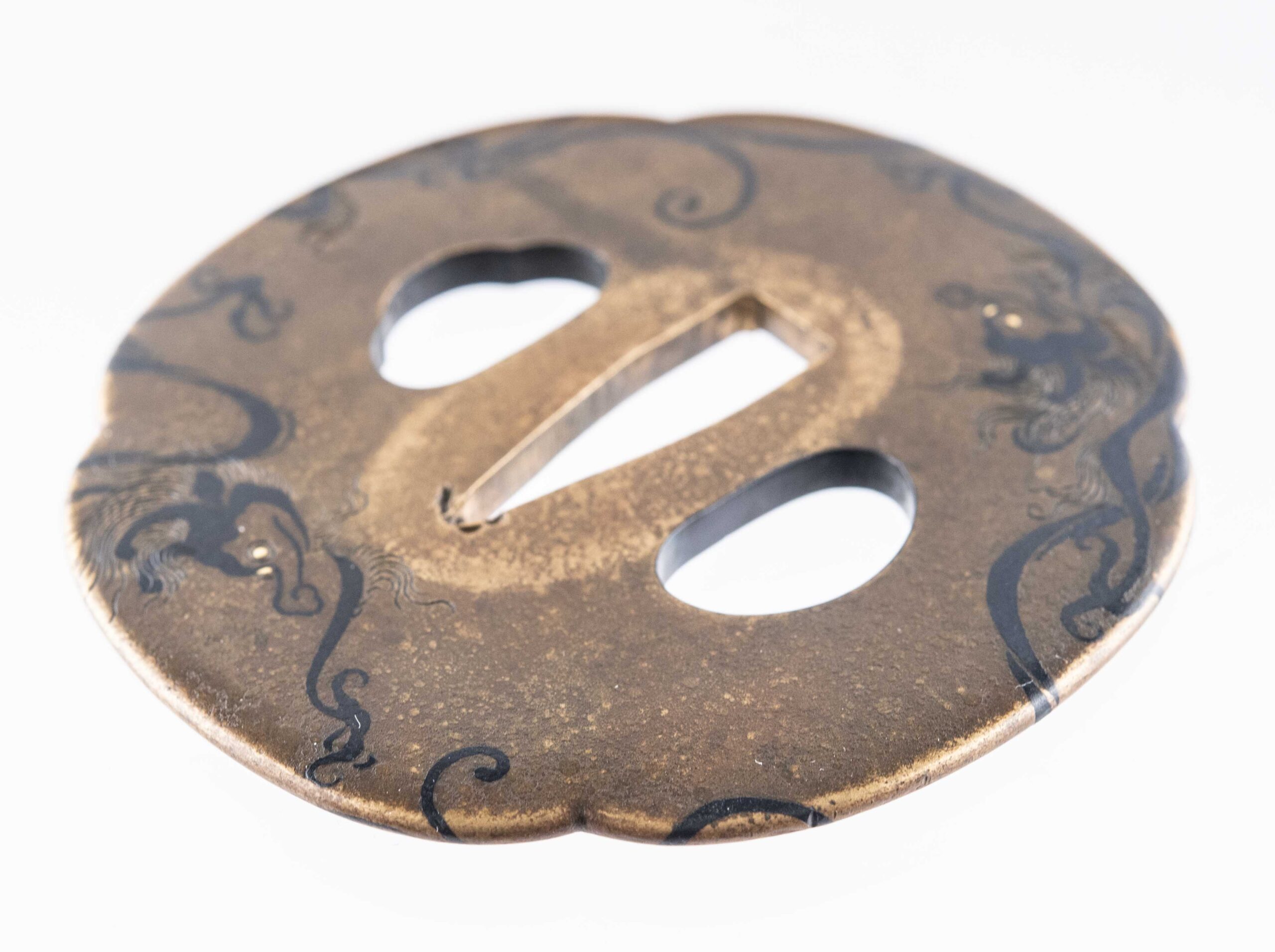
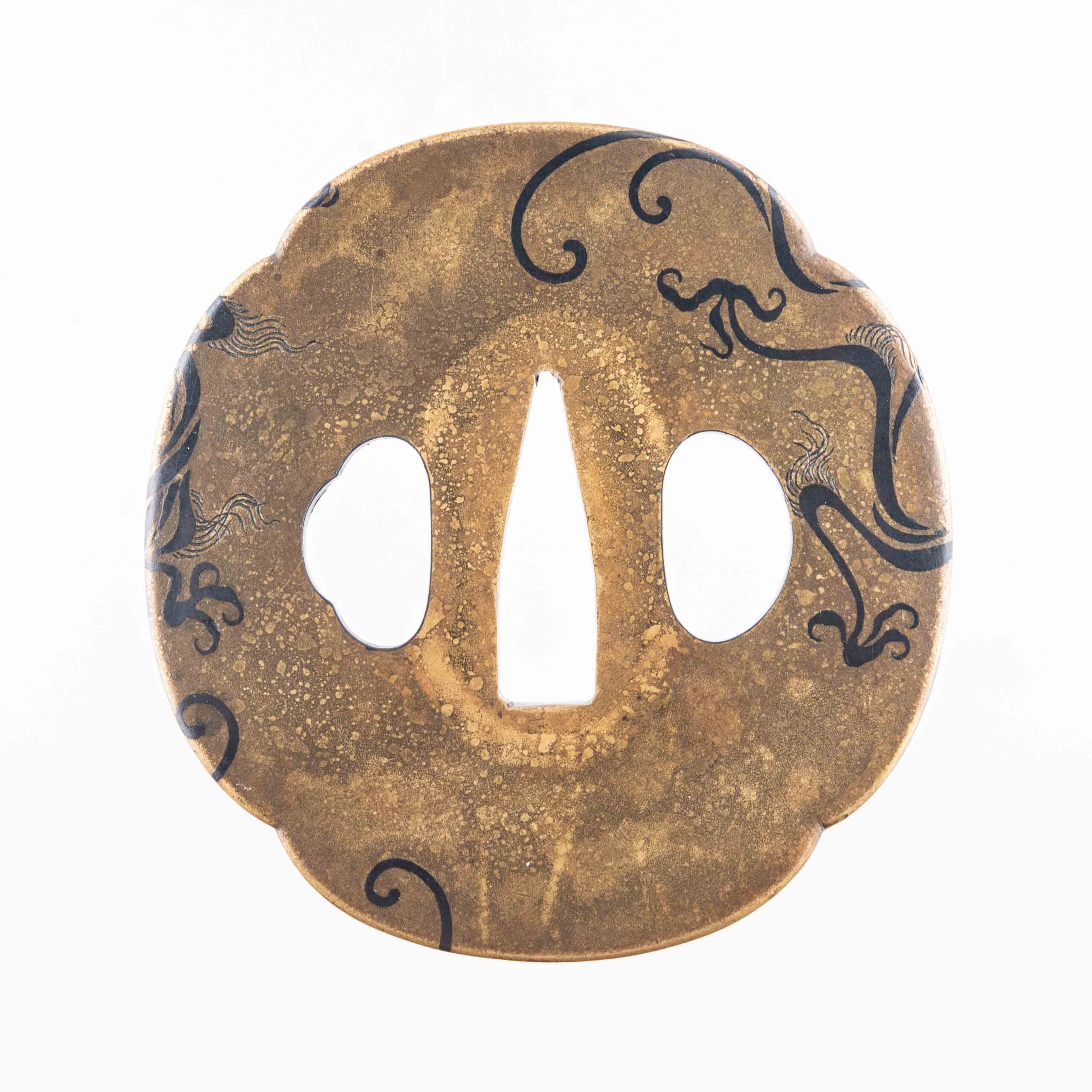
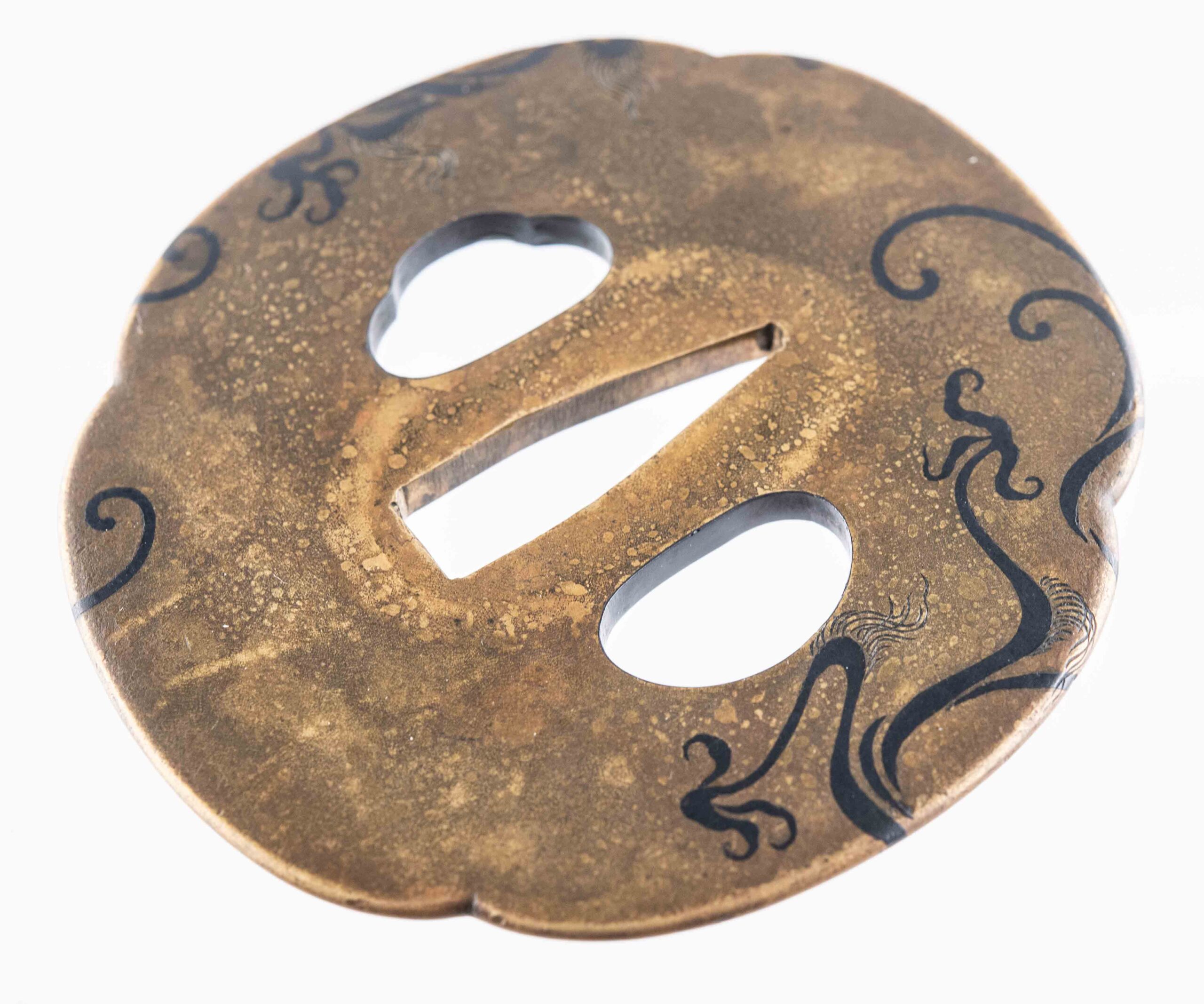
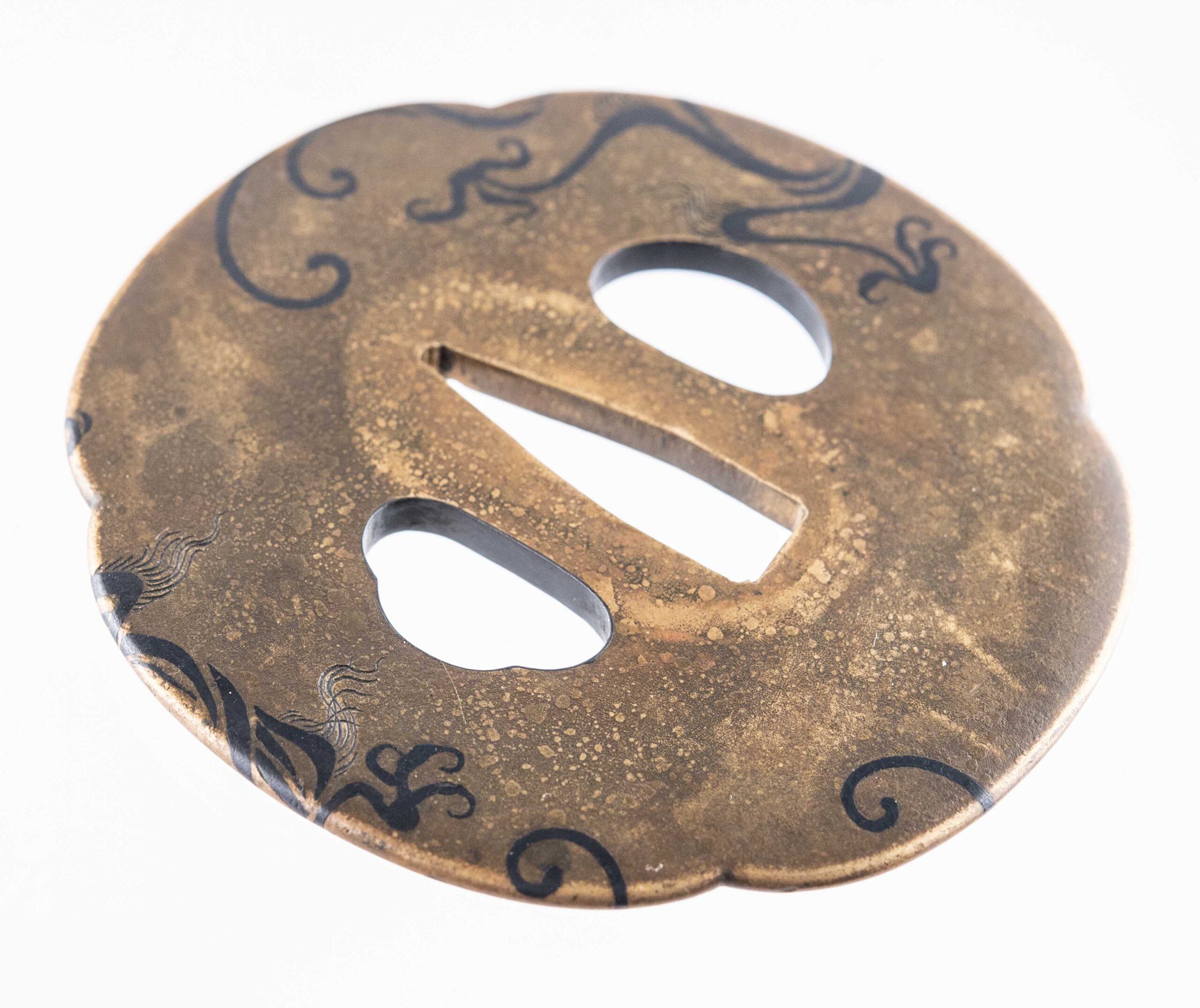
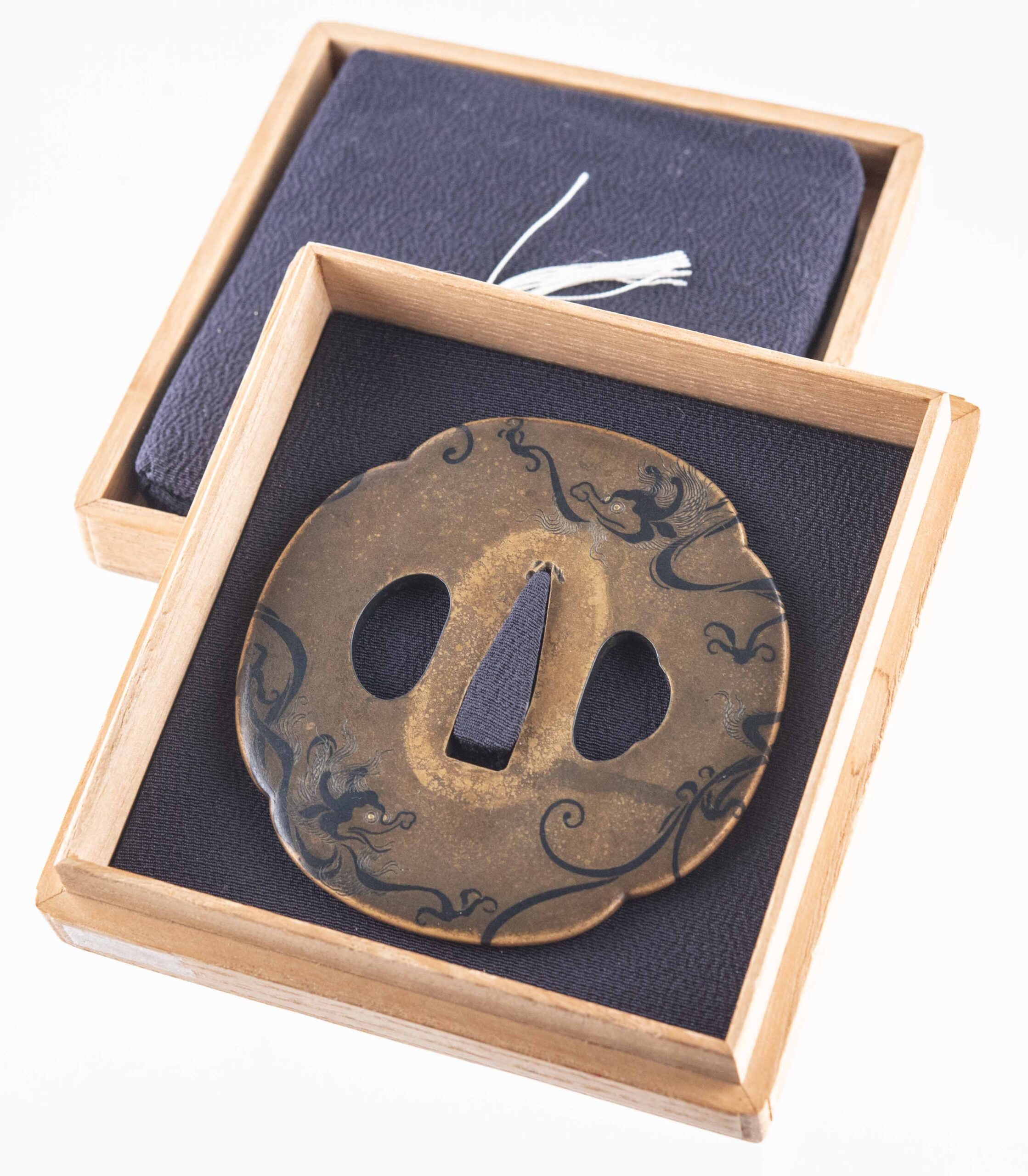
An Umetada dragon Tsuba
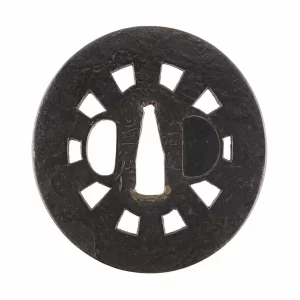
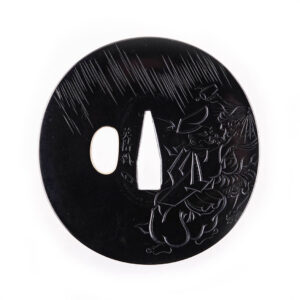
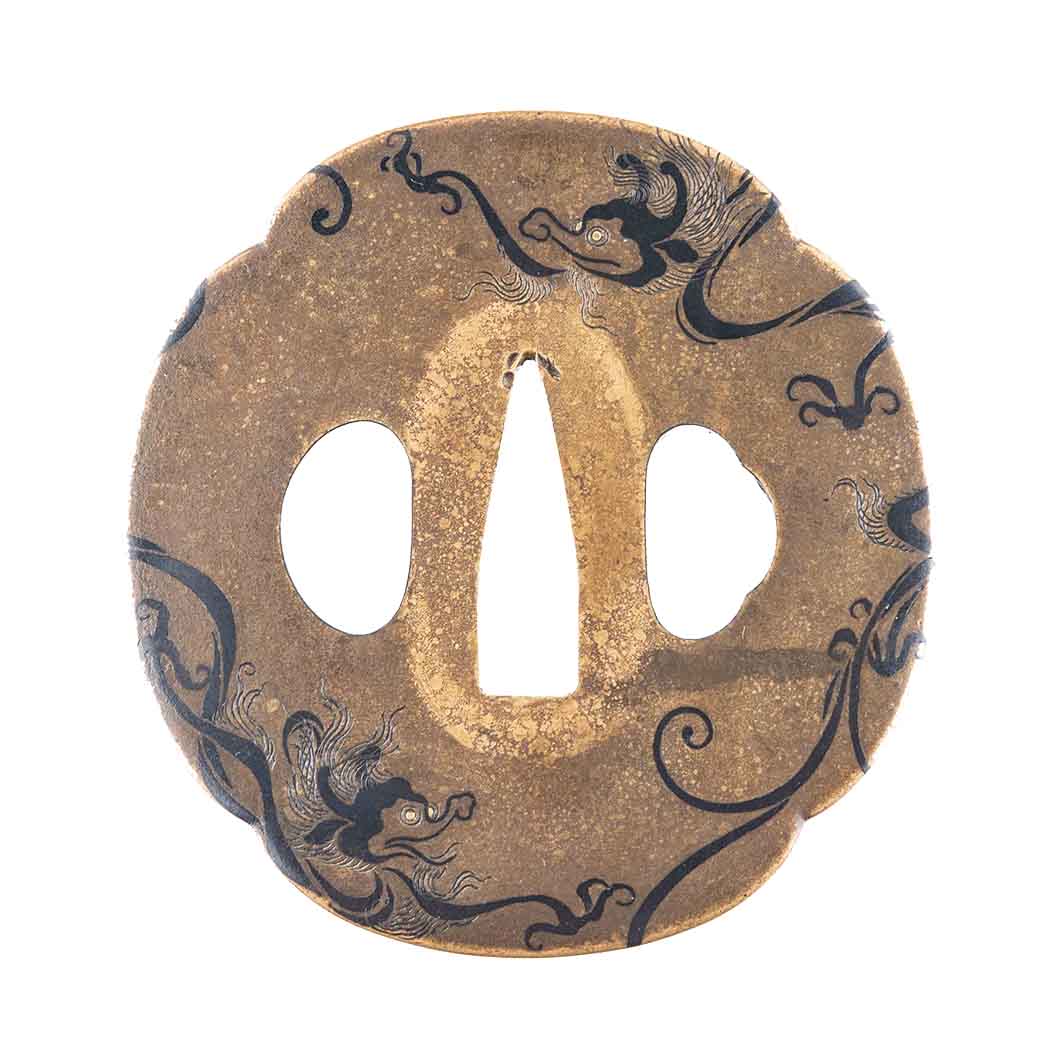
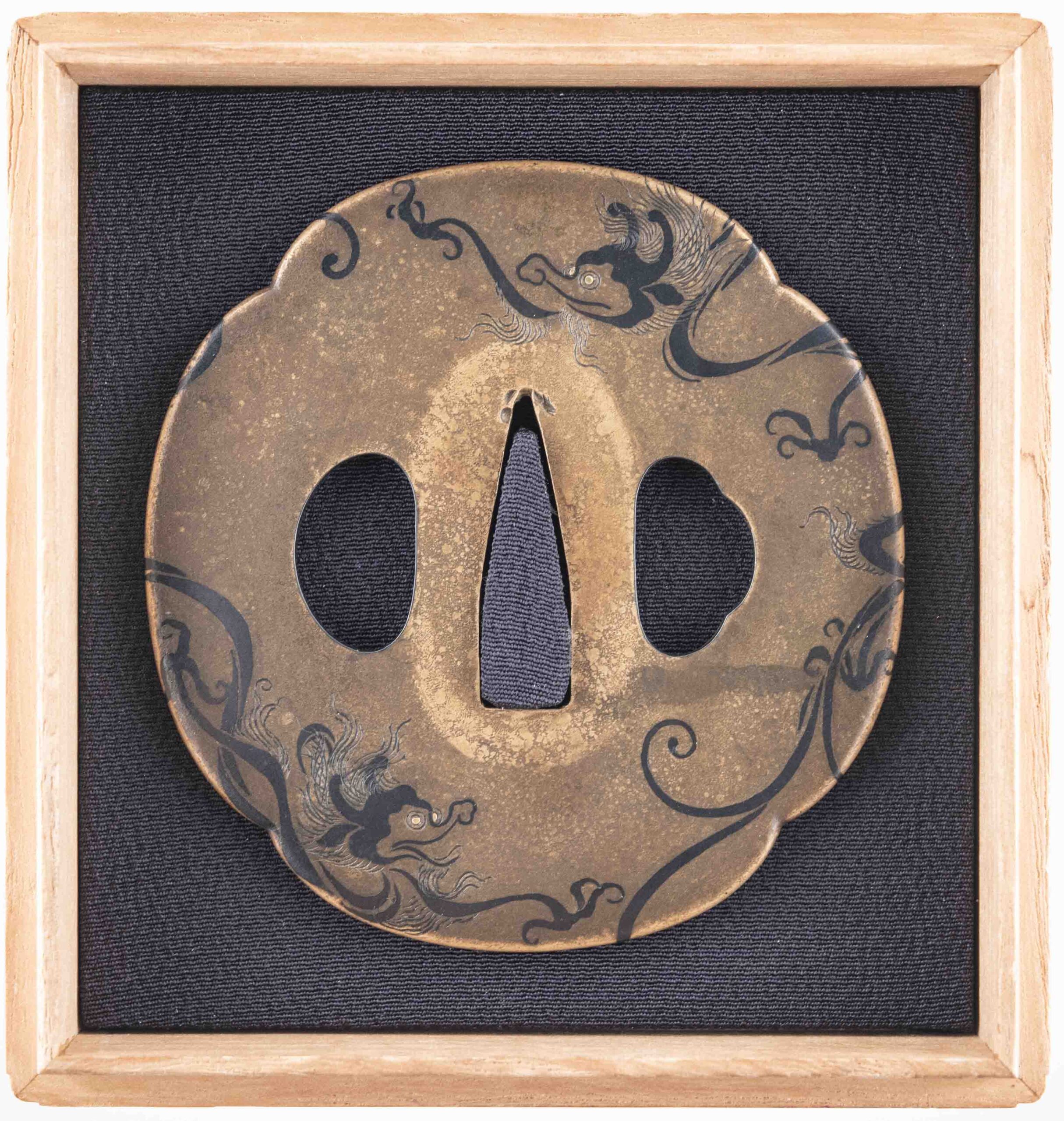
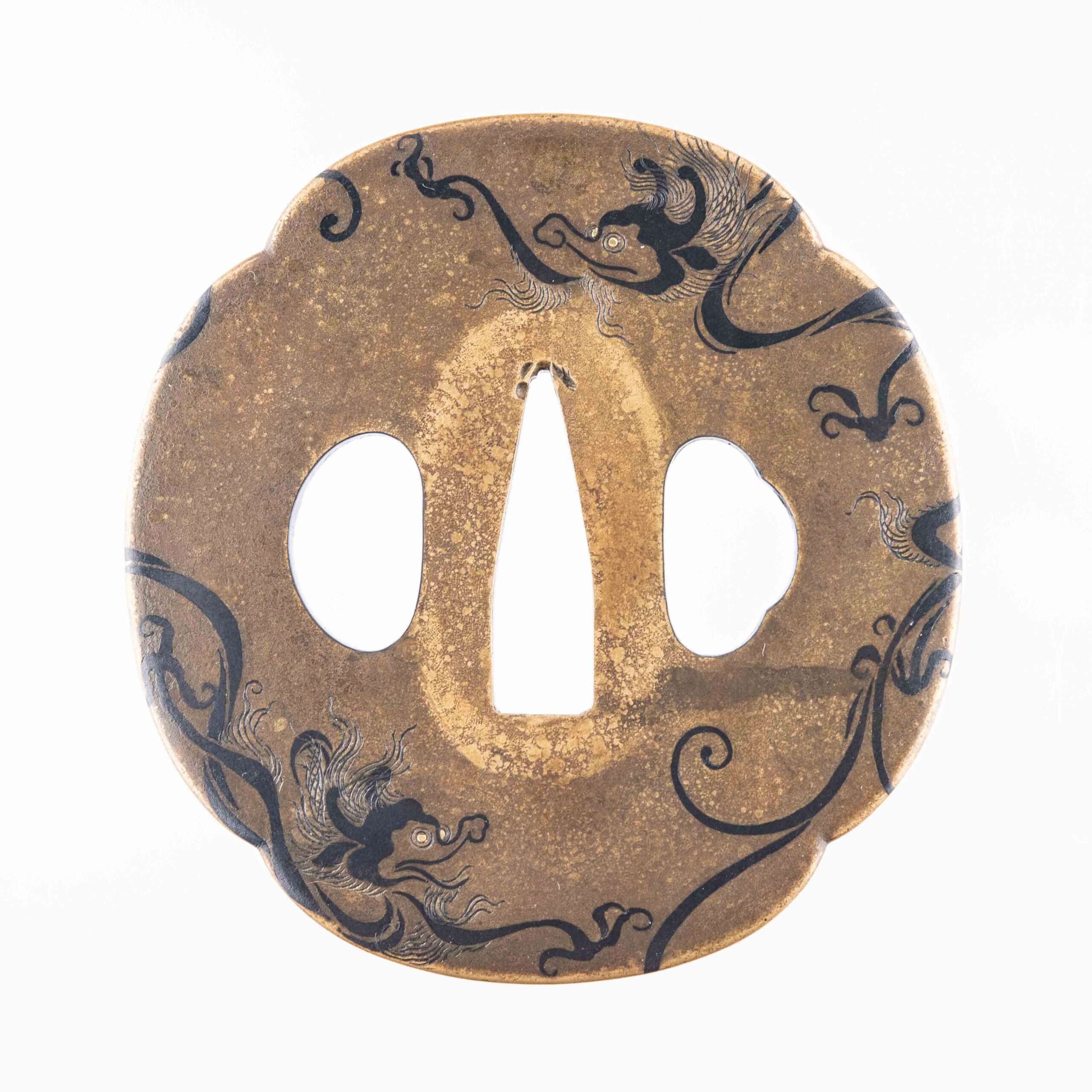
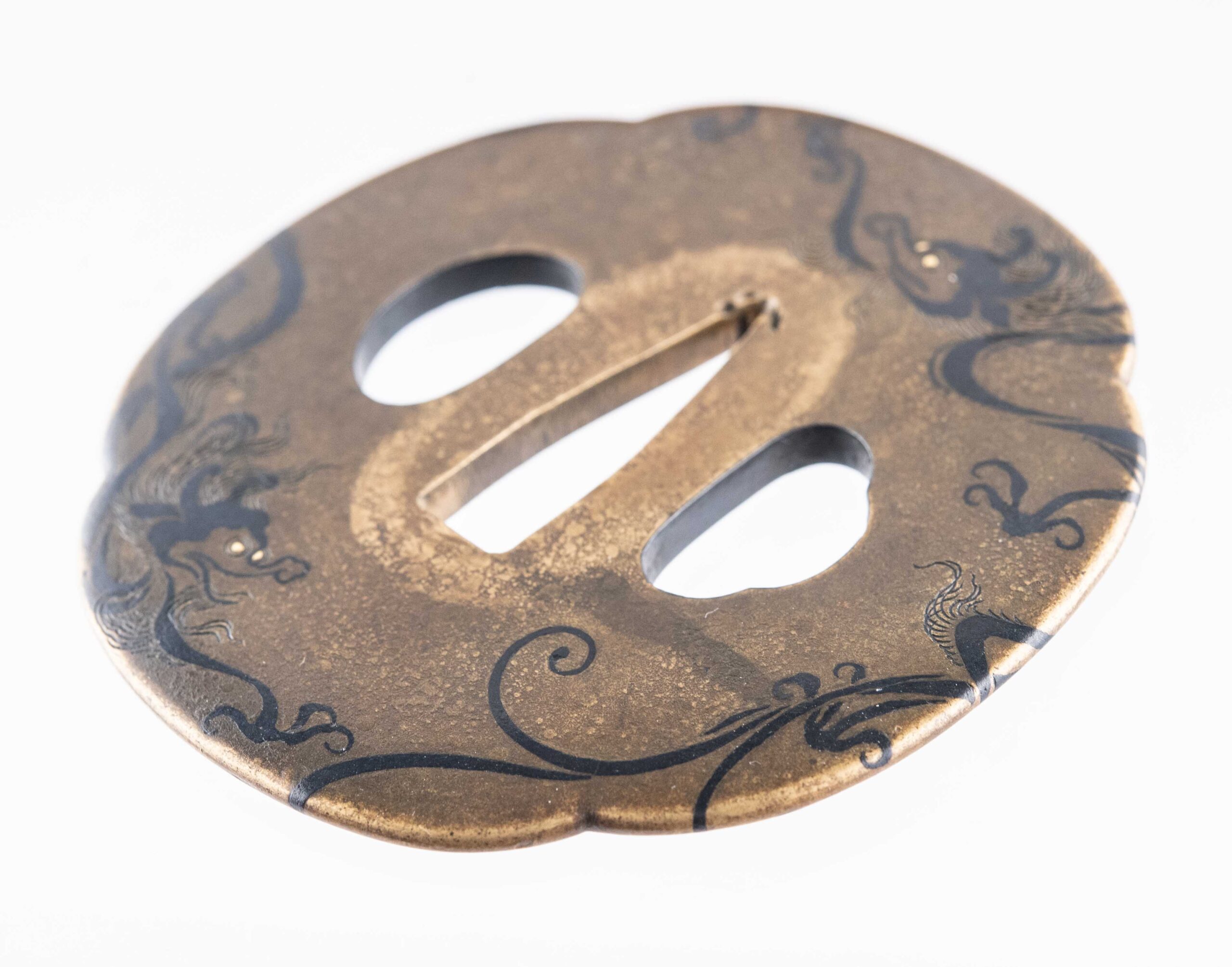
This mokko-gata tsuba is attributed to the Umetada school and is crafted from sentoku (brass alloy), exhibiting the warm brownish-green patina characteristic of this material. The plate is of slightly lenticular cross-section, thinner towards the rim and thickening gently toward the seppa-dai. The surface displays the distinctive crystalline texture often associated with the work of Umetada Myoju, achieved through a subtle chemical treatment using arsenic, which created fine arsenic-crystal formations or light etching marks across the metal’s surface. This treatment results in a softly shimmering ground that interacts beautifully with the natural patination and gives the tsuba a refined, almost organic depth.
Set against this finely textured field are flat shakudo (hira-zogan) inlays flowing naturally around the rim, seamlessly integrated into the sentoku plate. The design depicts two rain dragons (ameryu) in graceful, fluid motion both continuing around the rim onto the reverse, their slender bodies creating a dynamic composition. The dragons’ eyes are inlaid with tiny dots of gold, while their manes are rendered in kebori (fine hair-line engraving), executed with delicate precision to convey the flowing texture of the mythical creatures’ hair. The combination of the warm brass tone, the dark shakudo inlays, and the gold details produces a subtle but striking contrast, highlighting the Tsuba’s technical sophistication and aesthetic balance.
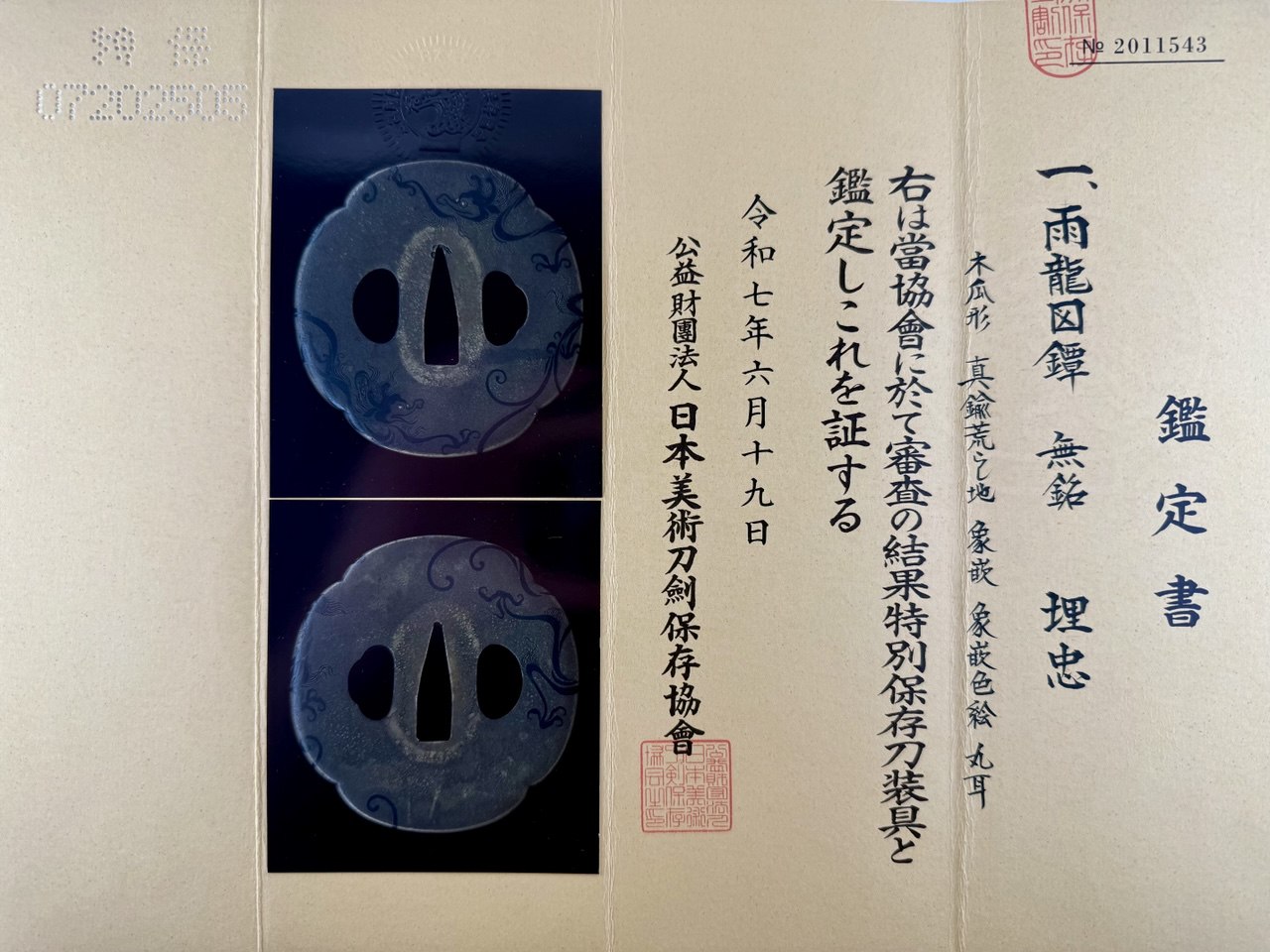
The hitsu-ana are lined with an exceptionally thin layer of shakudo, nearly invisible from above but visible within their interior, a refined detail sometimes found on high-quality Umetada school fittings. The piece dates to the mid to late Edo period (ca. late 18th century) and bears a Tokubetsu Hozon certificate from the NBTHK, attesting to its attribution to the Umetada school.
The Umetada school, founded by Umetada Myoju (埋忠明寿) in the late 16th to early 17th century, is among the most influential schools in the history of Japanese sword fittings. The Umetada artists were pioneers in blending classical motifs with innovative surface treatments and alloy experimentation, including the use of sentoku and shakudo in combination. They also developed advanced methods of texturing and patination that influenced later kinko masters such as the Nara school for example. Myoju and his successors were celebrated for their technical versatility—working not only in soft metals but also creating fine iron tsuba with elaborate inlays and surface effects such as the slightly elevated hira zogan.
Overall, this tsuba exemplifies the mature style of the Umetada school in the Edo period—technically sophisticated, elegant in composition, and rooted in a long tradition of metallurgical innovation and artistic excellence.
Comes with the NBTHK Tokubetsu Hozon certificate attributing this piece to Umetada.
With an old Kiri made wooden box.
Size:
H.: 78 mm W.: 75 mm Sd.: 4 mm R.: 2 mm