A Goto Kozuka by the 6th mainline master Eijo
Goto Eijo, born in the Momoyama period and active during the early Edo period, was the sixth master of the prestigious Goto family of sword fitting makers. He was the son of the fifth-generation master Tokujo and inherited not only the title but also the full artistic legacy of the Goto tradition. Eijo played a significant role in maintaining and refining the high standards of the Goto school, which by then had become the official provider of sword fittings to the Tokugawa shogunate. His works are characterized by exceptional skill in nanako ground finishing, subtle takabori carving, and elegant compositions rooted in classical themes. In his work he often tried to imitate the 3rd mainline master Joshin by creating rather bold designs in high relief. Eijo’s artistry marked a culmination of early Goto techniques, preserving their purity and finesse at a time when the school had become the gold standard for court and samurai fittings alike.
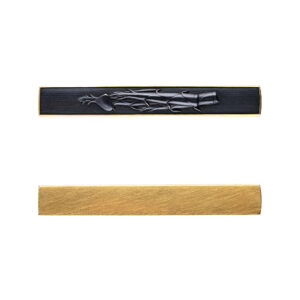
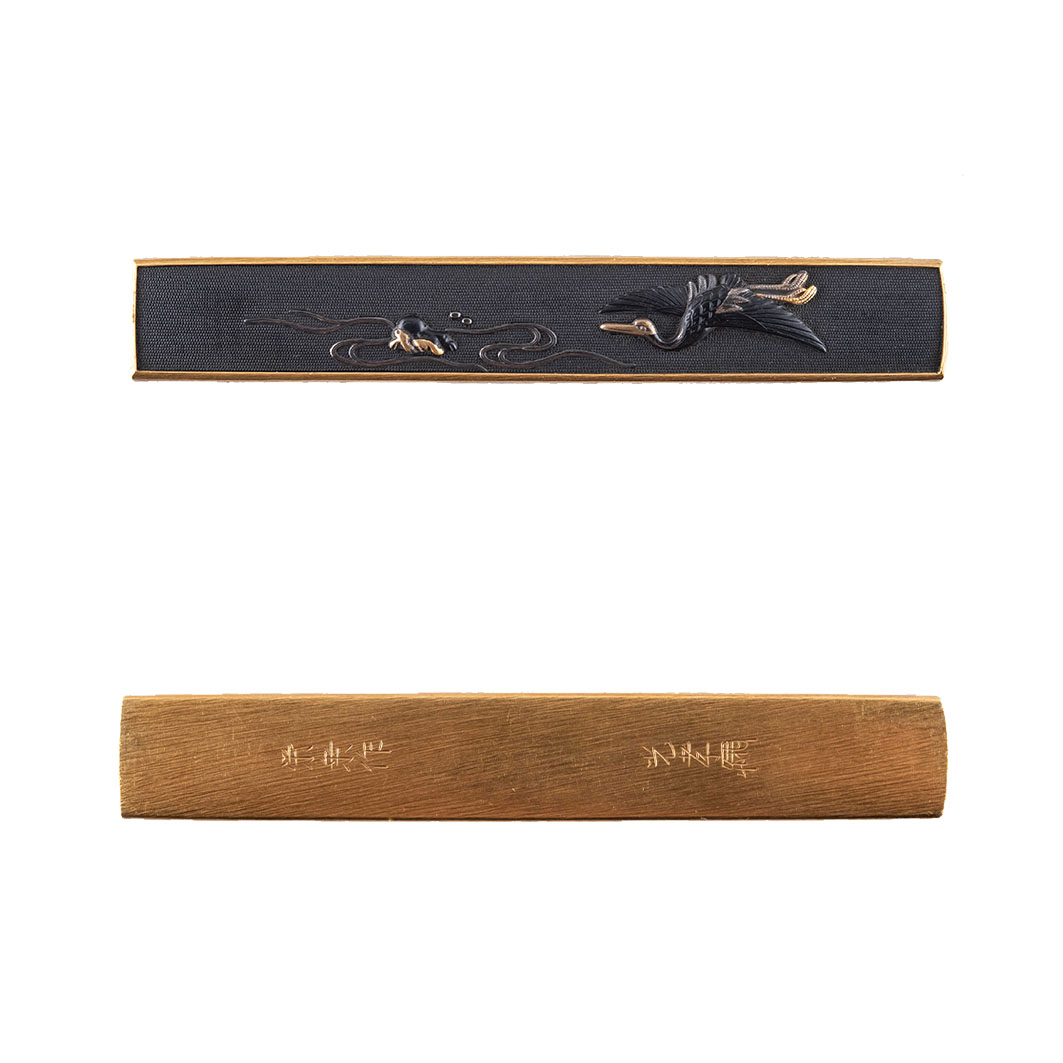
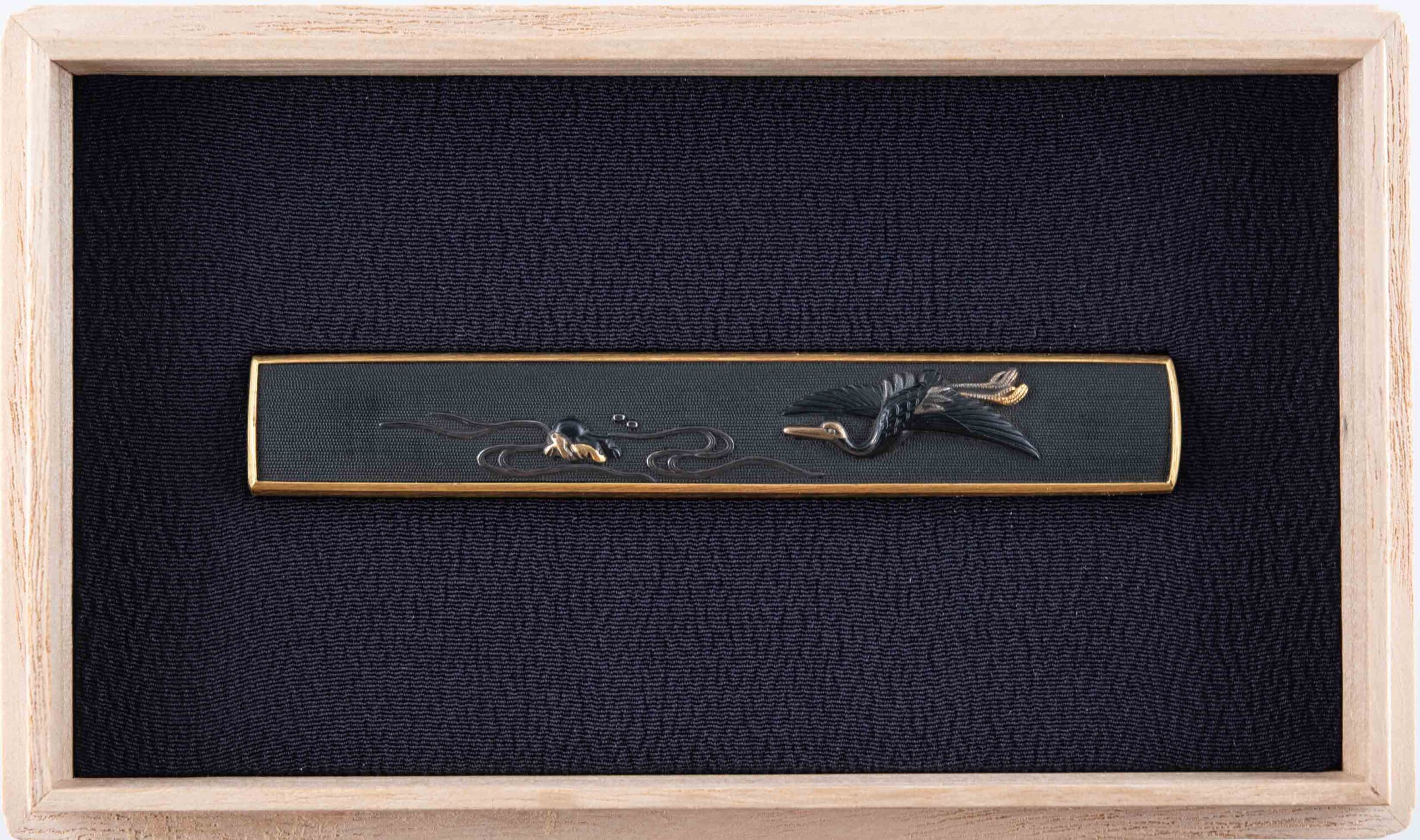
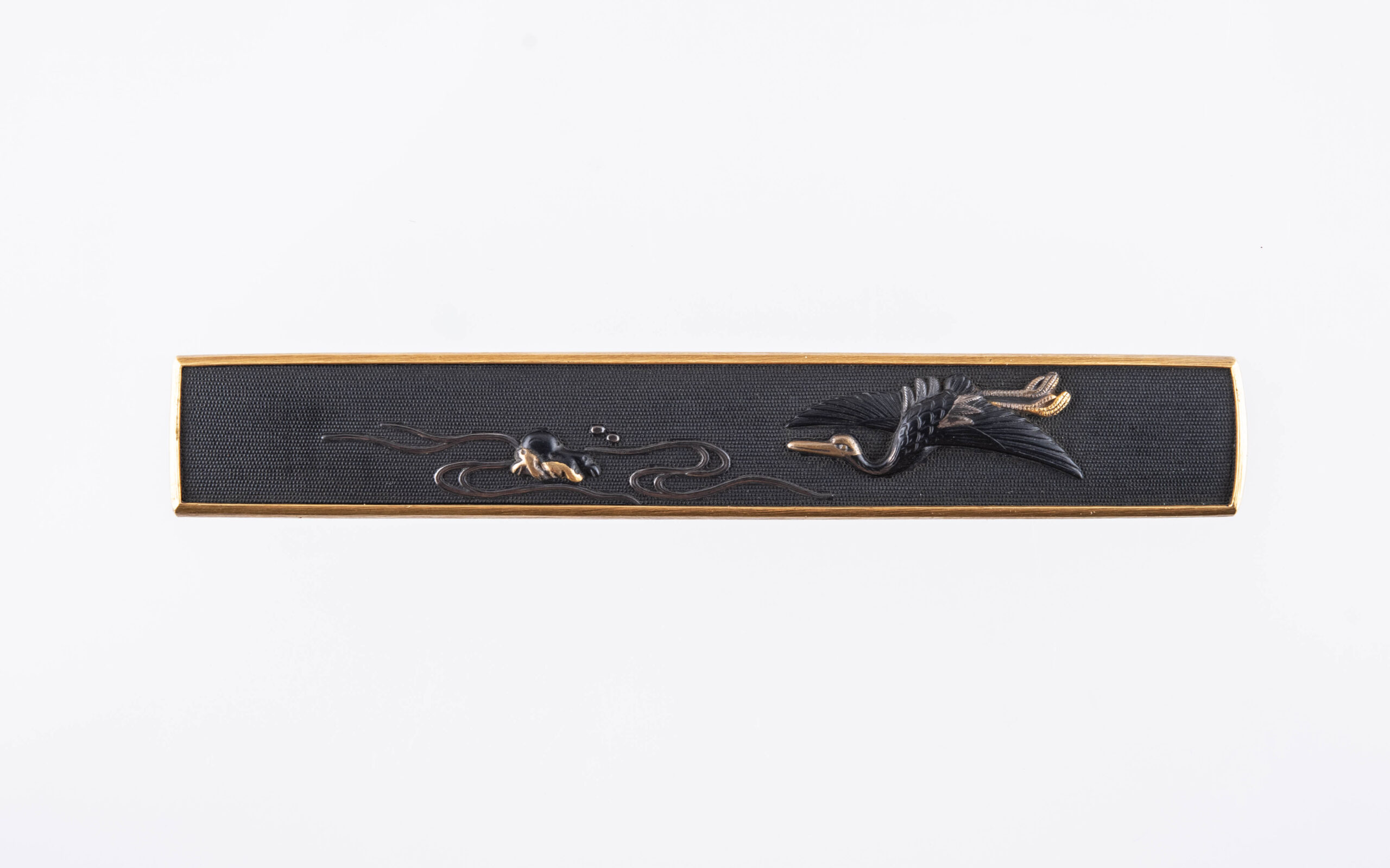
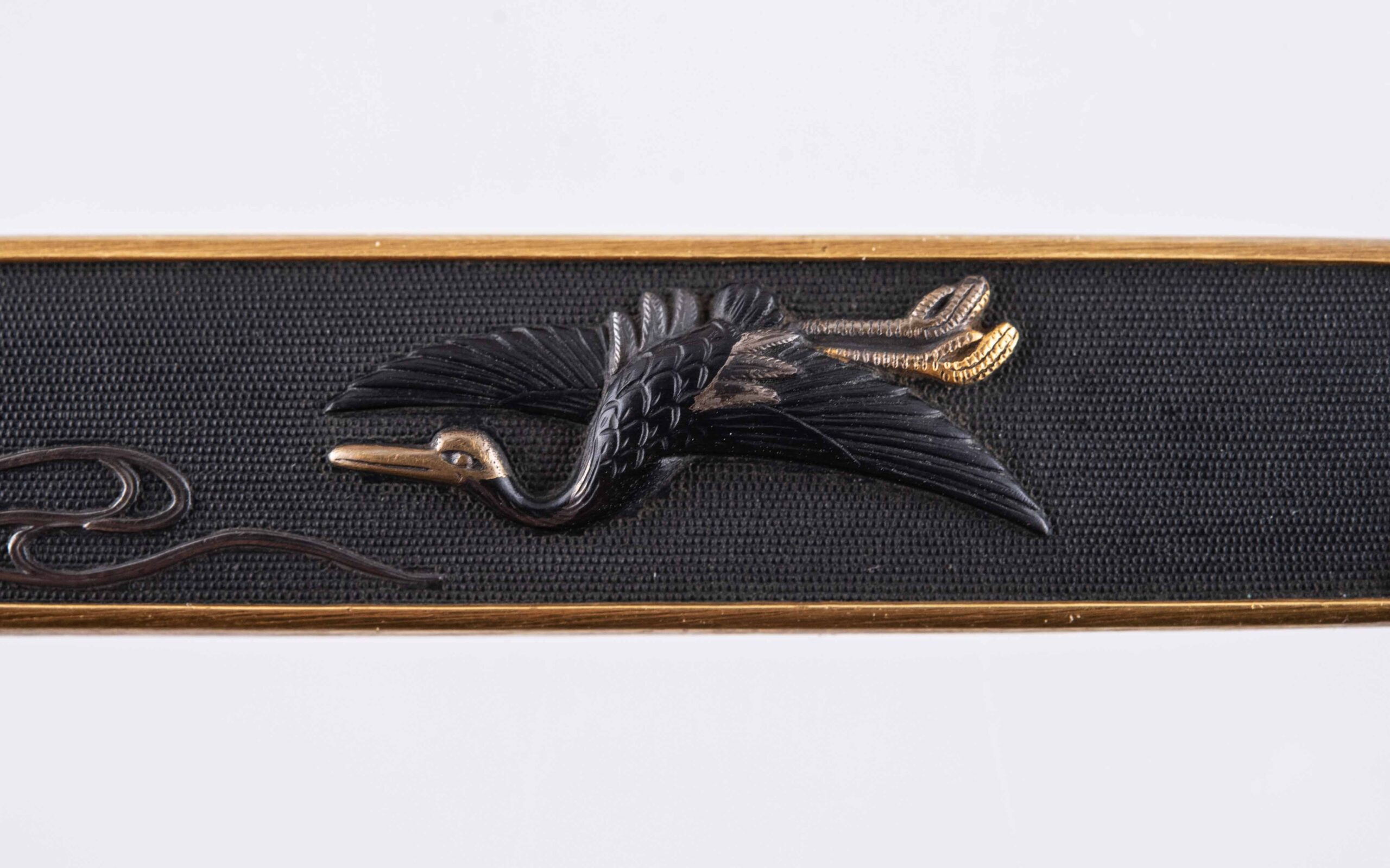
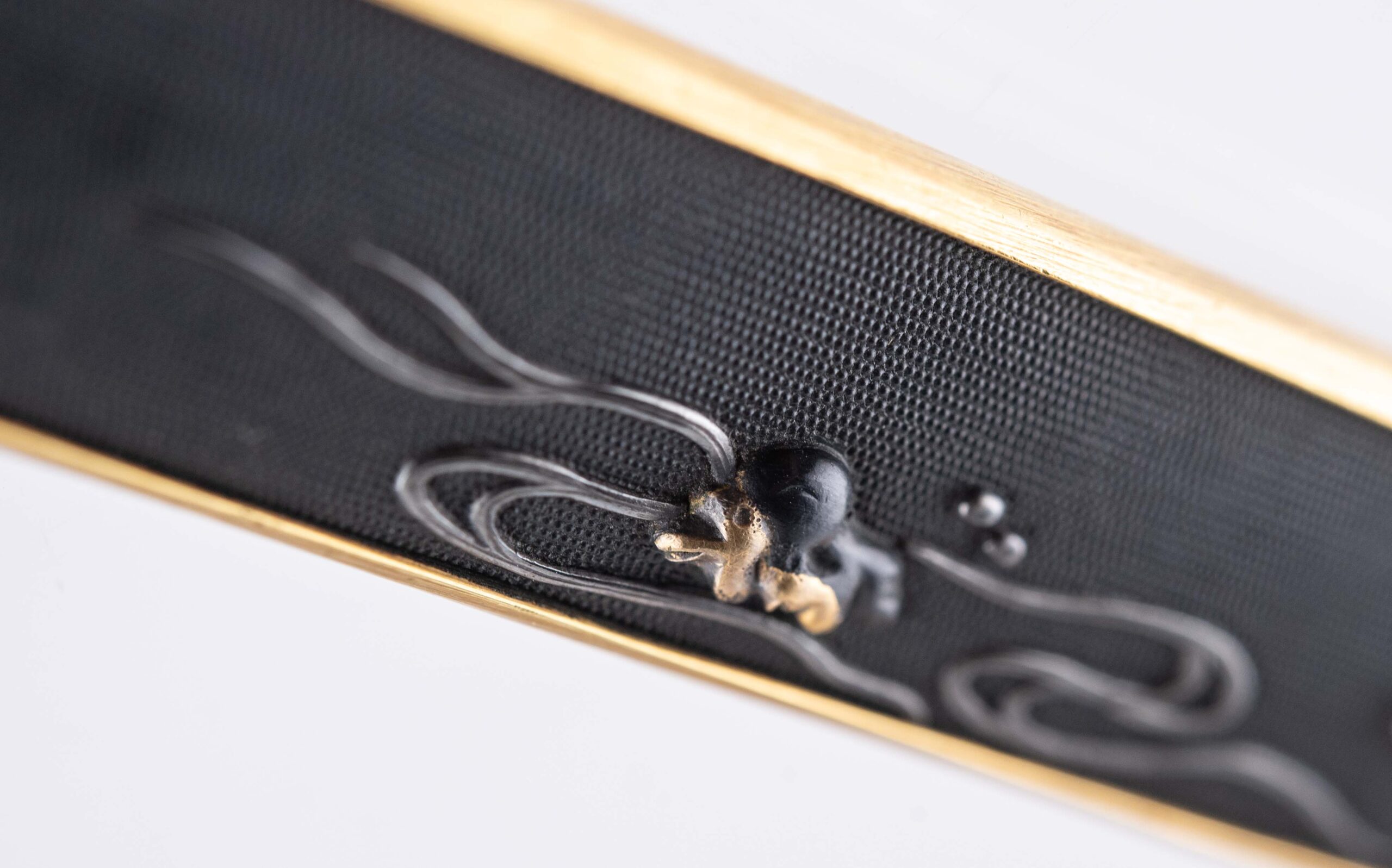
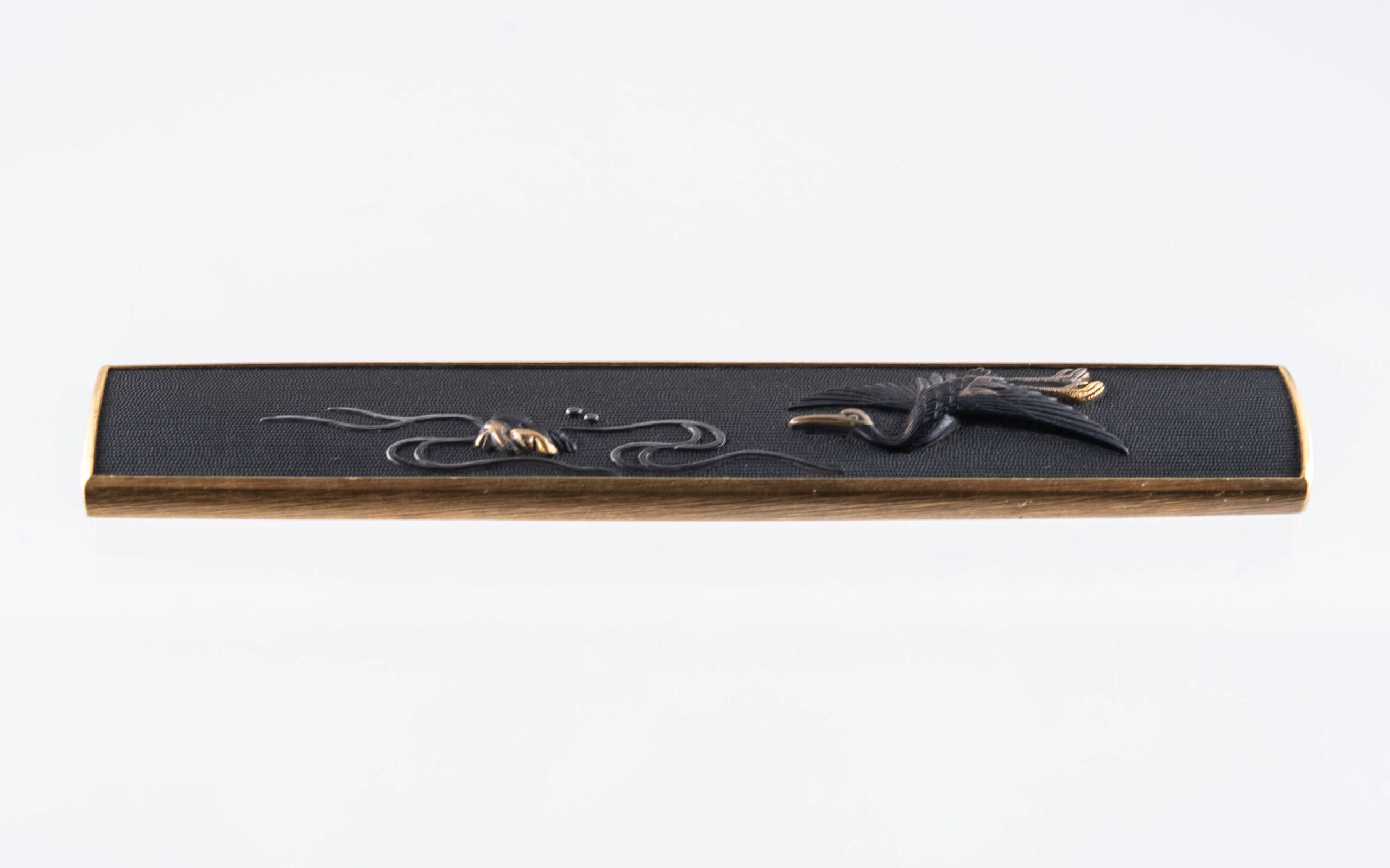
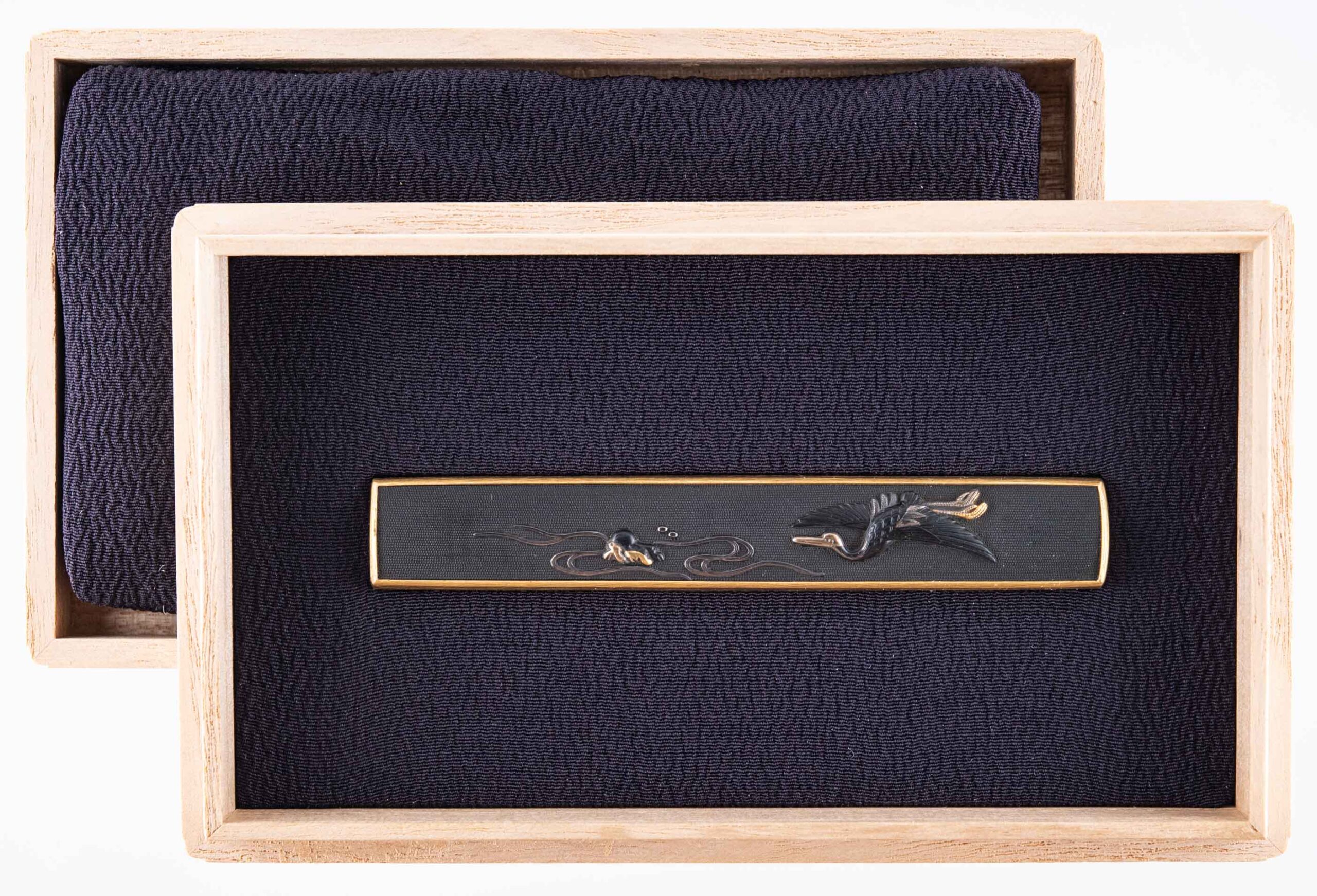
This Goto Kozuka presents a serene and balanced landscape composition: On the right side, a crane is depicted, rendered with quite exquisite detail and highlighted in gold and silver. On the left side flows a small stream, inlaid in silver, next to a stone. The scene evokes classical Japanese themes of longevity and purity—the crane being a symbol of long life, and water representing clarity and renewal. The choice of subject, subtle yet rich in meaning, is entirely in line with the refined aesthetic of the Goto school under Eijo’s direction.
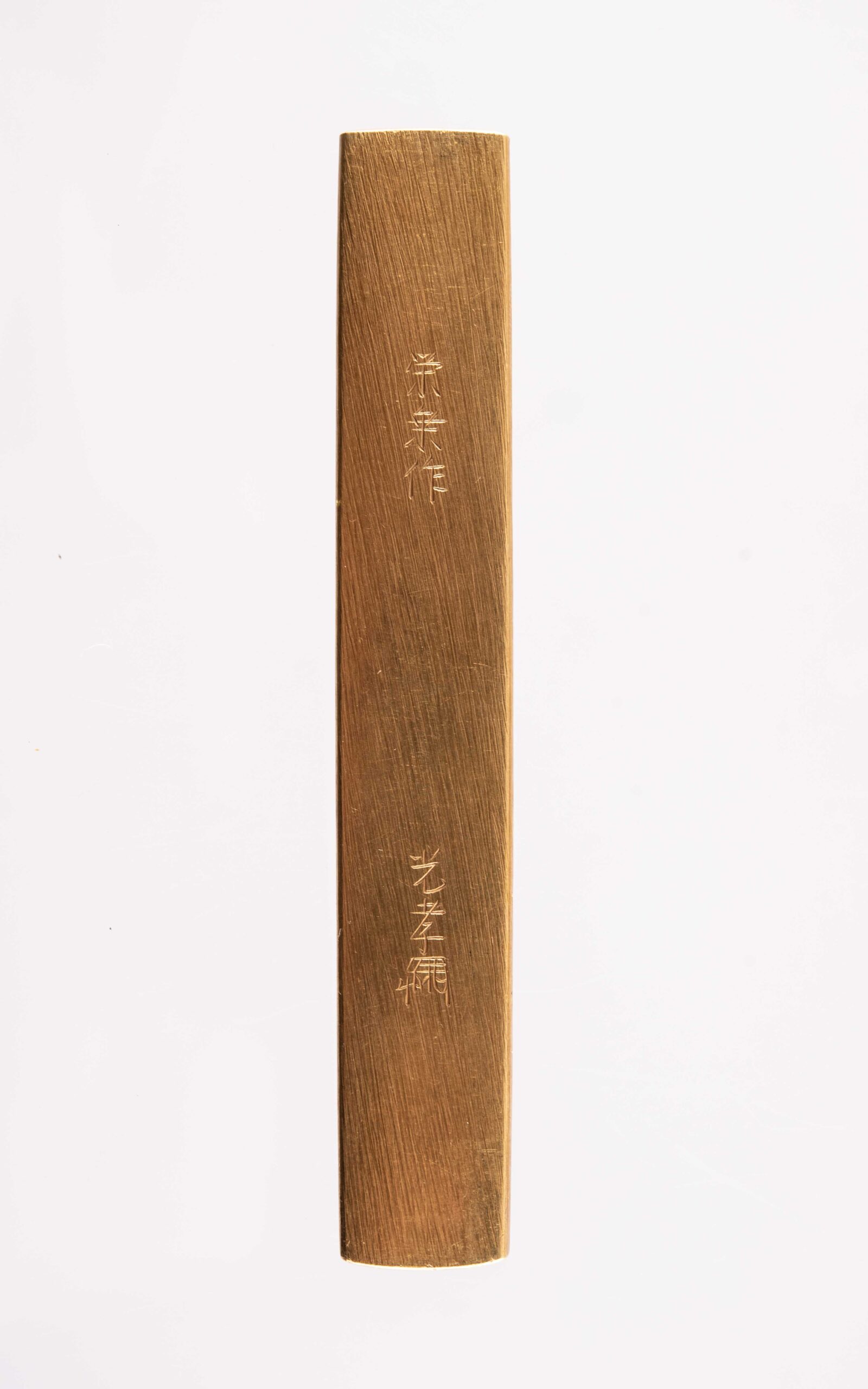
The Piece is executed on a shakudo base with a finely textured nanako ground, which is slightly less mechanically correct as later Edo period pieces, which is typical for early Goto works. The rim and the reverse of the Kozuka are finished in gold, lending the piece a luxurious and authoritative presence. The reverse also features the typical Yasurime decoration, consistent with authentic Goto workmanship.
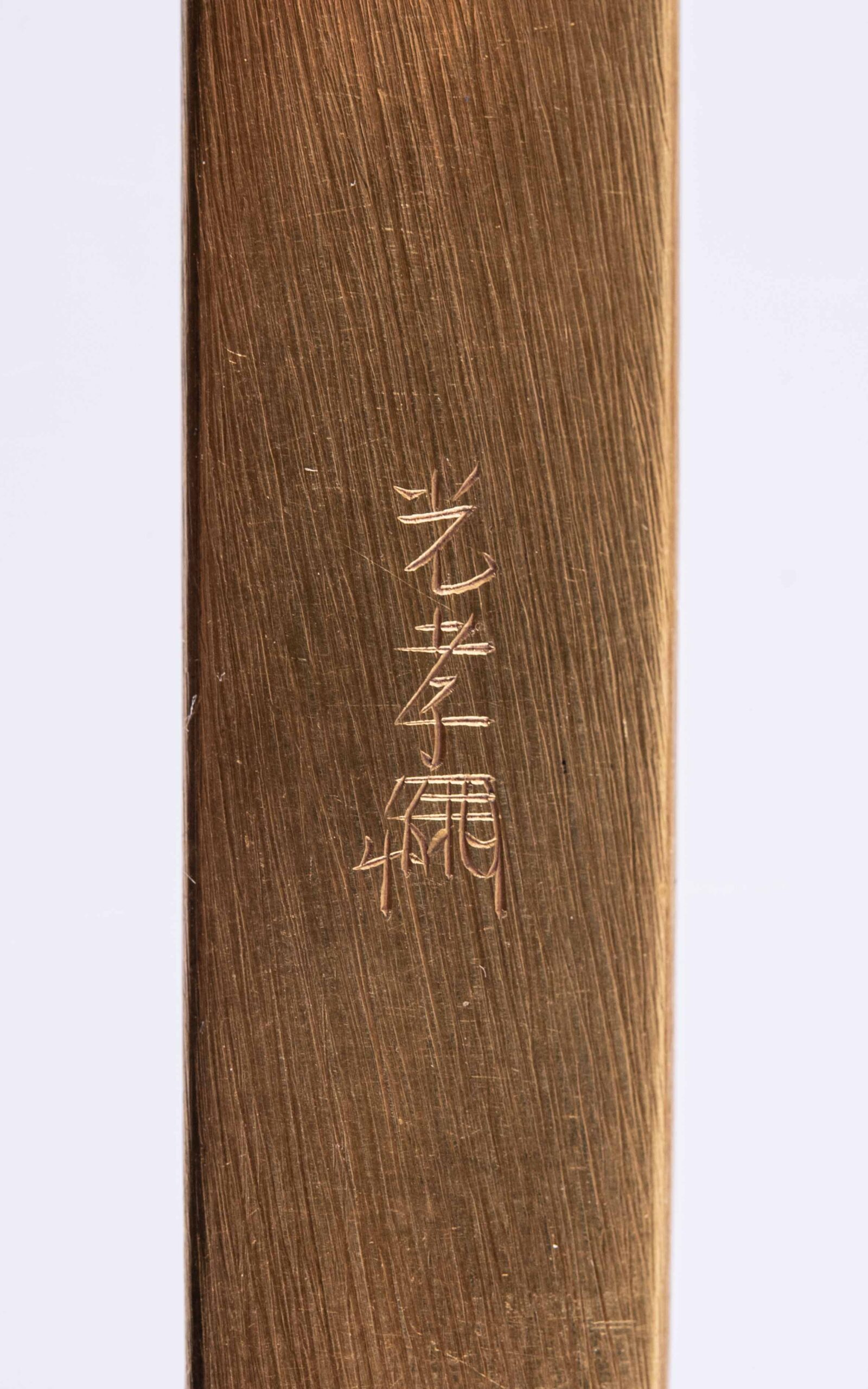
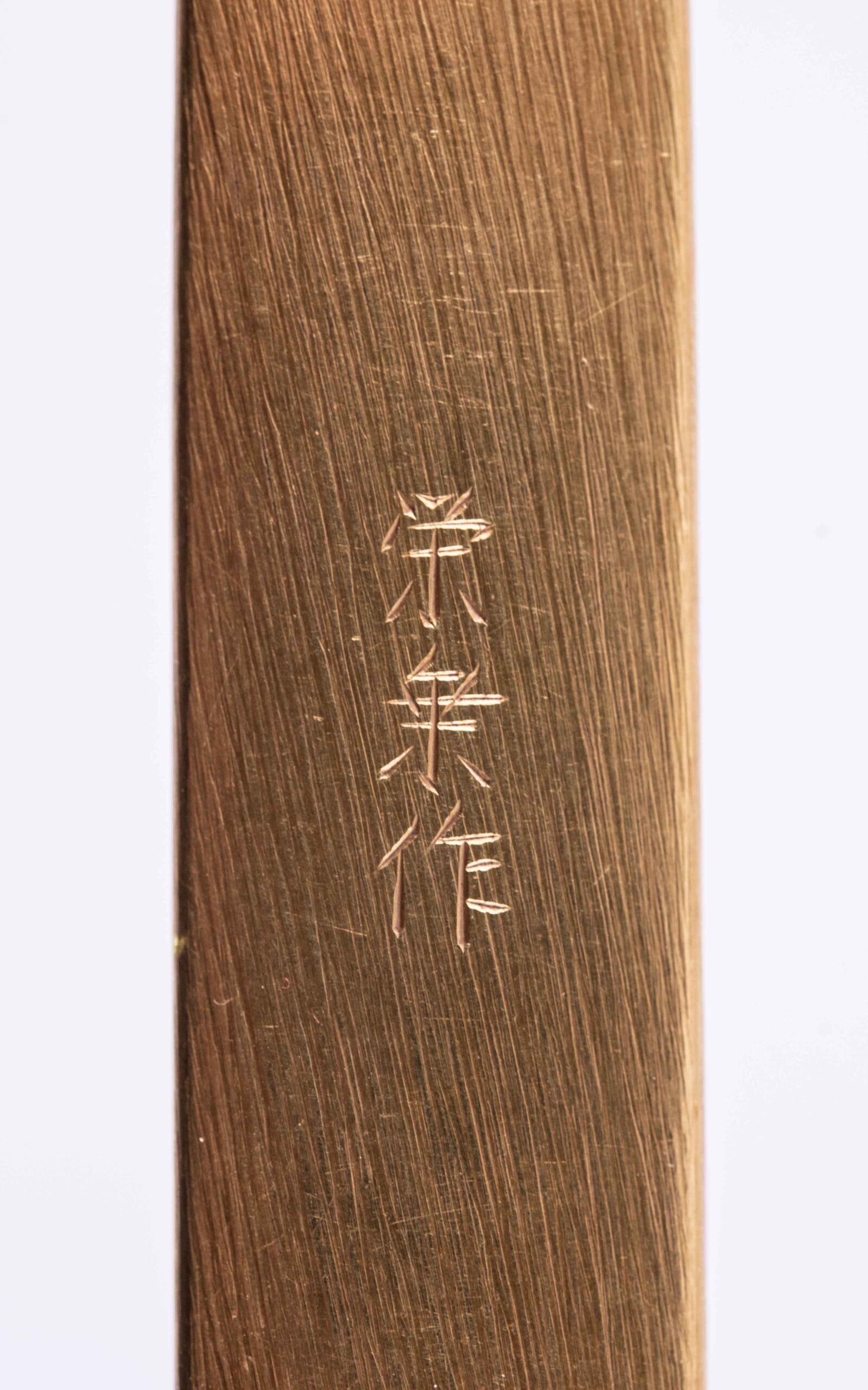
Most significantly, the reverse bears a Kiwame-mei, or attribution inscription, by Mitsutaka, the 13th Master of the school (Enjo Mitsutaka 十三代延乗光孝 1722 – 1784) which dates back to the Mid Edo period. The inscription reads “Eijo saku Mitsutaka” followed by Mitsutaka’s kao, signifying that Mitsutaka personally attested to the piece being made entirely by Eijo. This is a rare and confident statement of authorship and reserved only for works of high quality. Furthermore, the piece has survived in excellent condition, with the nanako ground still crisp and intact.
This Kozuka is a rare example of early Edo period Goto craftsmanship, executed by the hand of Eijo himself. The elegance of its design, the use of premium materials, the precision of the nanako work, and theattribution by Mitsutaka all come together to affirm its place as a great collectors item.
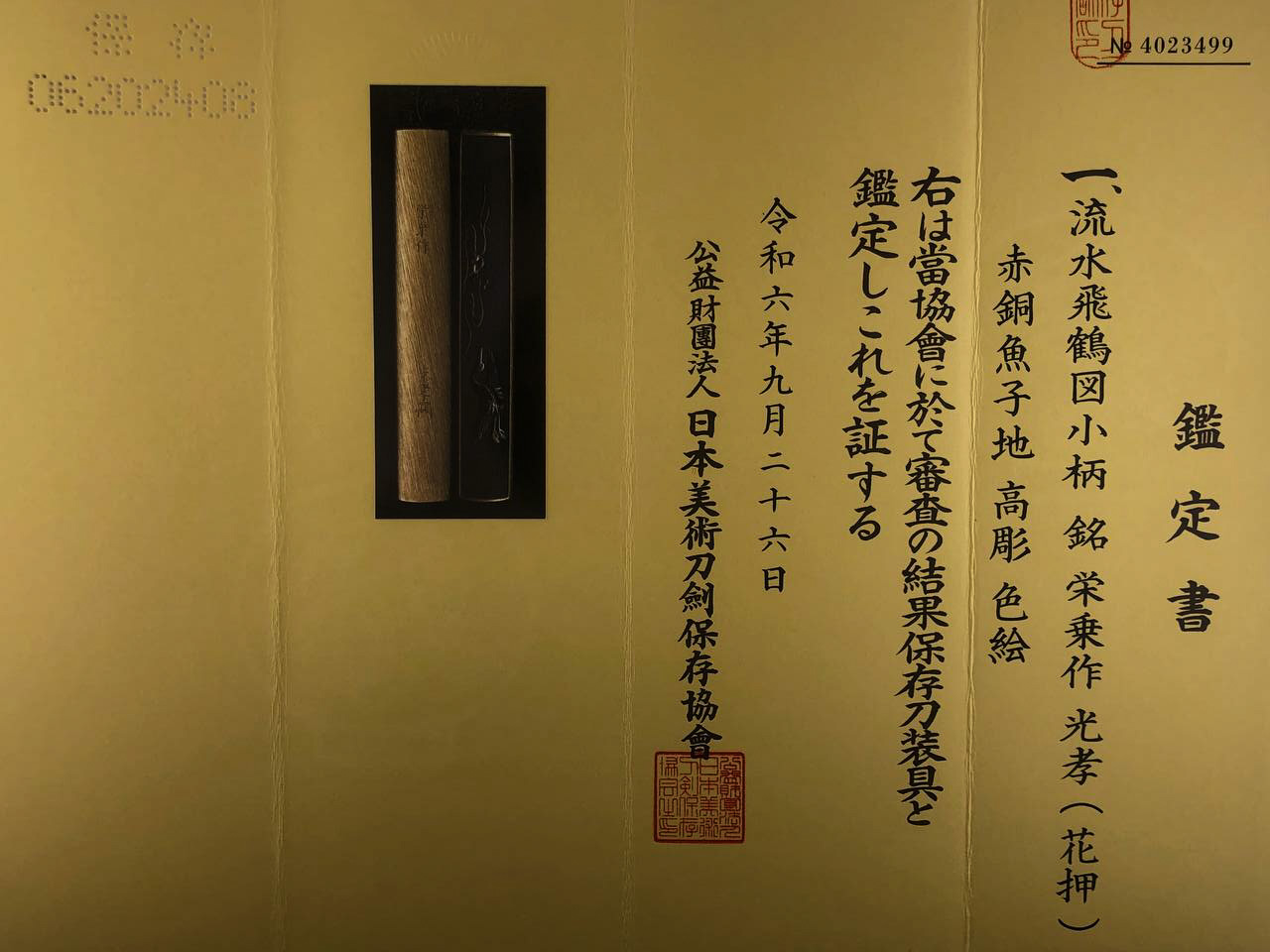
The authenticity of this Goto Kozuka is verified by the NBTHK Hozon certificate. If submitted again this piece will also receive a Tokubetsu Hozon certificate.
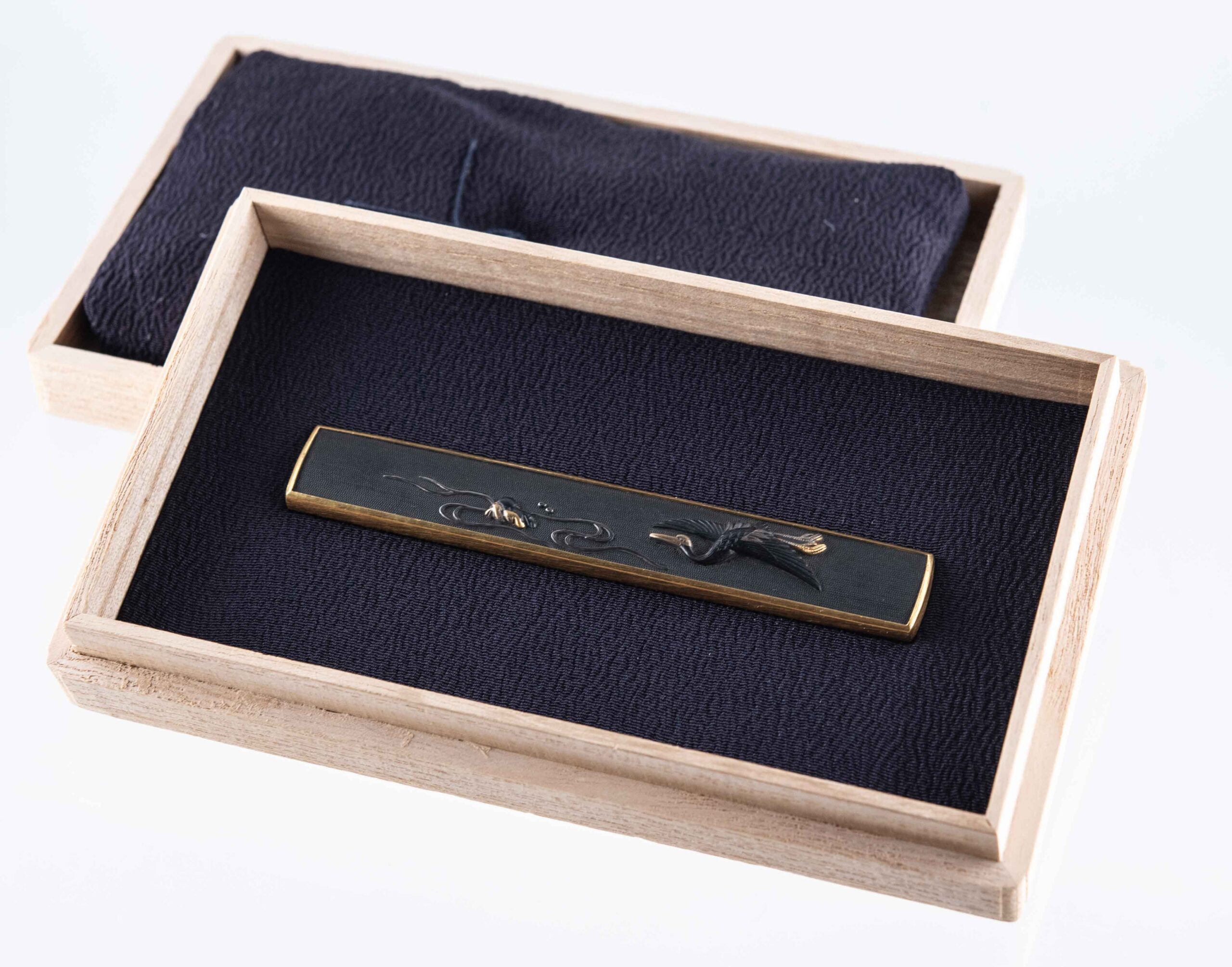
Comes with a custom made box.
Read more about the Goto school here: