A Juyo Kozuka by Goto Sojo (2nd Mainline master)
Historical background
Being about 500 years old, this Kozuka is a truly magnificent extant piece of Japanese history. It was made in the midst of the Sengoku jidai, a period marked by fragmented political authority and constant conflict over regional supremacy. Kyoto being still the formal seat of the emperor and the Ashikaga shogunate – whom Goto Sojo was a retainer of – had lost much of its former stability. The city’s economic and cultural life persisted but was repeatedly disrupted by shifting military occupations and the weakness of central governance. Although the shogun technically resided in Kyoto, real power was dispersed among competing daimyos, leaving the capital symbolically important but politically fragile. During these warring times the early Goto Masters (Yujo 1st, Sojo 2nd, Joshin 3rd) being Samurai themselves and involved in the war created the most magnificent pieces of art as can be seen here. It is the more astonishing that this Kozuka survived in pristine, almost perfect condition.
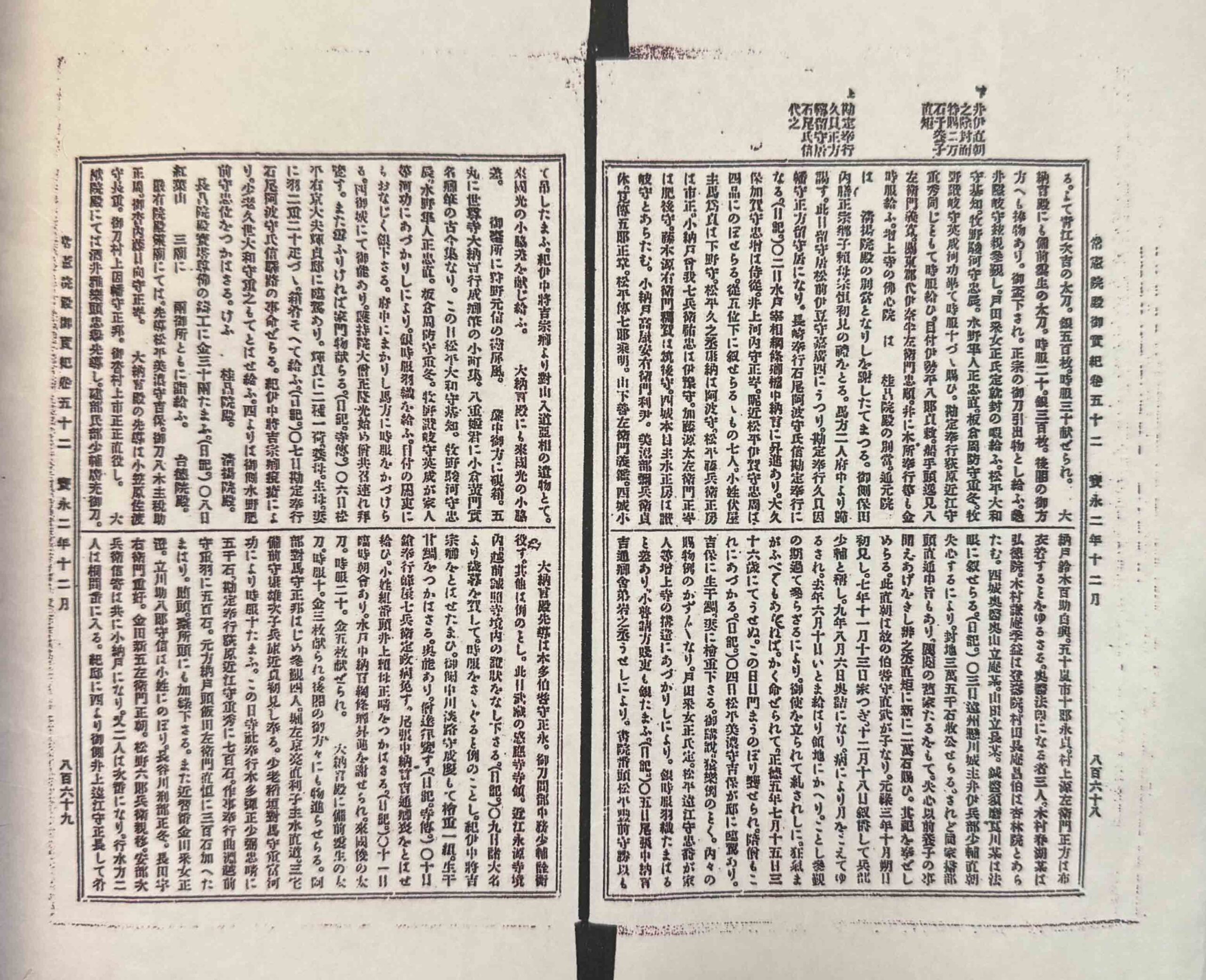
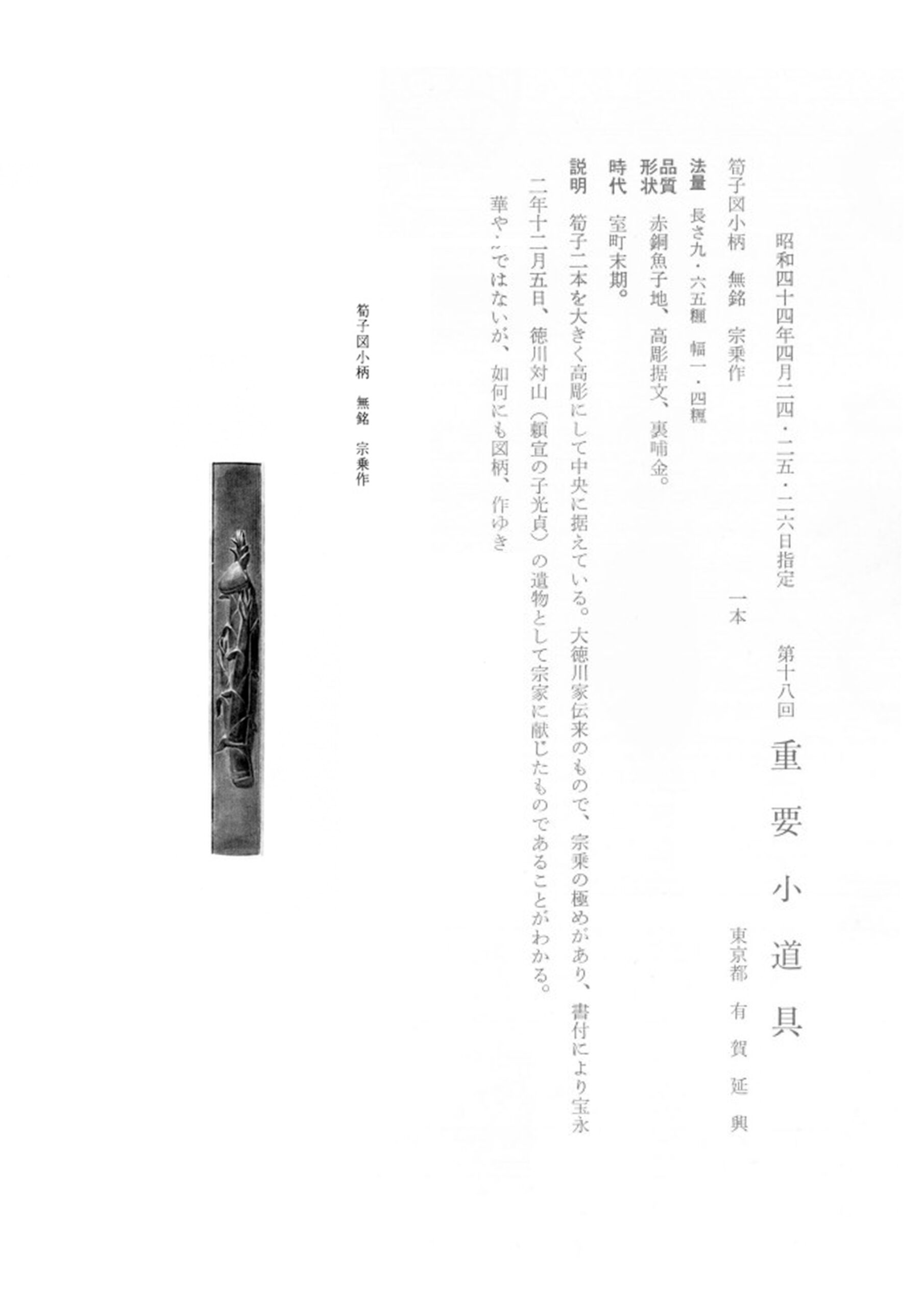
As the Juyo certificate states, this Kozuka was part of the Tokugawa collection and was donated as being a relic from the possessions of Tokugawa Mitsusada, who became the eighth Tokugawa Shogun in 1667. A copy of the document supporting that fact is attached and can be seen in the pictures. The donation happened 320 years ago at a ‘commemoration of the sacred treasure’ event at the Joso-in in December 1705 shortly after Mitsusada has passed away.
Workmanship
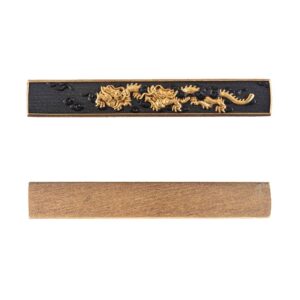
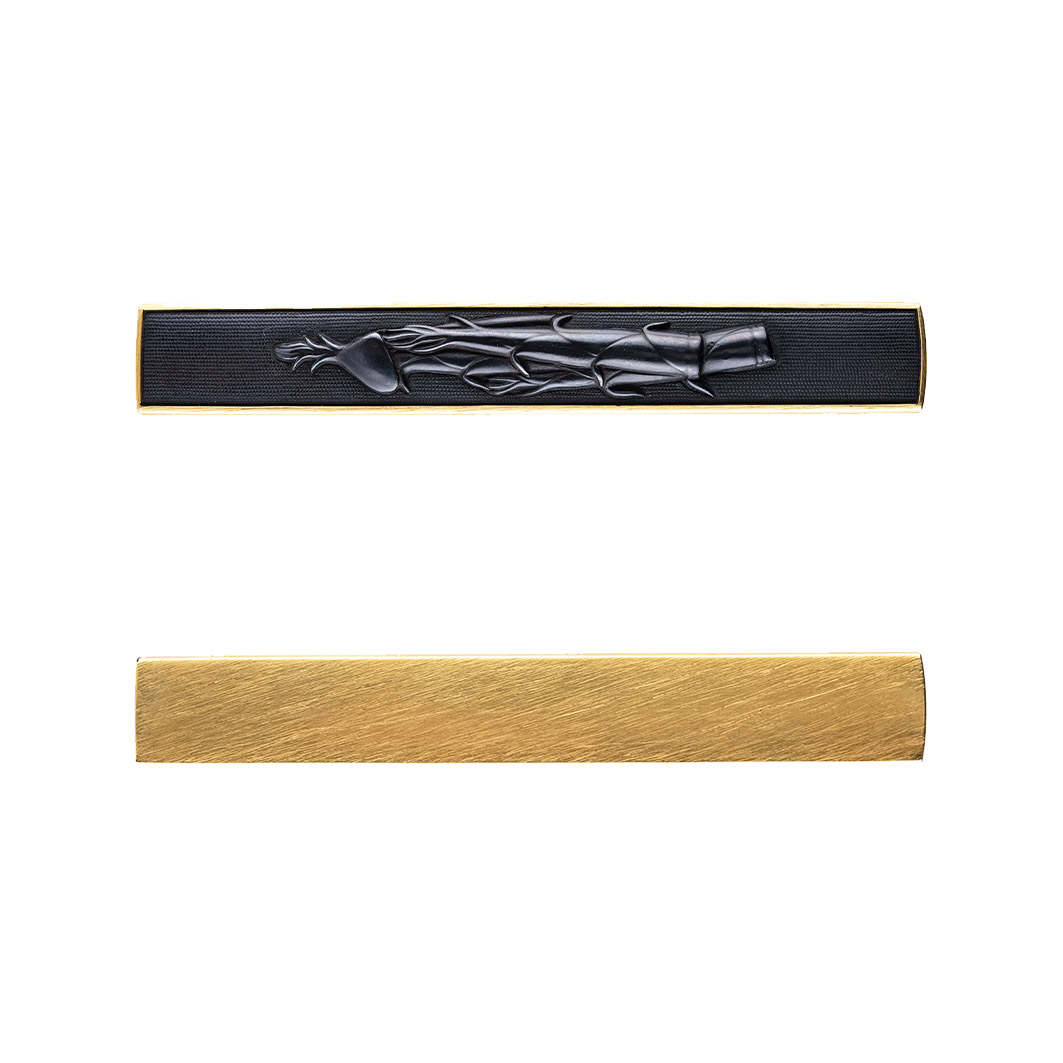
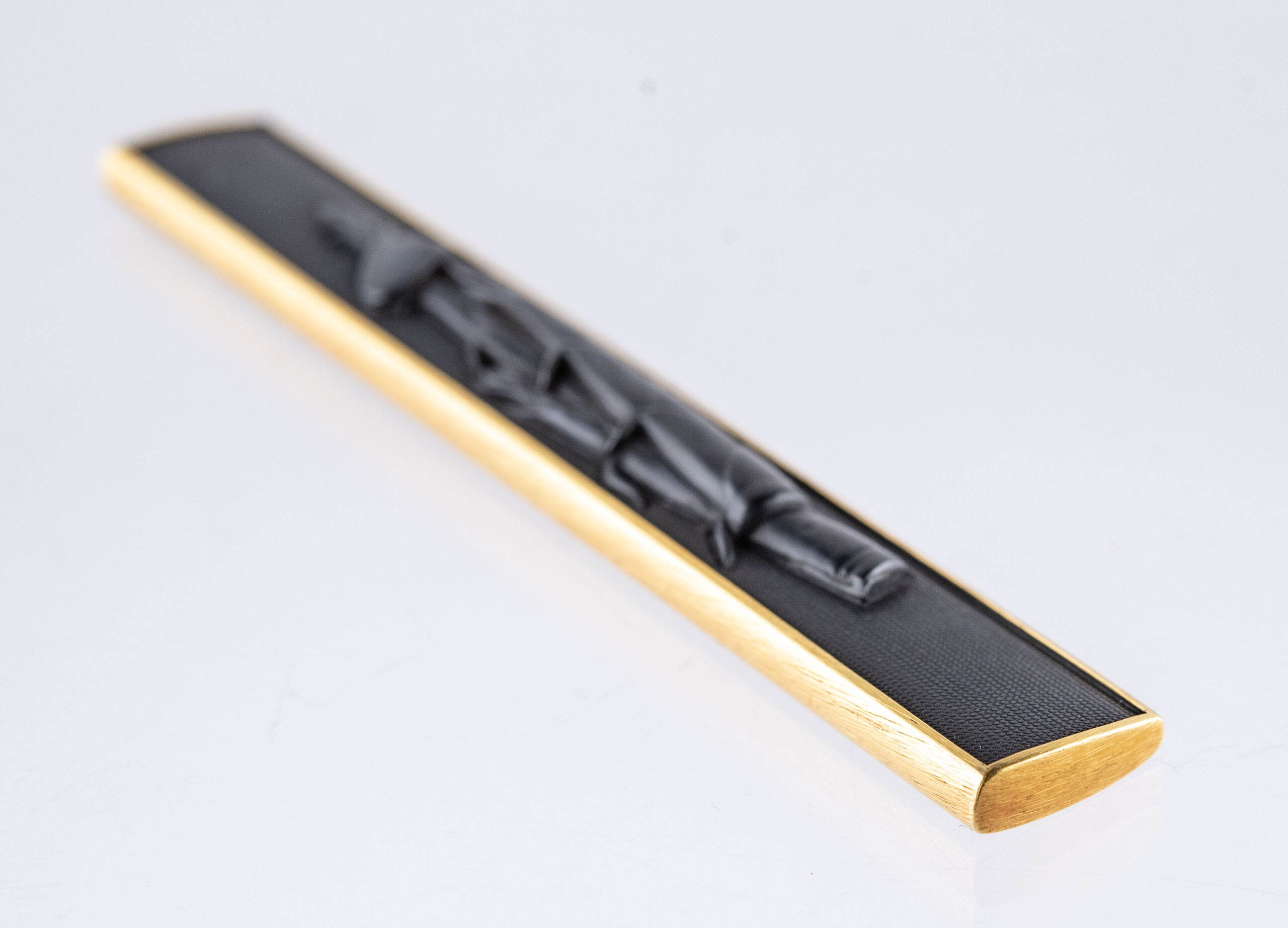
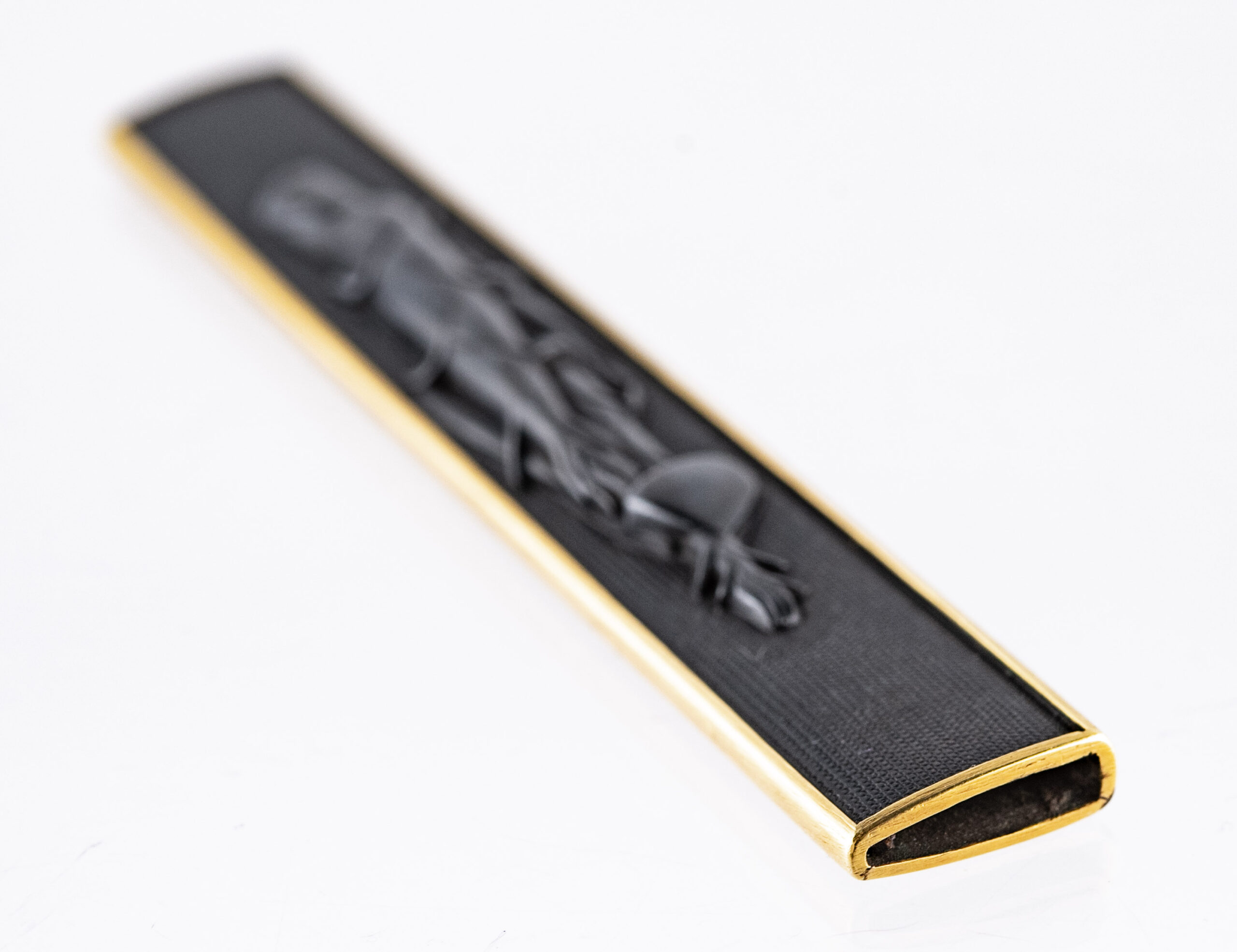
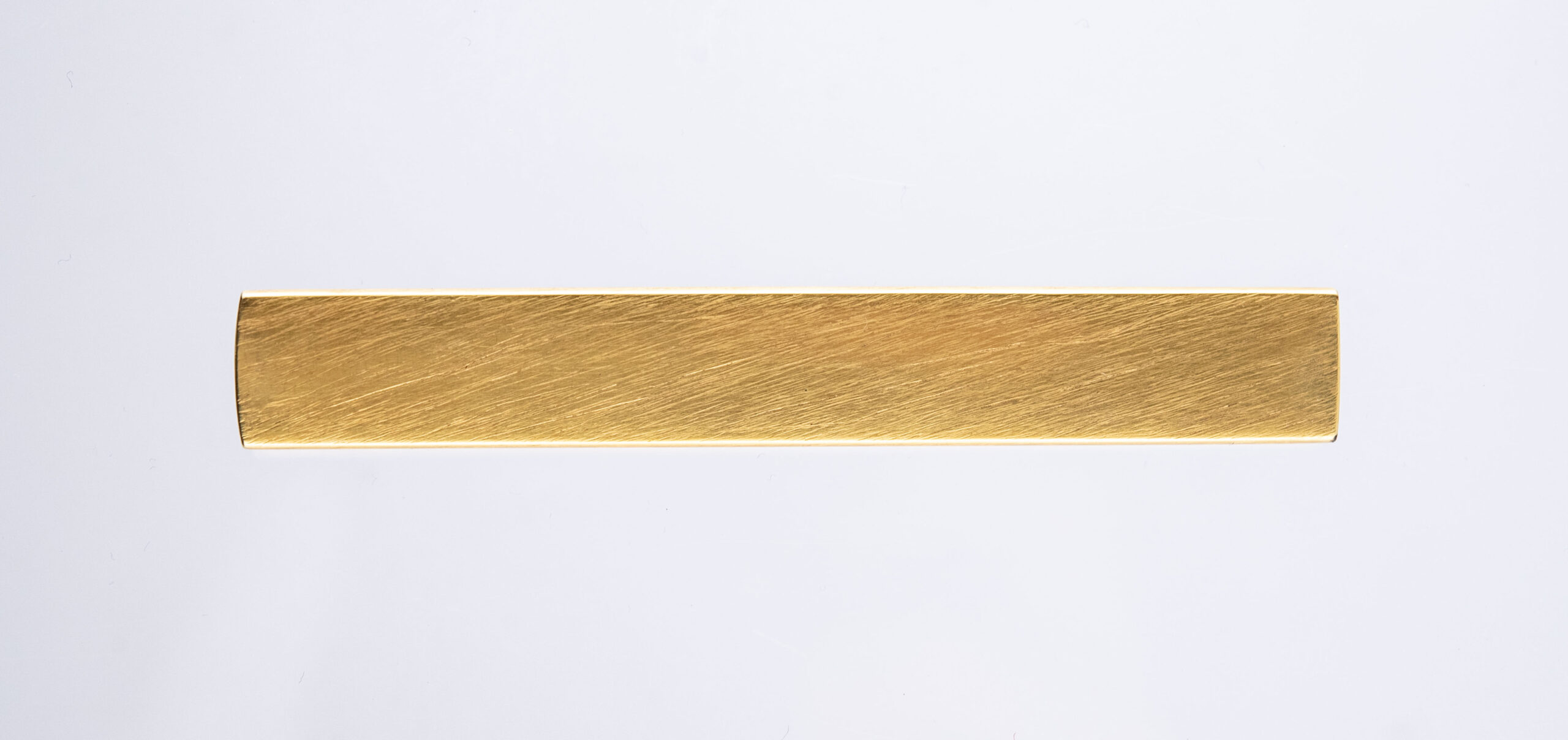
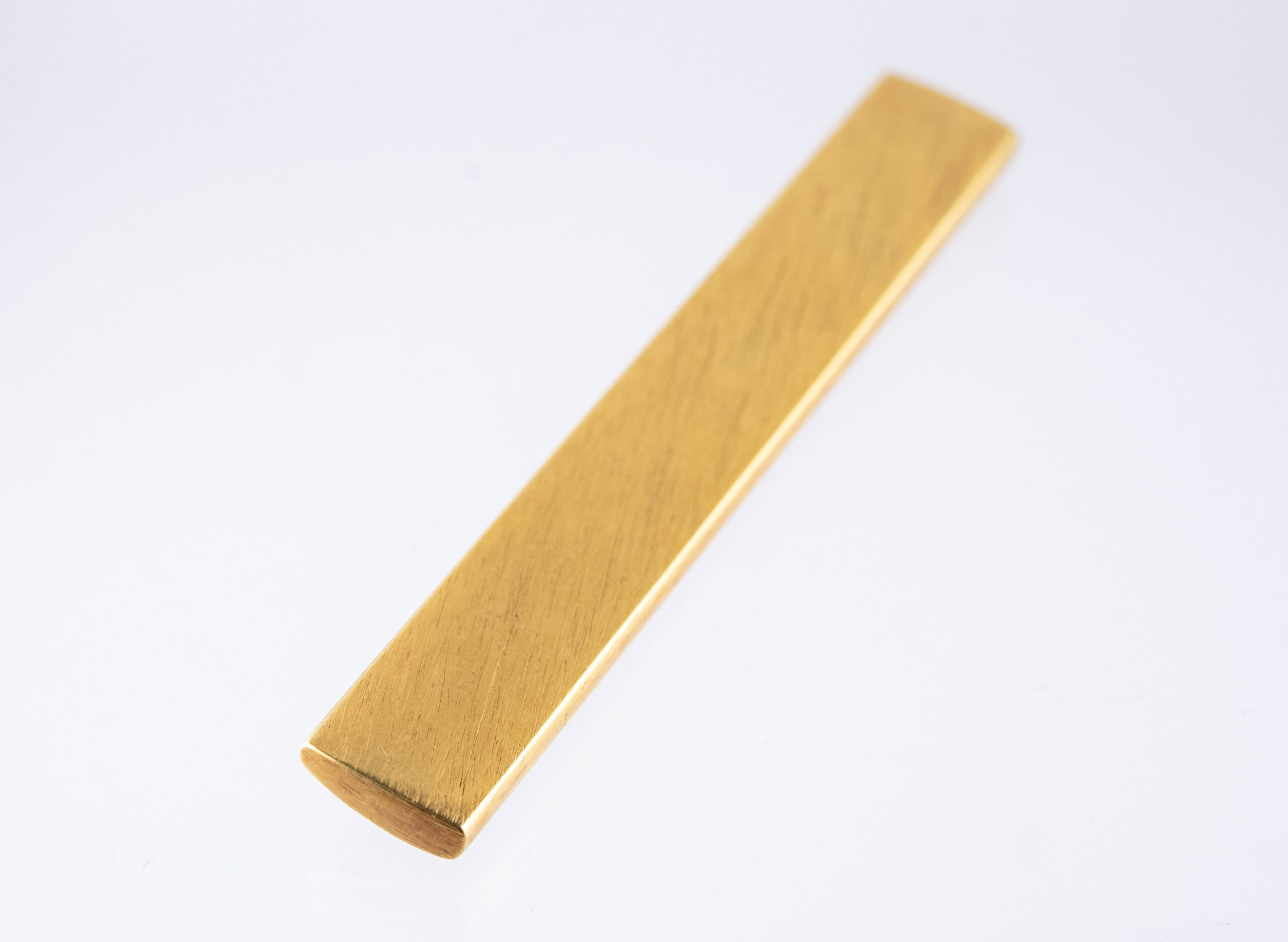
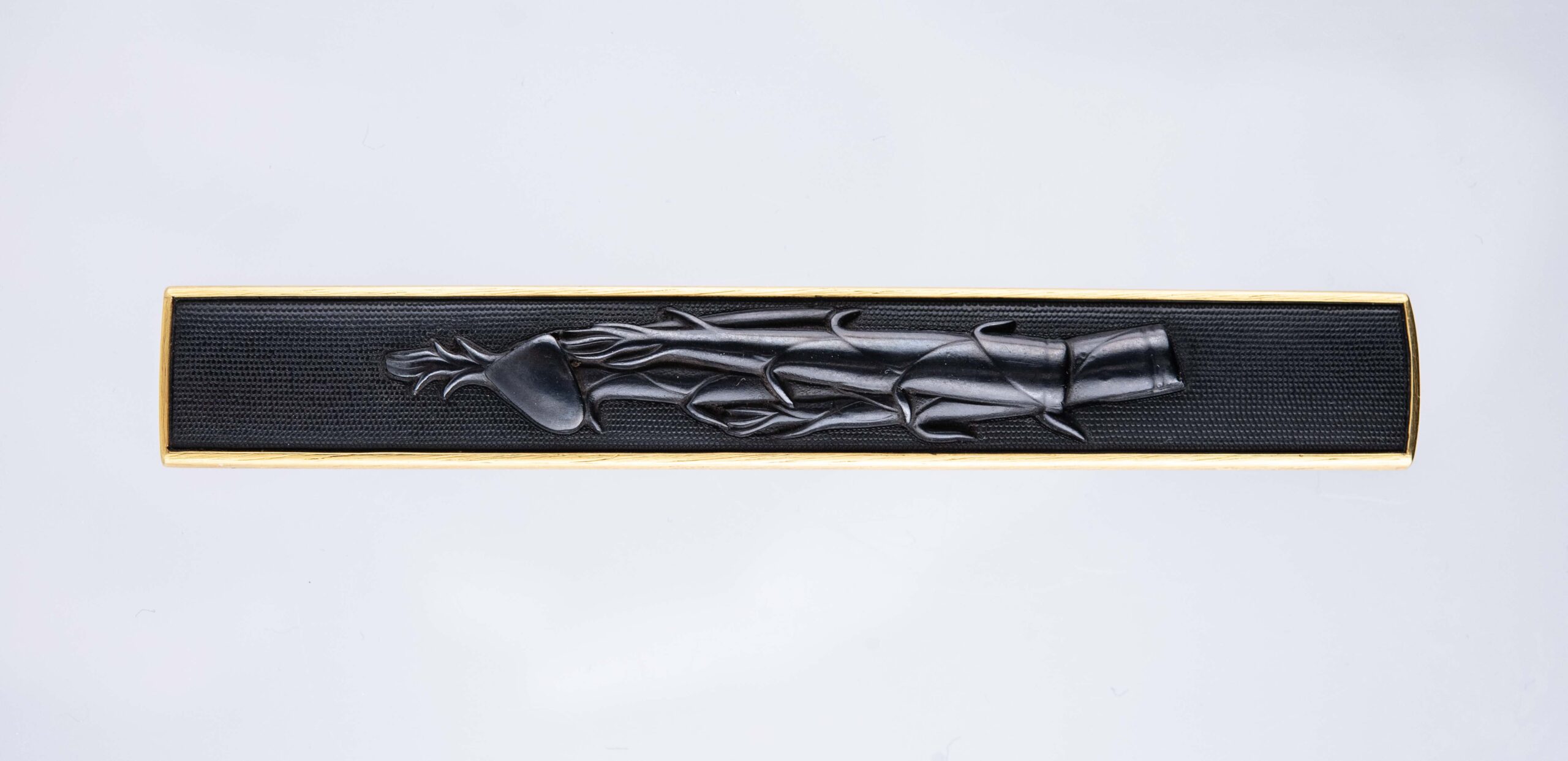
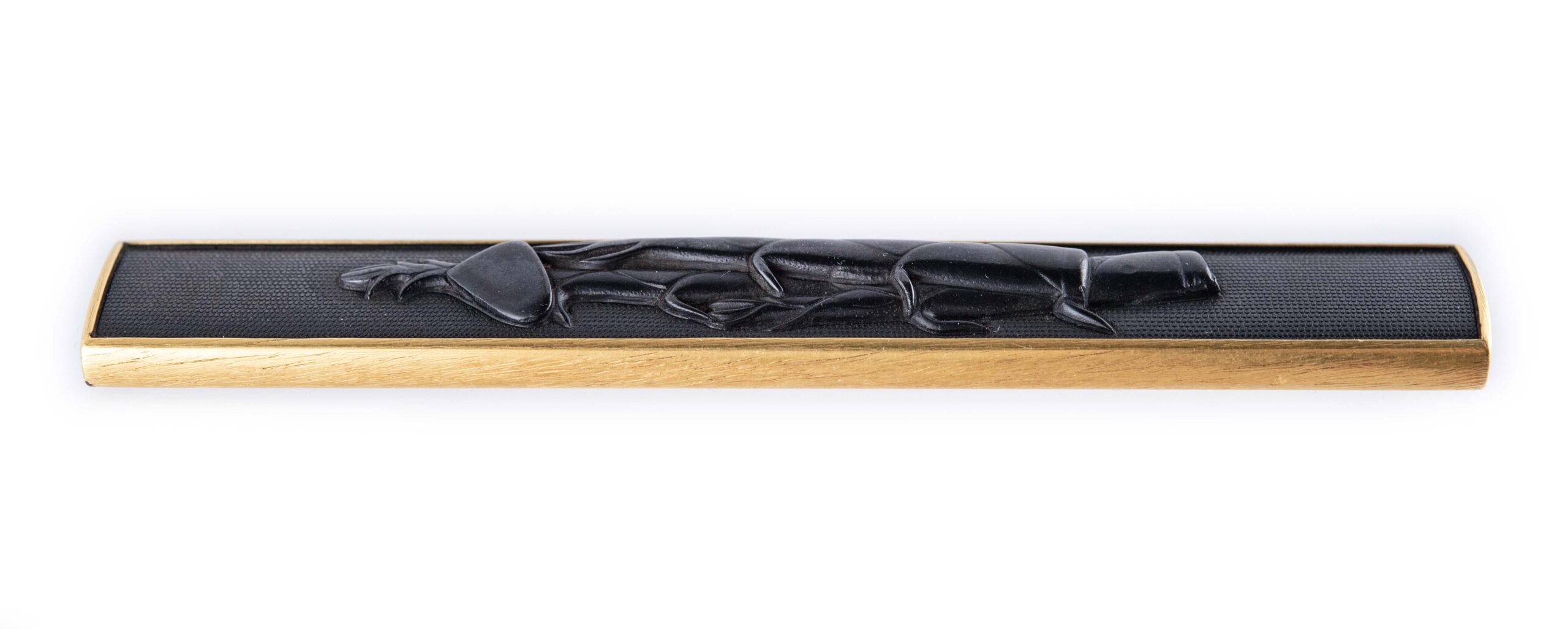
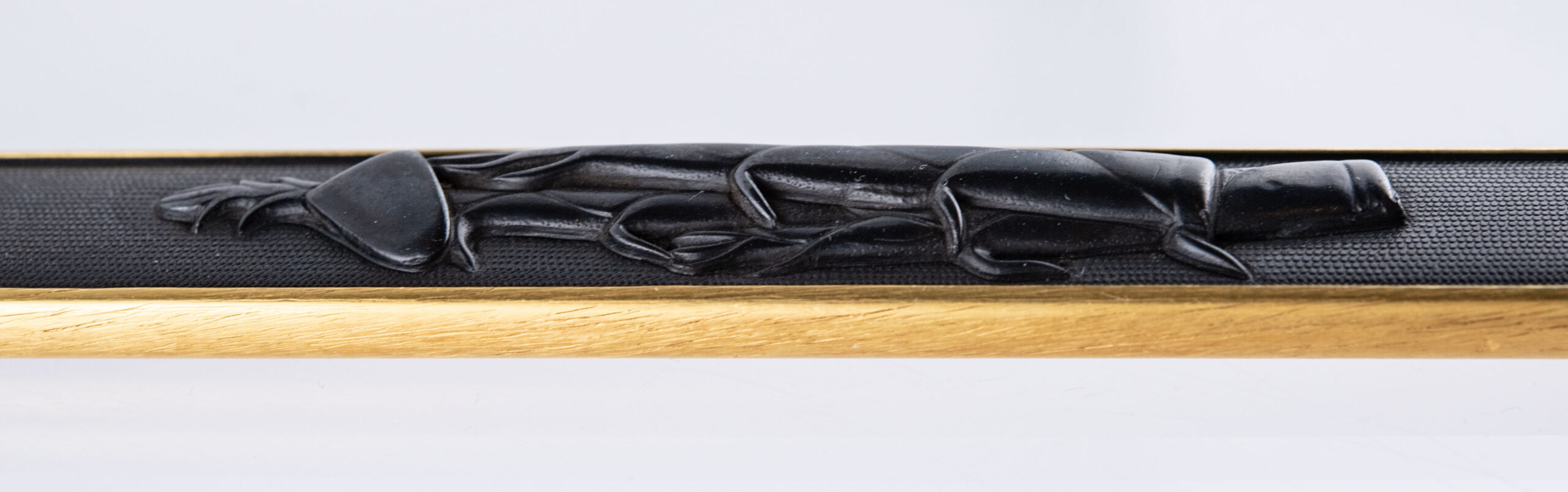
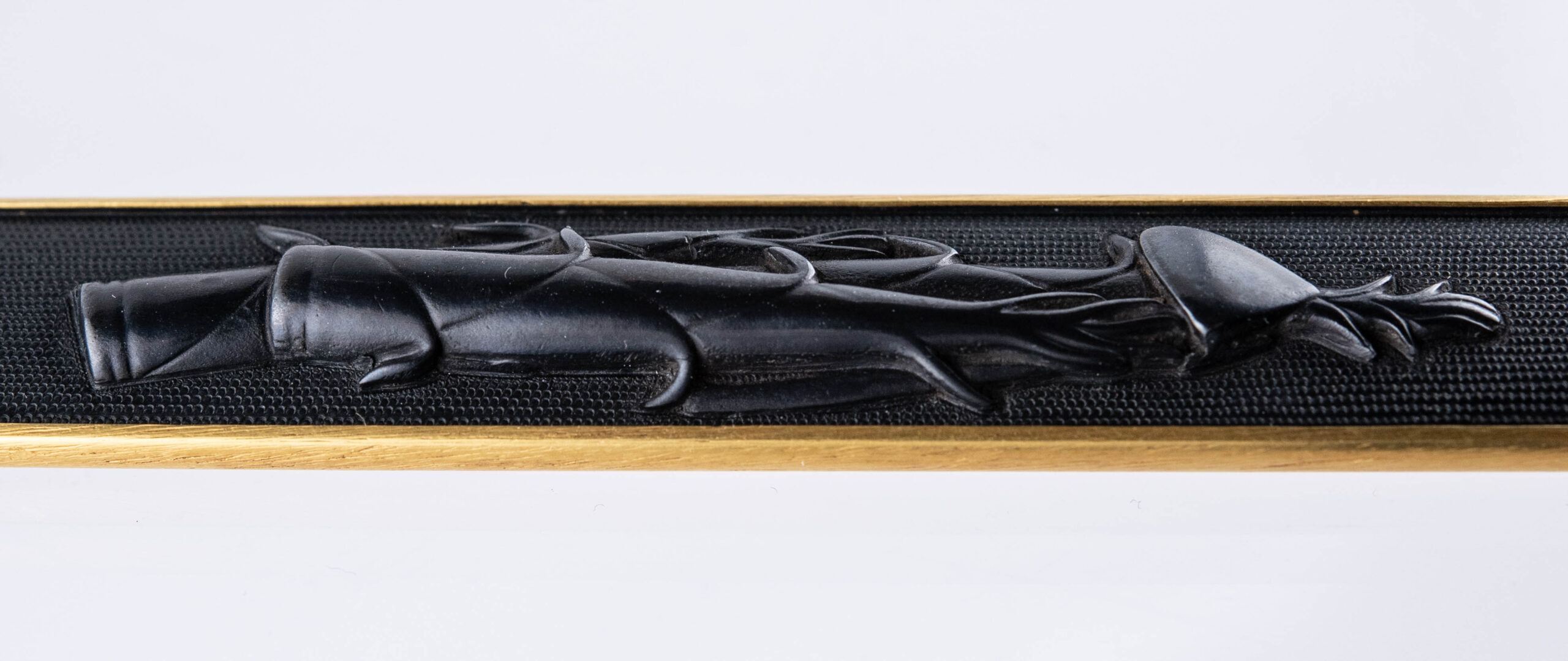
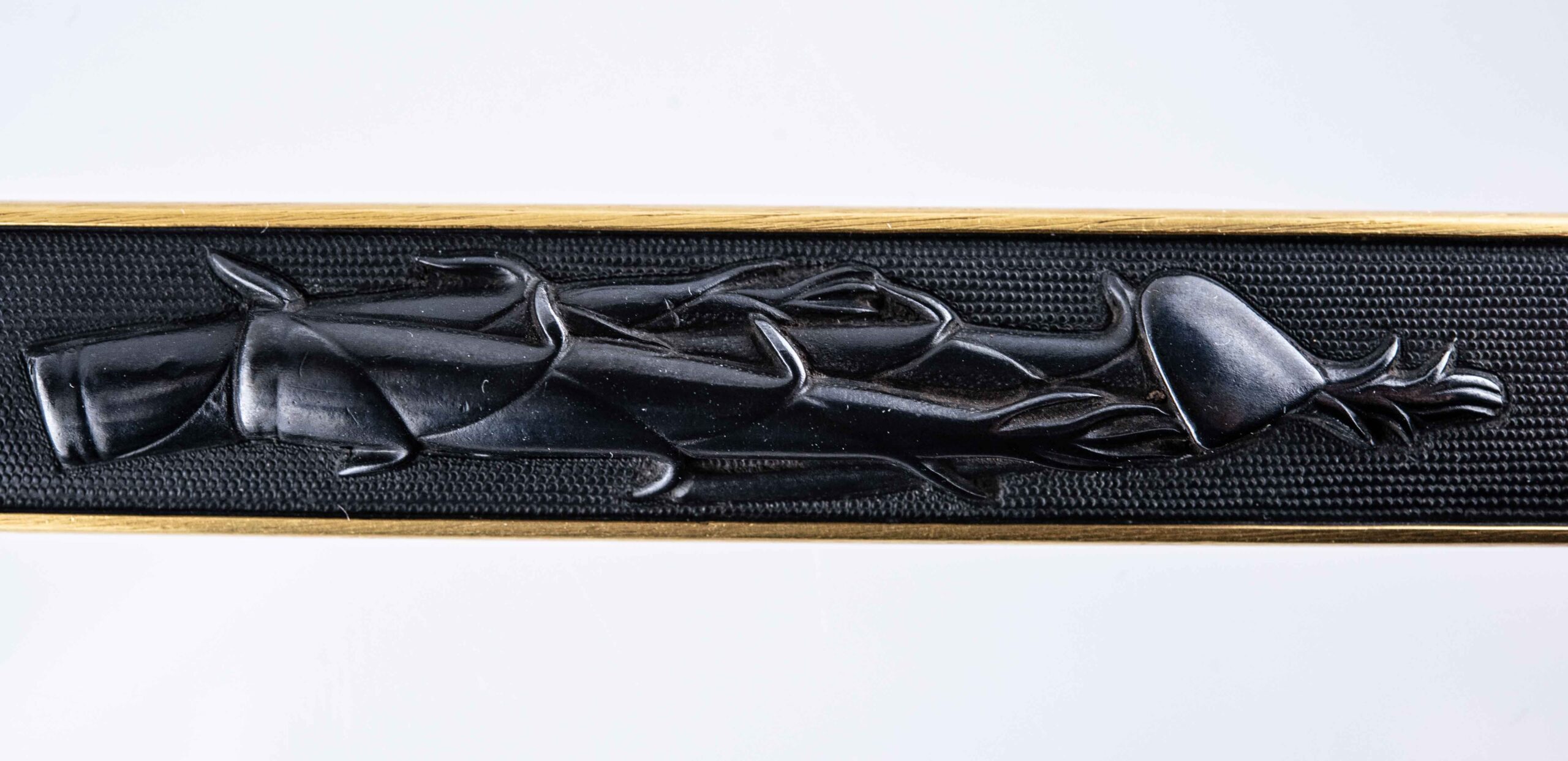
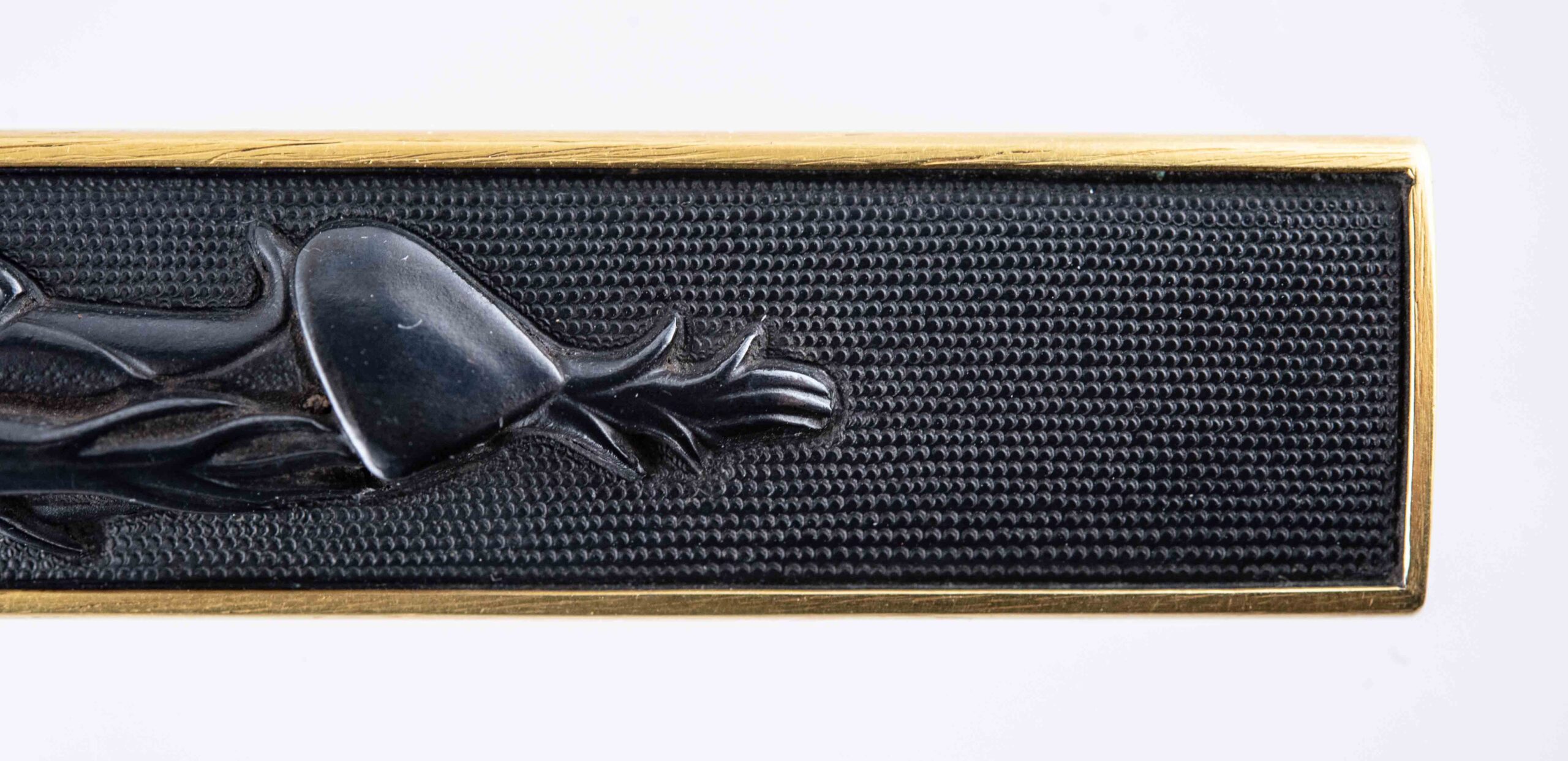
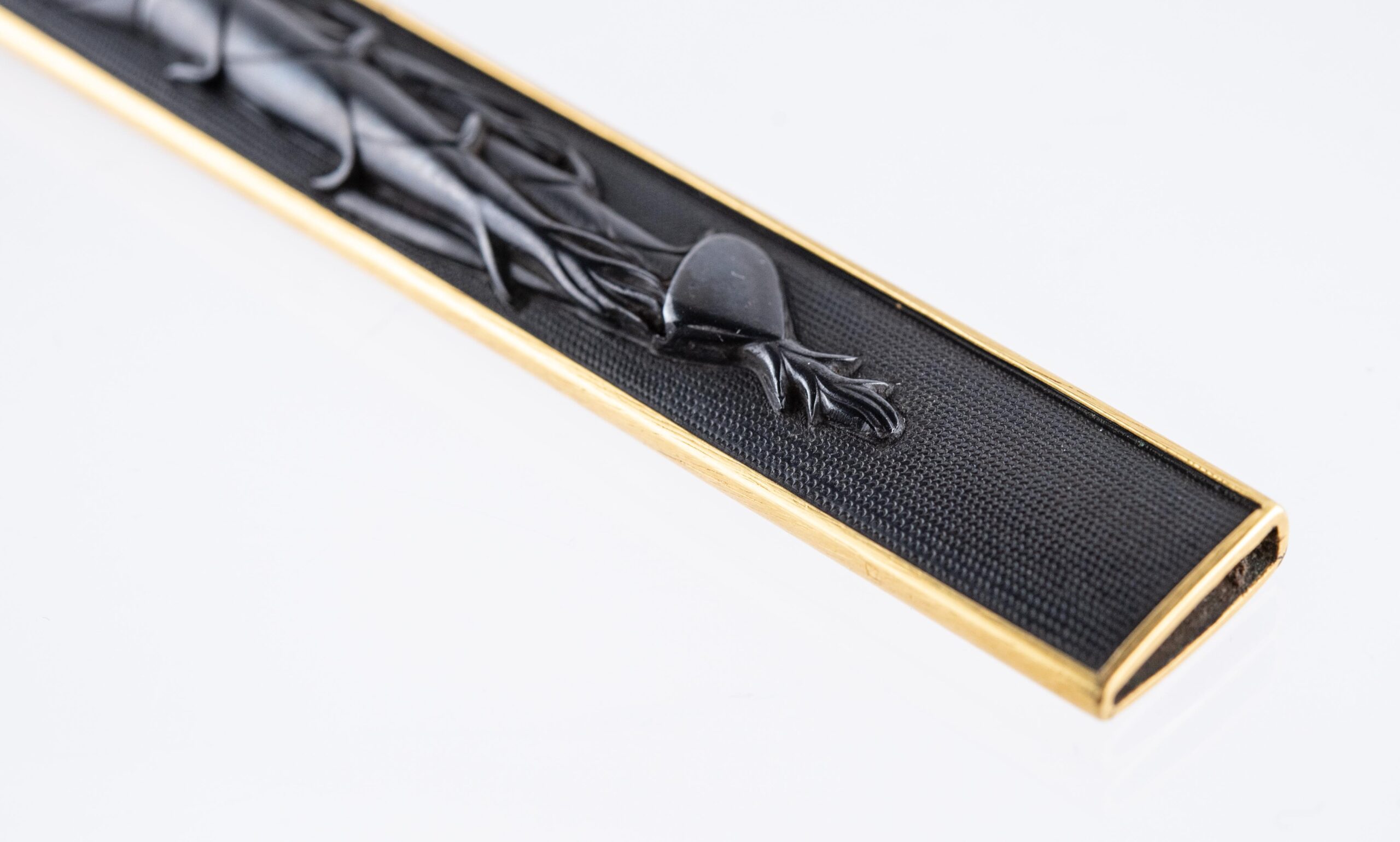
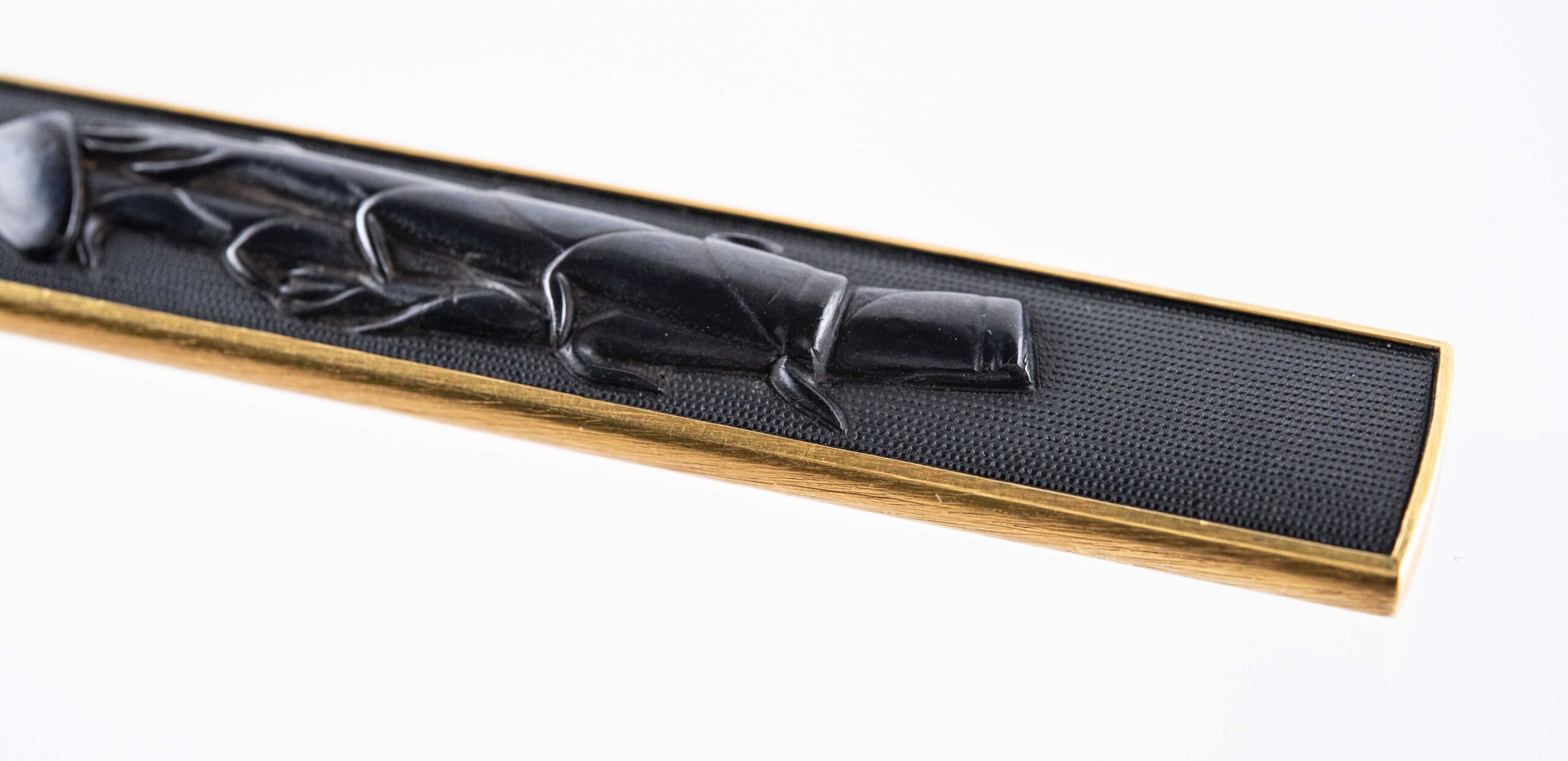
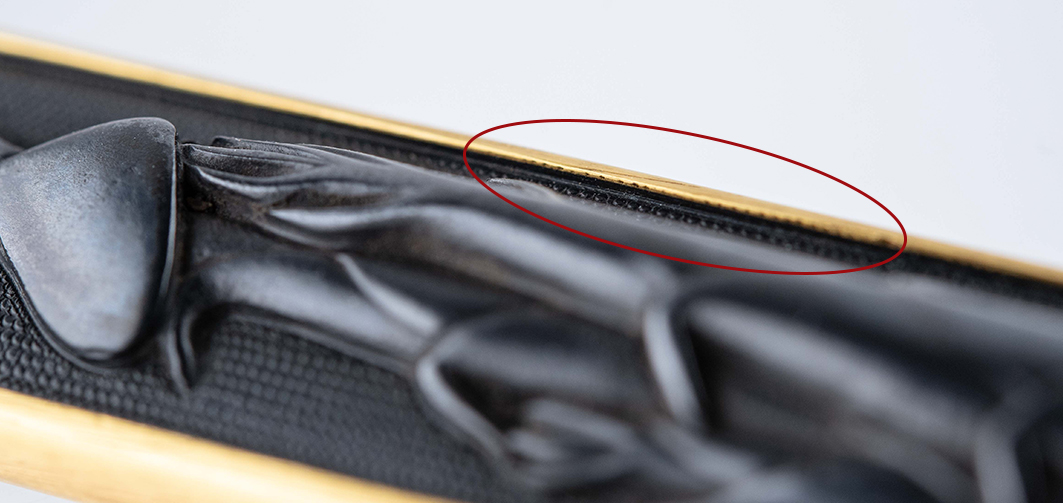
As already pointed out, this Kozuka has been preserved over 500 years with little or no wear. It was made from Shakudo covered with gold foil which bears the typical fine yasurime of the early Goto. The Mon is made in takabori technique where the design element is created from the base plate by hammering down the surrounding area. A very important trait and almost invisible to the naked eye are the small marks along the upper rim of the golden frame (see last picture). These are traces from the Nanako Chisel and are proof of the original condition of this Kozuka. First, they show that the Nanako was made after the gold was attached to the outside in the so called ‘Jibori Suki Sage’ technique, which was only used until the Momoyama jidai, and second they are proof that the gold has not been replaced later and the piece was never restored by a later master thus retaining its original appearance over the centuries.
Kozuka Design
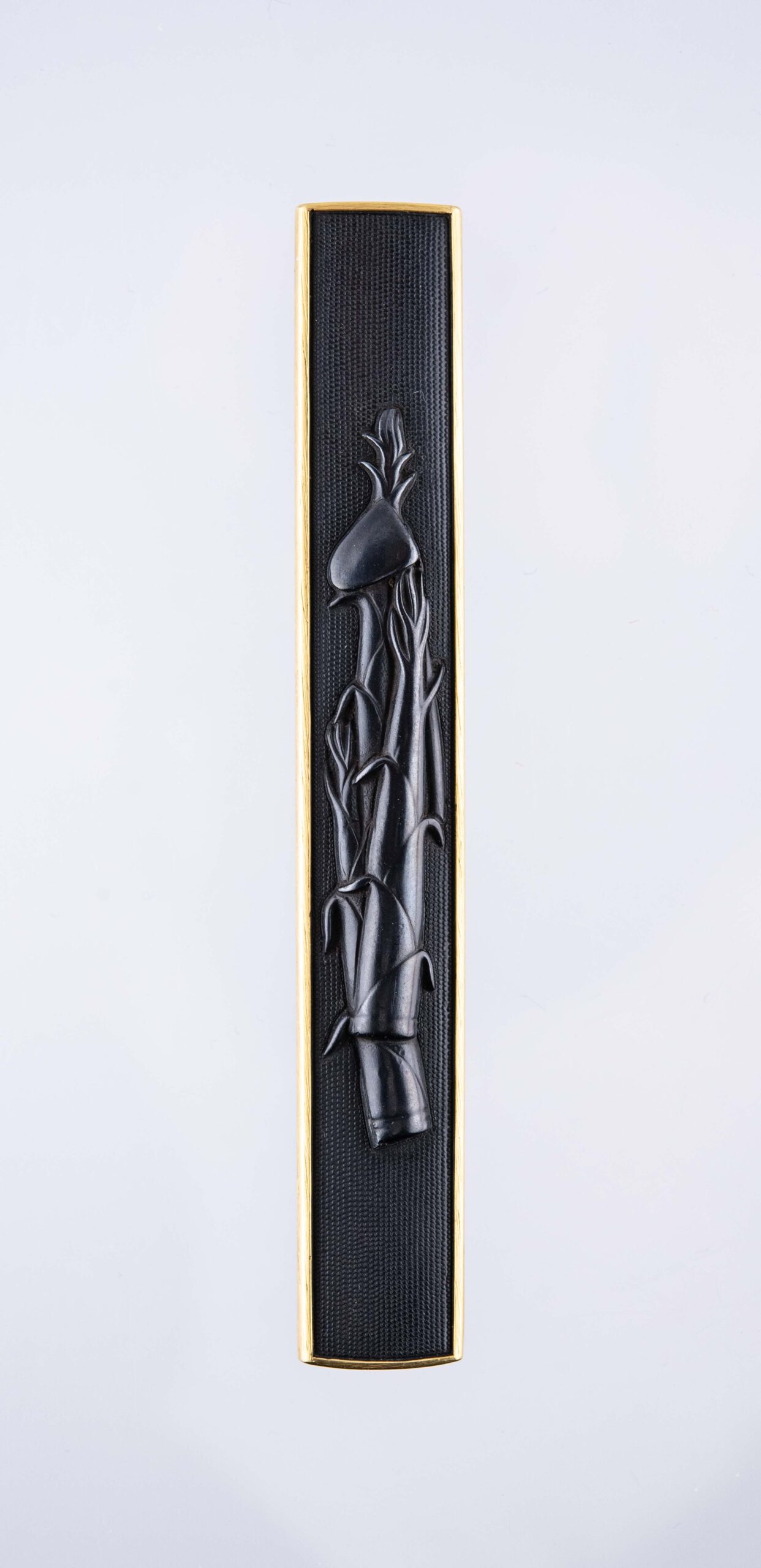
This Juyo Kozuka depicts young bamboo shoots, and a hoe. These two together represent the story of Moso, a well-known tale of filial piety that circulated widely in East Asia and is also found in Japanese tale collections. In this tale, a man named Moso is devoted to caring for his dying mother who craves for a last supper of bamboo shoots. Though it is winter and bamboo shoots do not grow in that season Moso travels miles through the snow to find some. When finally he starts digging in the snow, the gods show mercy and miraculously some young bamboo shoots appear. He heads home and fulfills his mother’s last wish.
It is rare to see these large designs by Sojo which cover almost the entire plate of the Kozuka and the high relief work creates a beautiful strong and elegant impression. The deep black shakudo speaks for a high percentage of gold of at least 5 % being used.
It is said that Kozuka made before the Edo period only depicted horizontal design elements and that Yokoya Somin was the first master to create vertical Kozuka designs. However, as we can also see from the direction the Kozuka is depicted in the Juyo paper, this piece might already have been made with a vertical design long before Somin was even born.
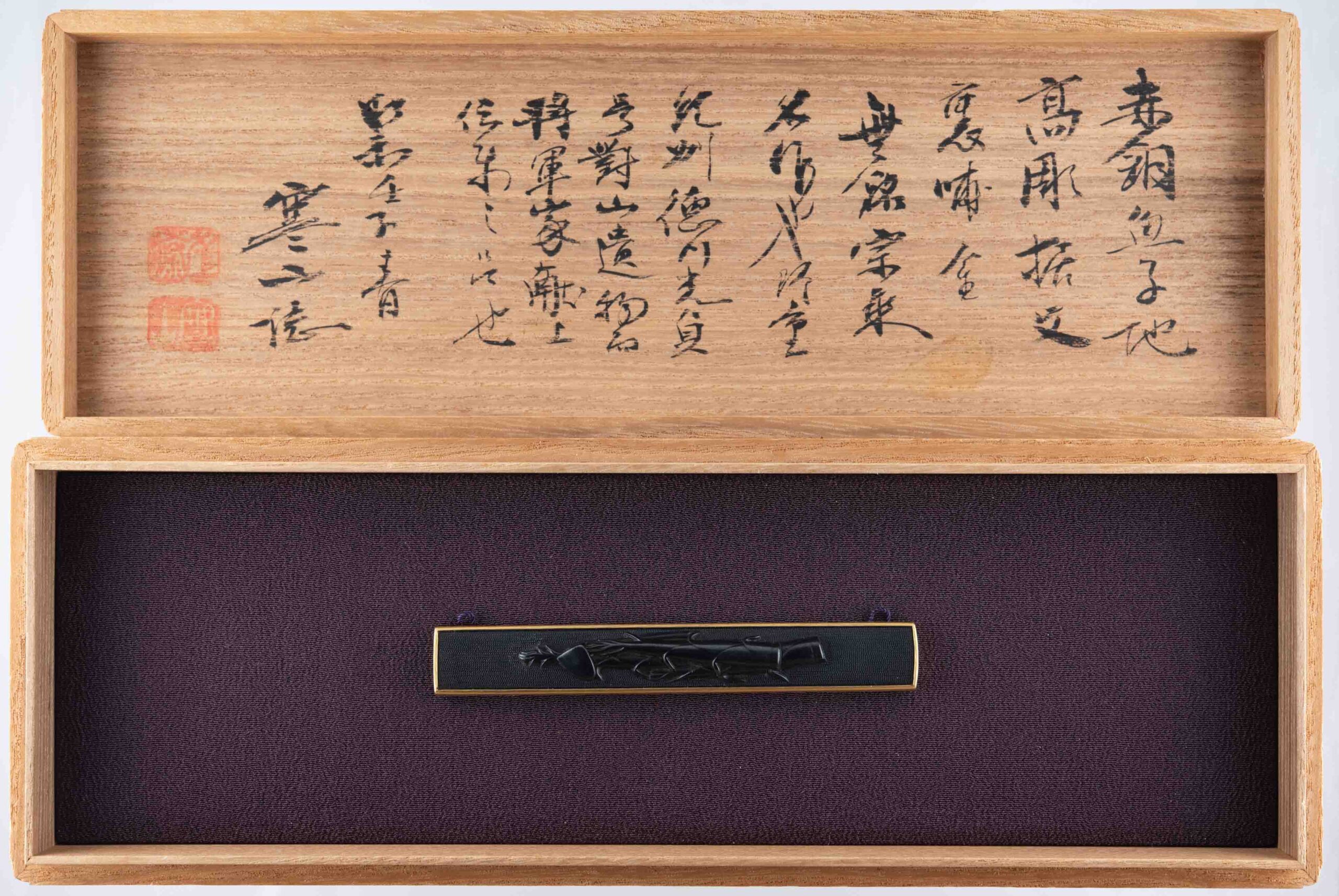
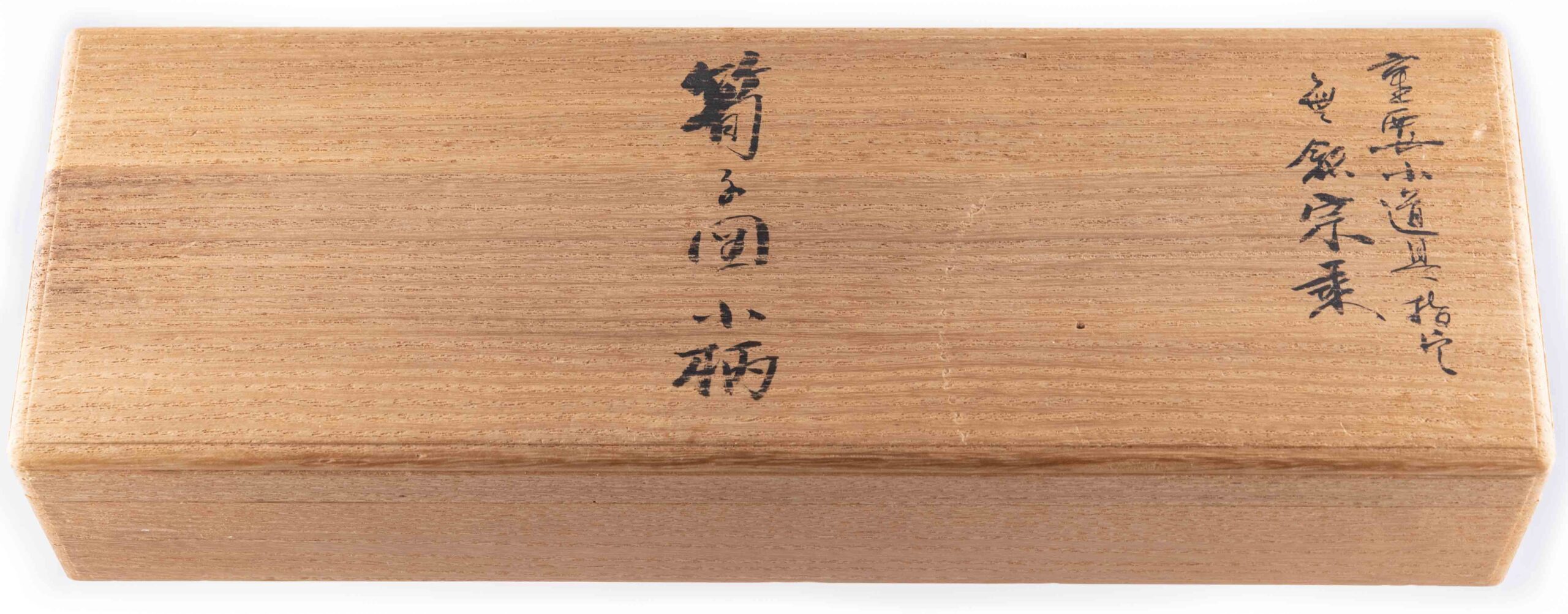
This Kozuka comes with an old high quality Kiri wood box which was inscribed with a Hakogaki by Sato Kanzan one of the former Directors of NBTHK.
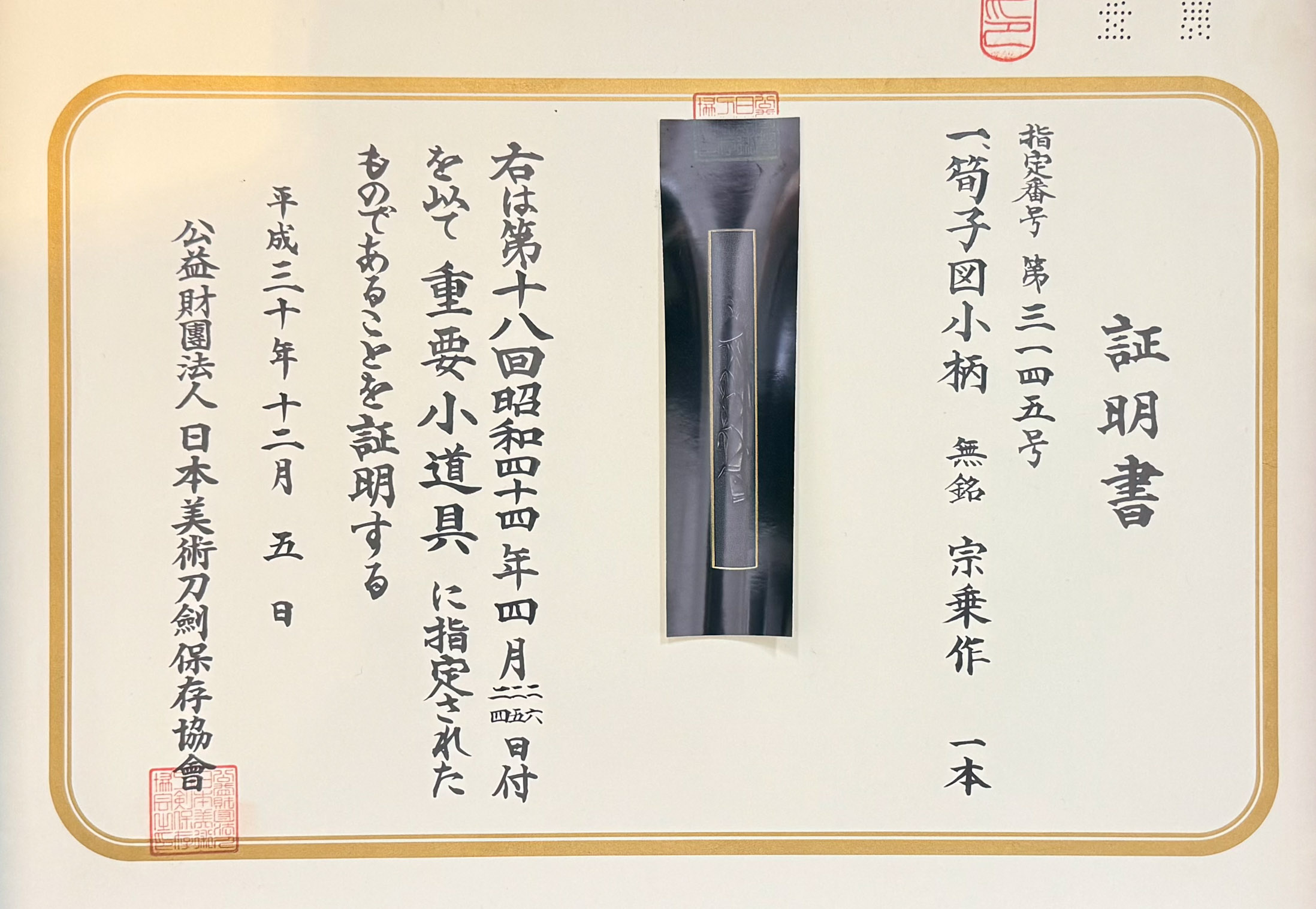
The historical value, the provenience and its condition make this Kozuka a true masterpiece and rare artwork which very well deserves the rank of Juyo Tosogu. This is the third Kozuka from Sojo ever to receive the Juyo Rank in the 18th Juyo Shinsa 1969, April 24.
Read more about the Goto family of sword fitting artists here: https://tsuba.info/goto/
Size: 9.65 cm x 1.4 cm