This refined Tsuba is a work by Wada Isshin (1814–1882), one of the distinguished students of Goto Ichijo. Isshin worked during the late Edo and early Meiji periods and became known for his highly accomplished sword fittings. The NBTHK awarded this piece Tokubetsu Hozon certification.
Workmanship and Design
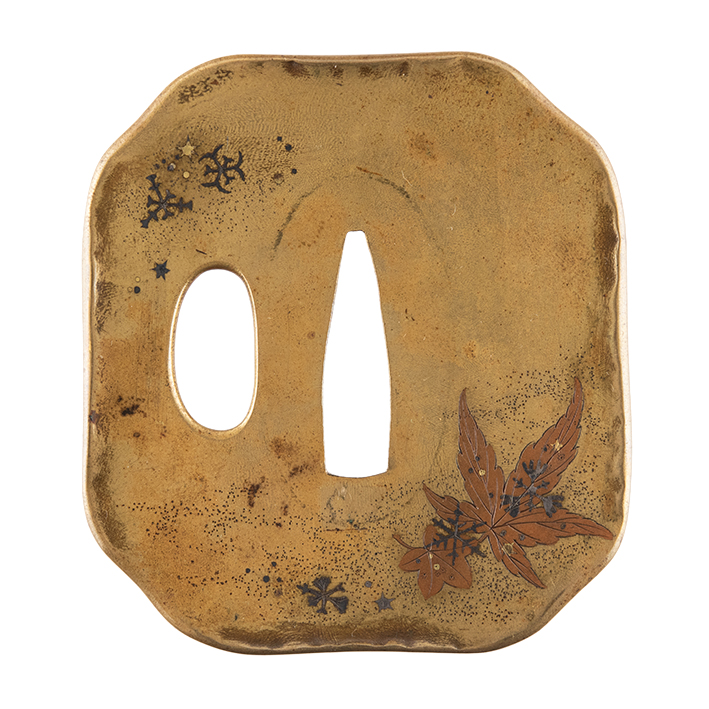
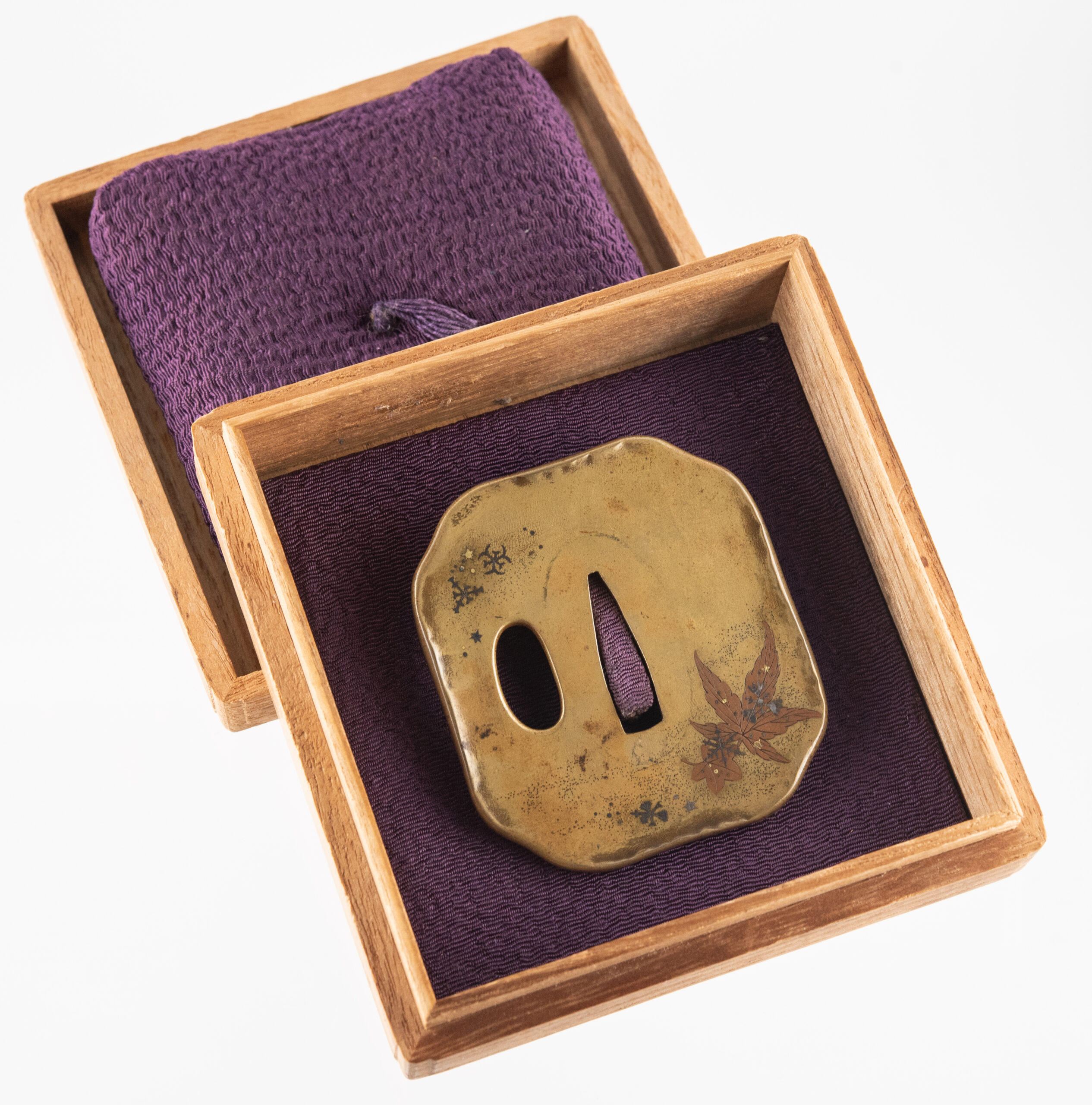
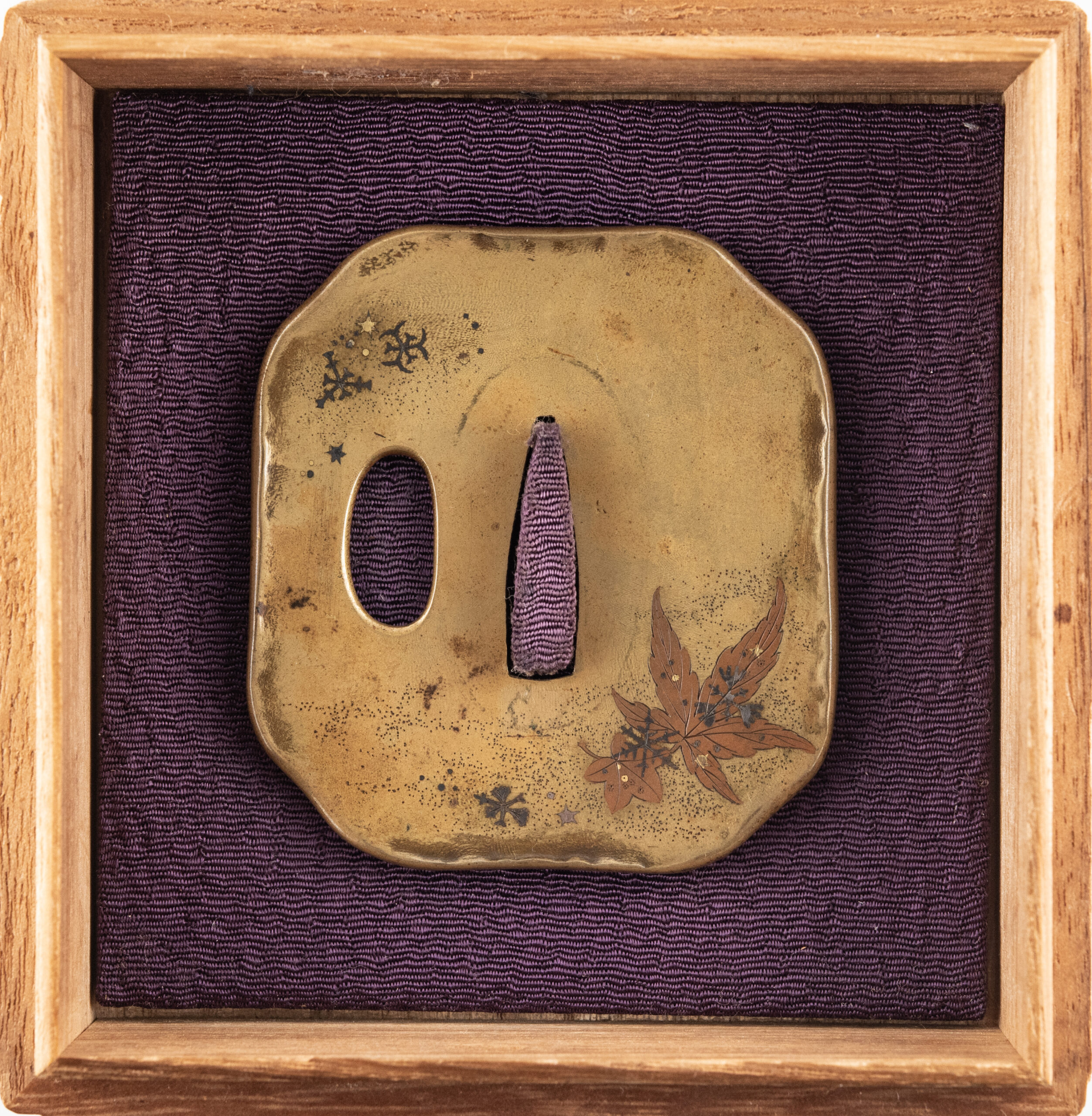
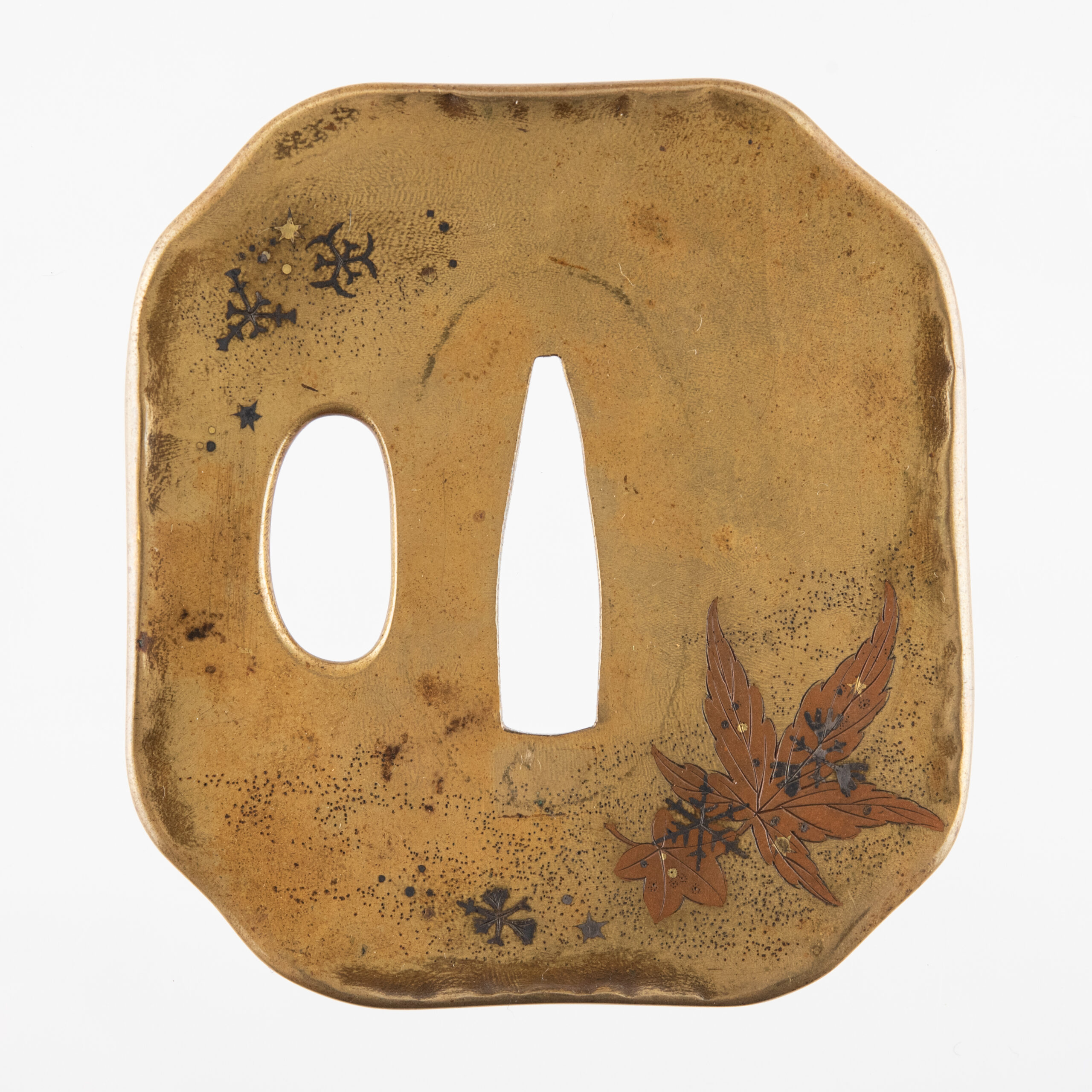
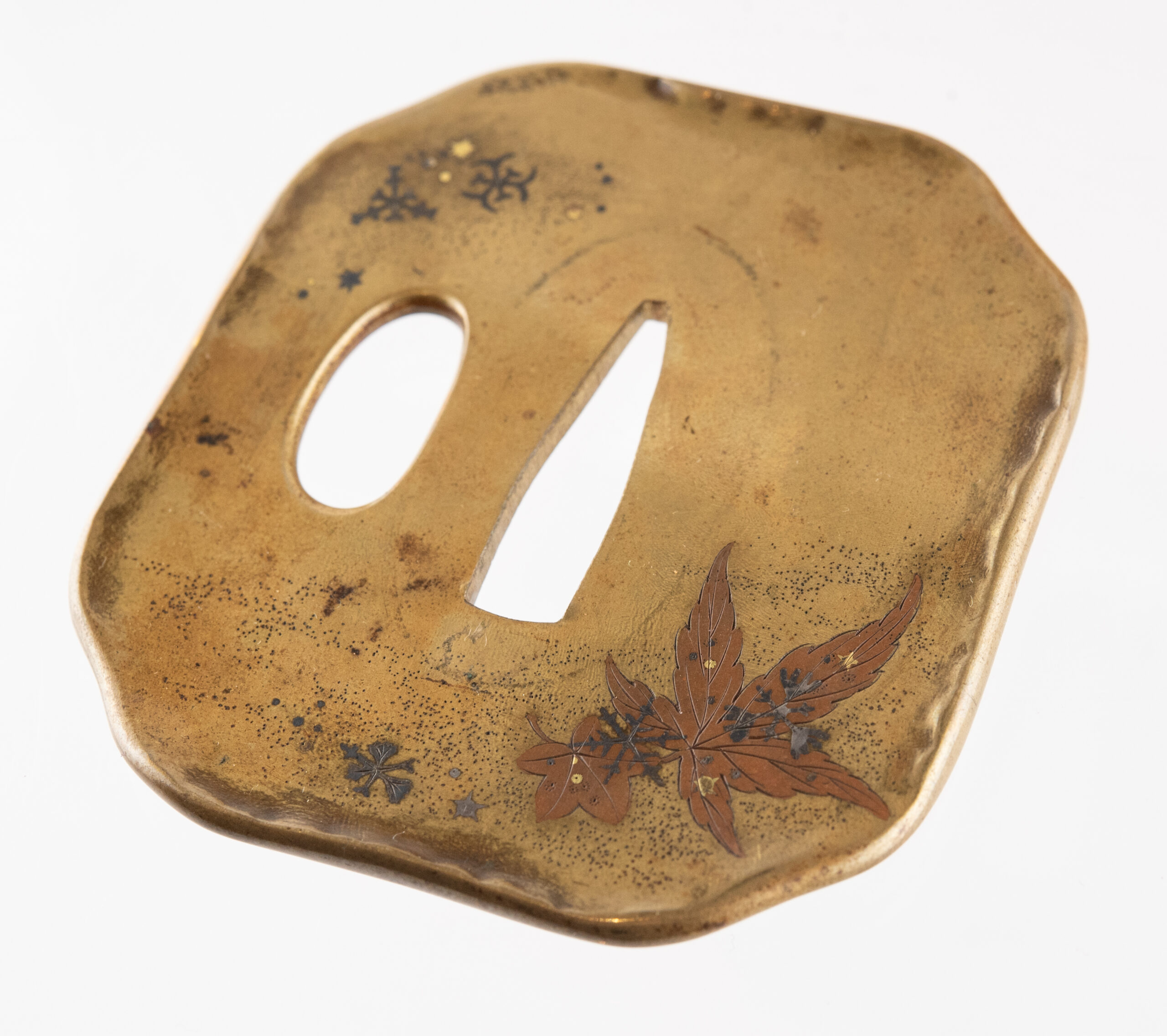
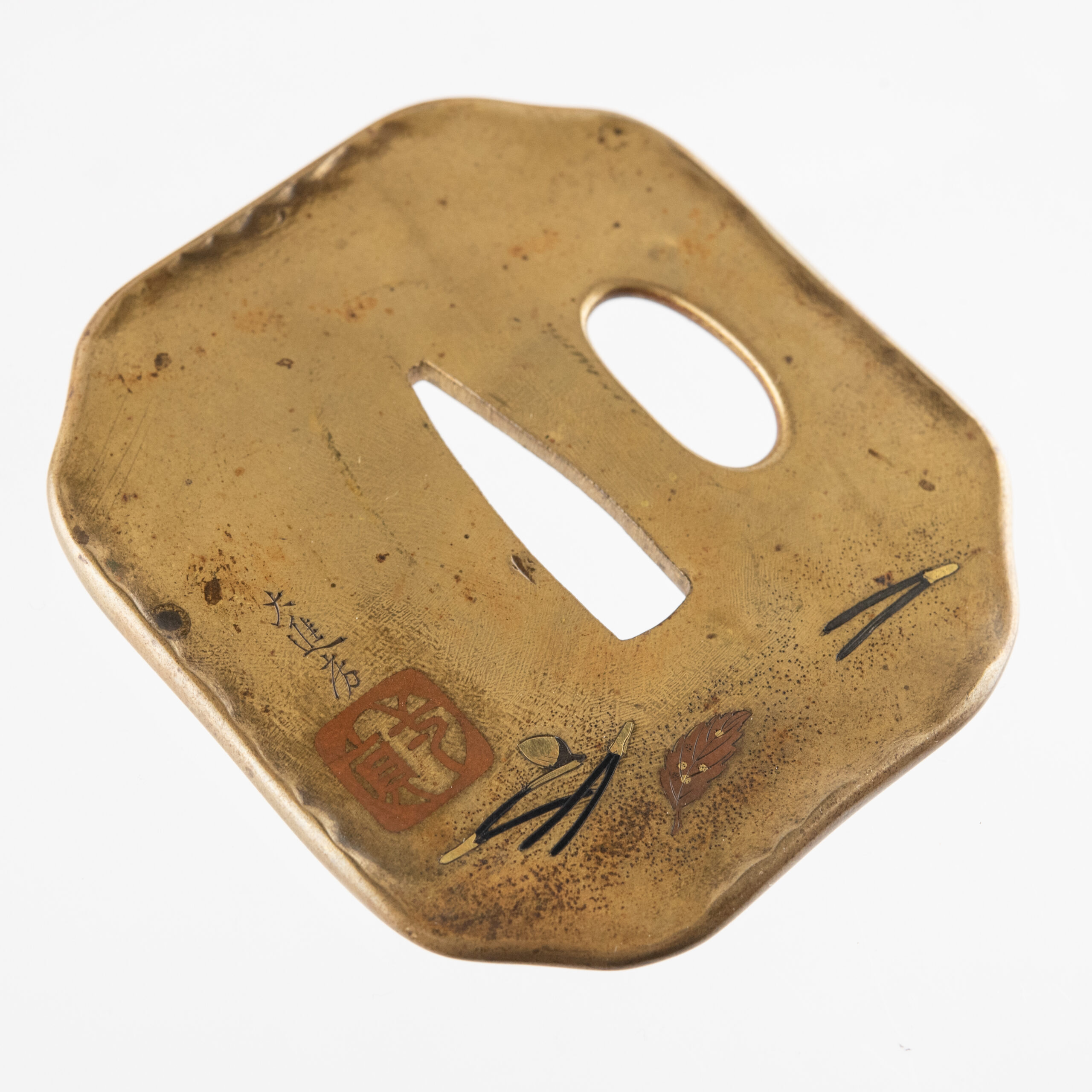
The Tsuba is made of sentoku and has developed an attractive greenish-brown patina. Its dimensions correspond to a Wakizashi-size Tsuba. The plate has a kakugata form with sumikiri corners, giving it an almost octagonal outline while retaining a distinctly rectangular appearance. The thin plate rises gently toward the rim, creating a subtle three-dimensional profile. It has one kozuka-hitsuana and is otherwise solid.
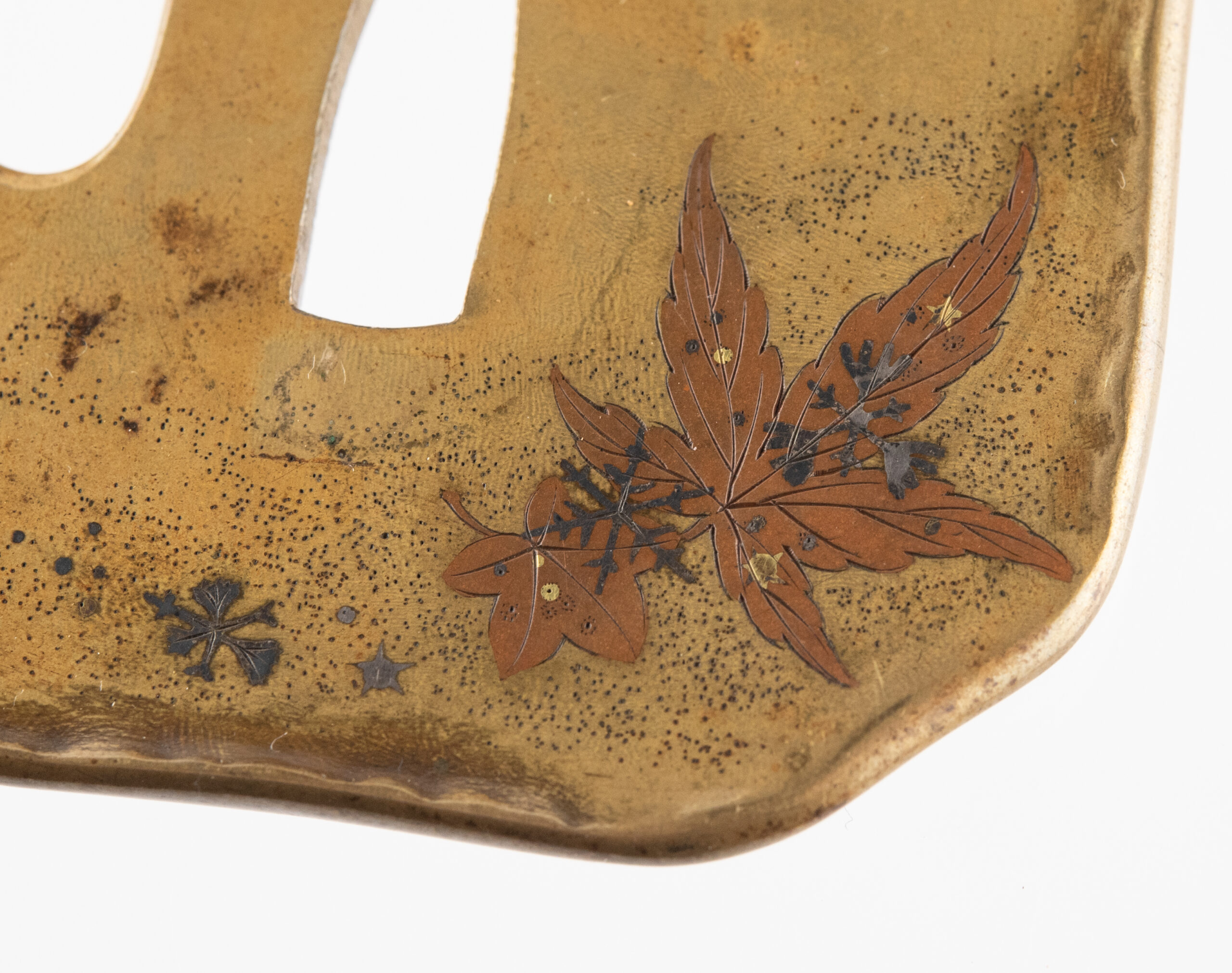
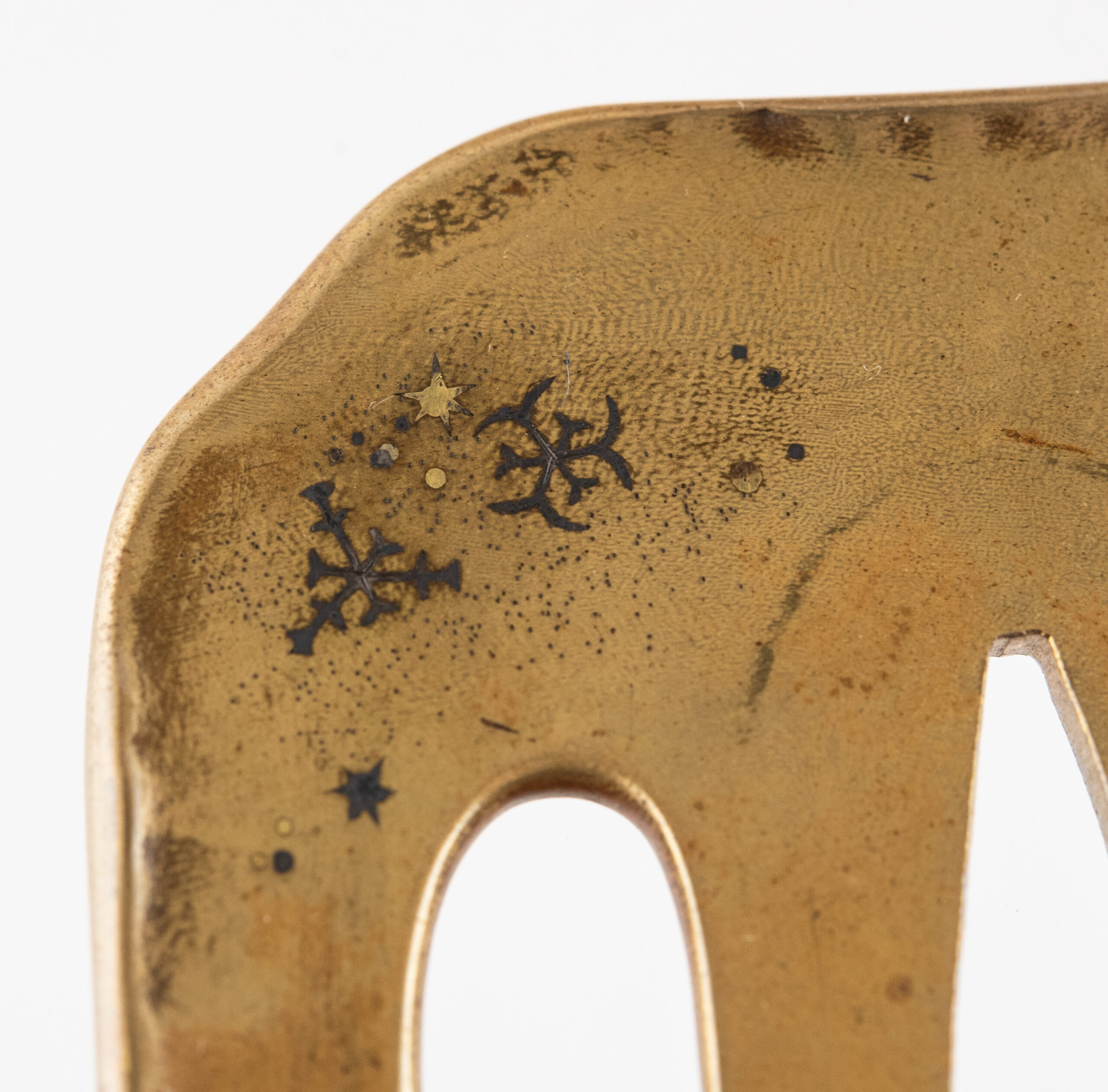
On the lower right of the front, the artist inlaid two autumn leaves in copper. One is a maple leaf, while the second is a rounded five-lobed leaf whose species remains unidentified. Delicate silver snowflakes lie across the maple leaf. Additional silver snowflakes and minute gold inlays appear toward the upper left.
The juxtaposition of autumn foliage and snow suggests the arrival of early snow in late autumn. Isshin executed the decoration predominantly in delicate hirazogan, or flat inlay, allowing the design to remain closely integrated with the smooth sentoku surface.
Reverse and Signature
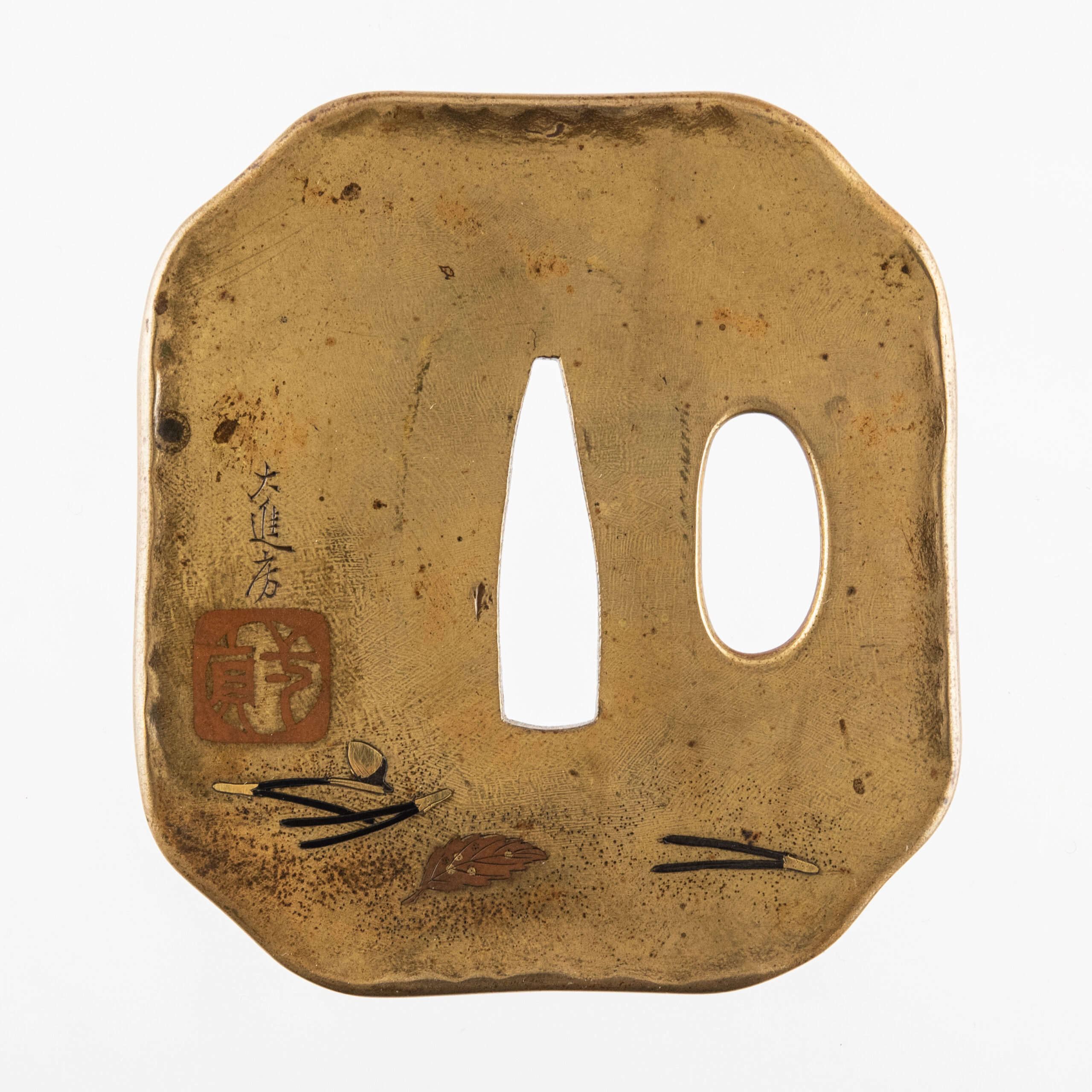
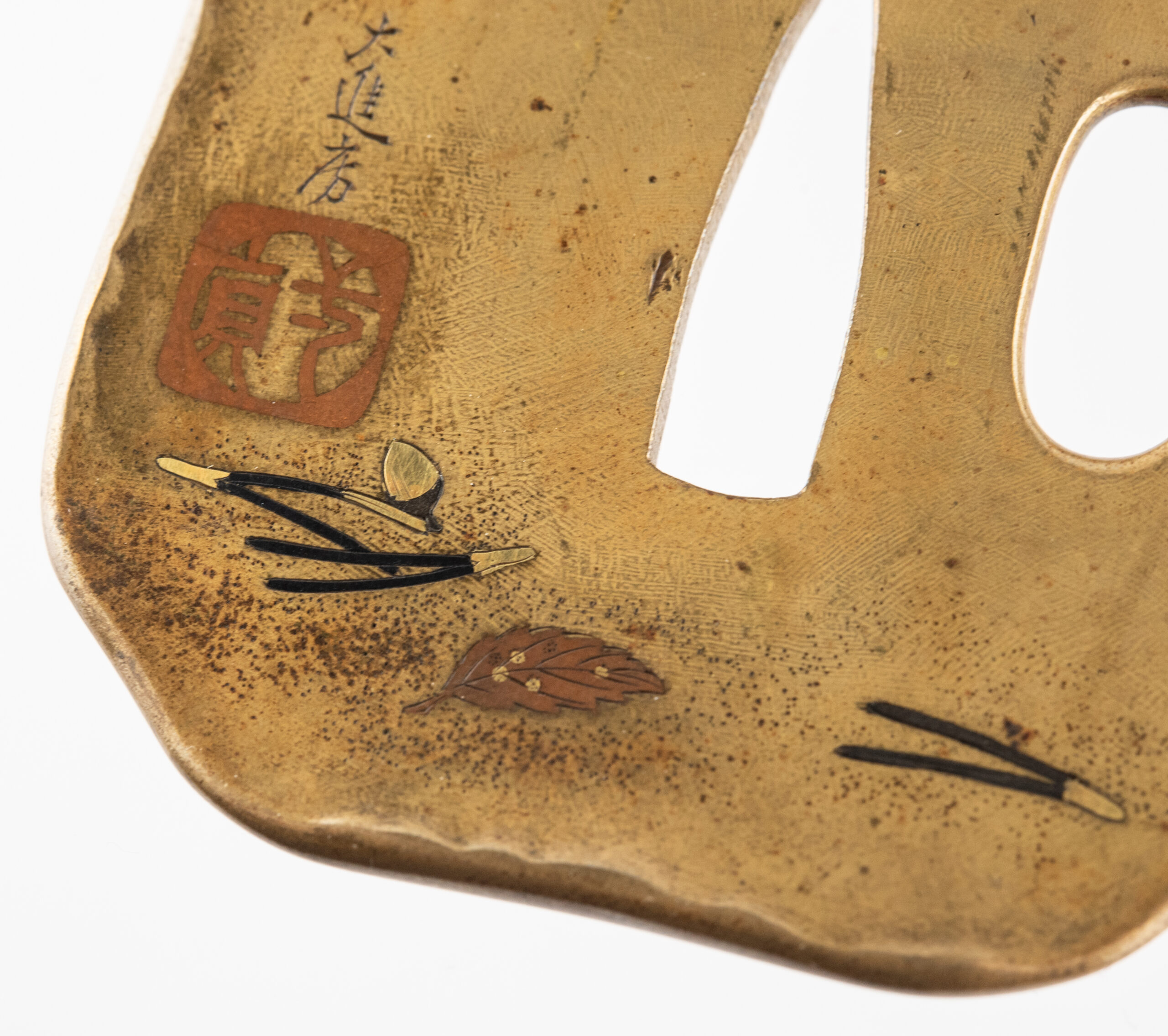
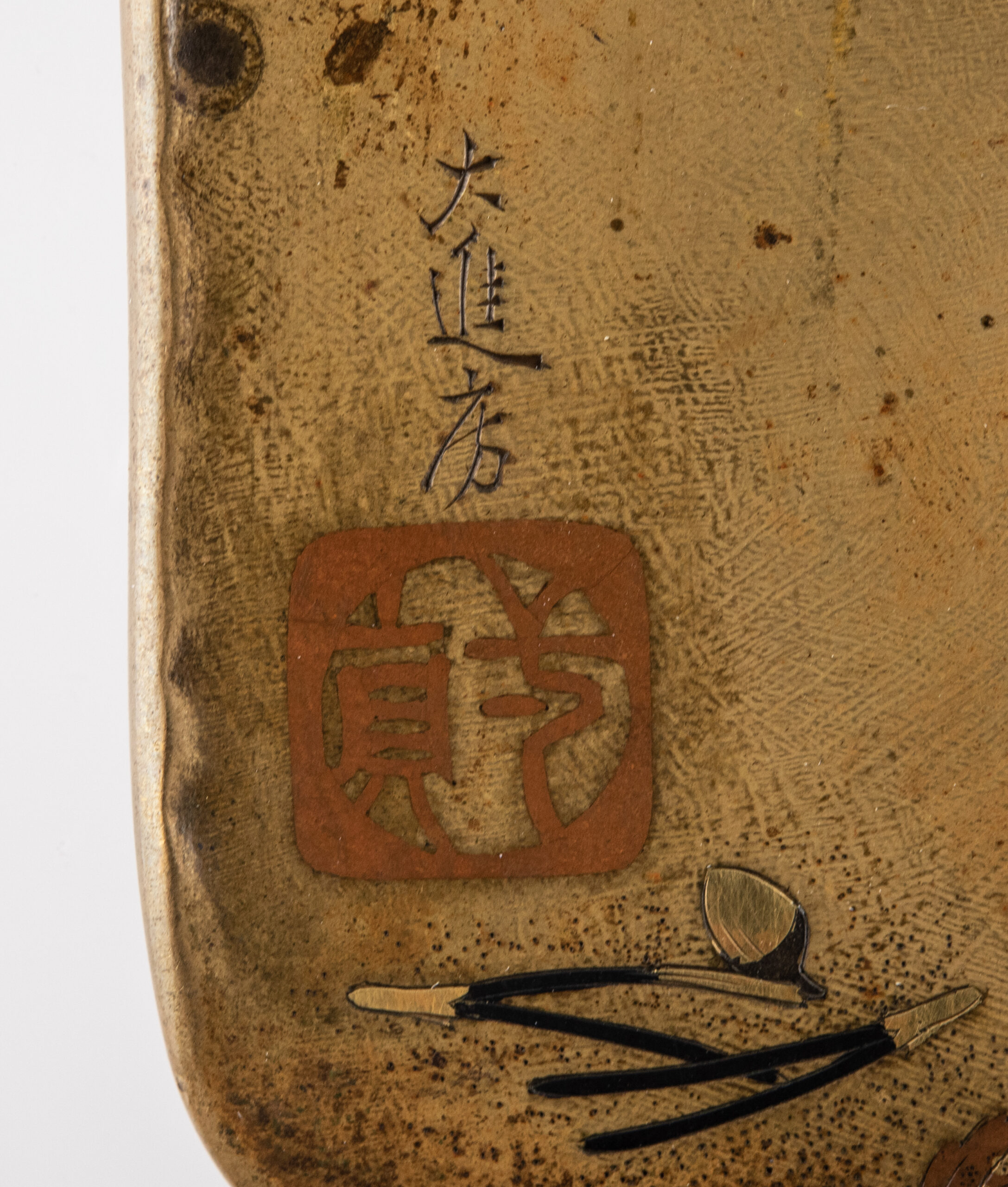
The reverse carries Isshin’s go Daishinho on the left, with an Isshin seal rendered in copper below.
The lower area features an acorn in gold and shakudo, accompanied by scattered matsuba (pine needles) and another red autumn leaf. Together, these details continue the seasonal theme of the front.
About Wada Isshin
Wada Isshin (1814–1882) was born in Kyoto. He first studied under Fujiki Kyubei, a craftsman associated with Goto-style fittings, and later entered the school of Goto Ichijo. Ichijo permitted him to use the character “Ichi,” after which he adopted the name Isshin. He used several art names during his career, including Daishinho, Gekkindo, Yusai and Bizan, and became one of the notable metalworkers of the Ichijo tradition.
Details
Artist: Wada Isshin (1814–1882)
Period: Late Edo period
Certificate: NBTHK Tokubetsu Hozon
Material: Sentoku with copper, silver, gold and shakudo inlay
Technique: Hirazogan
Shape: Kakugata with sumikiri corners
Length: 64 mm / 2.52 in
Width: 59 mm / 2.32 in
Thickness: 2.5 mm / 0.10 in
和田一真 鍔
後藤一乗門の名工・和田一真(1814–1882)による、幕末期の上質な鍔です。一真は江戸時代末期から明治時代初期に活躍した装剣金工で、本作にはNBTHK特別保存刀装具鑑定書が付属します。
形状と地金
地金は宣徳で、緑褐色の美しい古色を呈しています。寸法は脇差用の鍔として適した大きさです.形状は角形を基調としながら四隅を切った隅切角形で、長方形に近い印象を保ちながら八角形状の輪郭を形成しています。薄手の地板は耳に向かってわずかに盛り上がり、穏やかな立体感を見せます。小柄櫃孔を一つ備え、その他は地透かしのない構成です。
紅葉と初雪の意匠
表の右下には、銅象嵌による二枚の秋葉が配されています。一枚は楓で、もう一枚は丸みを帯びた五裂の葉ですが、樹種は未詳です。楓の上には銀で繊細な雪華が象嵌されています。また、左上にも銀の雪華と微細な金象嵌が見られます。
秋の葉と雪を組み合わせた意匠は、晩秋に訪れる初雪を表現したものと考えられます。文様の多くは平象嵌によって表され、滑らかな宣徳地と一体化した繊細な表現となっています。
裏面と銘
裏面左側には一真の号「大進房」があり、その下には銅象嵌による「一真」の印があります。
下部には金と赤銅で表した団栗、散らされた松葉、さらに赤い秋葉が配され、表面から続く秋の季節感を構成しています。
和田一真について
和田一真(1814–1882)は京都に生まれ、初め後藤家系の金工・藤木久兵衛に学び、その後、後藤一乗の門人となりました。一乗から「一」の字を許され、一真と名乗ったと伝えられています。大進房、月琴堂、幽斎、眉山など複数の号を用い、一乗門を代表する金工の一人として知られています。
作品詳細
作者:和田一真(1814–1882)
時代:江戸時代末期
鑑定書:NBTHK 特別保存刀装具
材質:宣徳地、銅・銀・金・赤銅象嵌
技法:平象嵌
形状:隅切角形
縦:64 mm / 2.52 in
横:59 mm / 2.32 in
厚さ:2.5 mm / 0.10 in