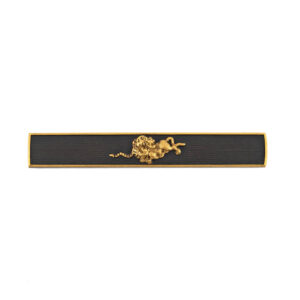
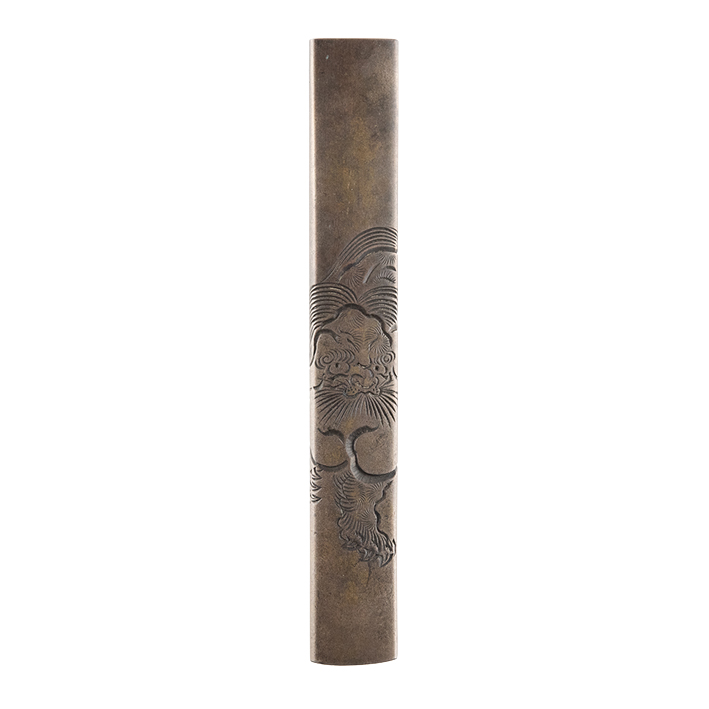
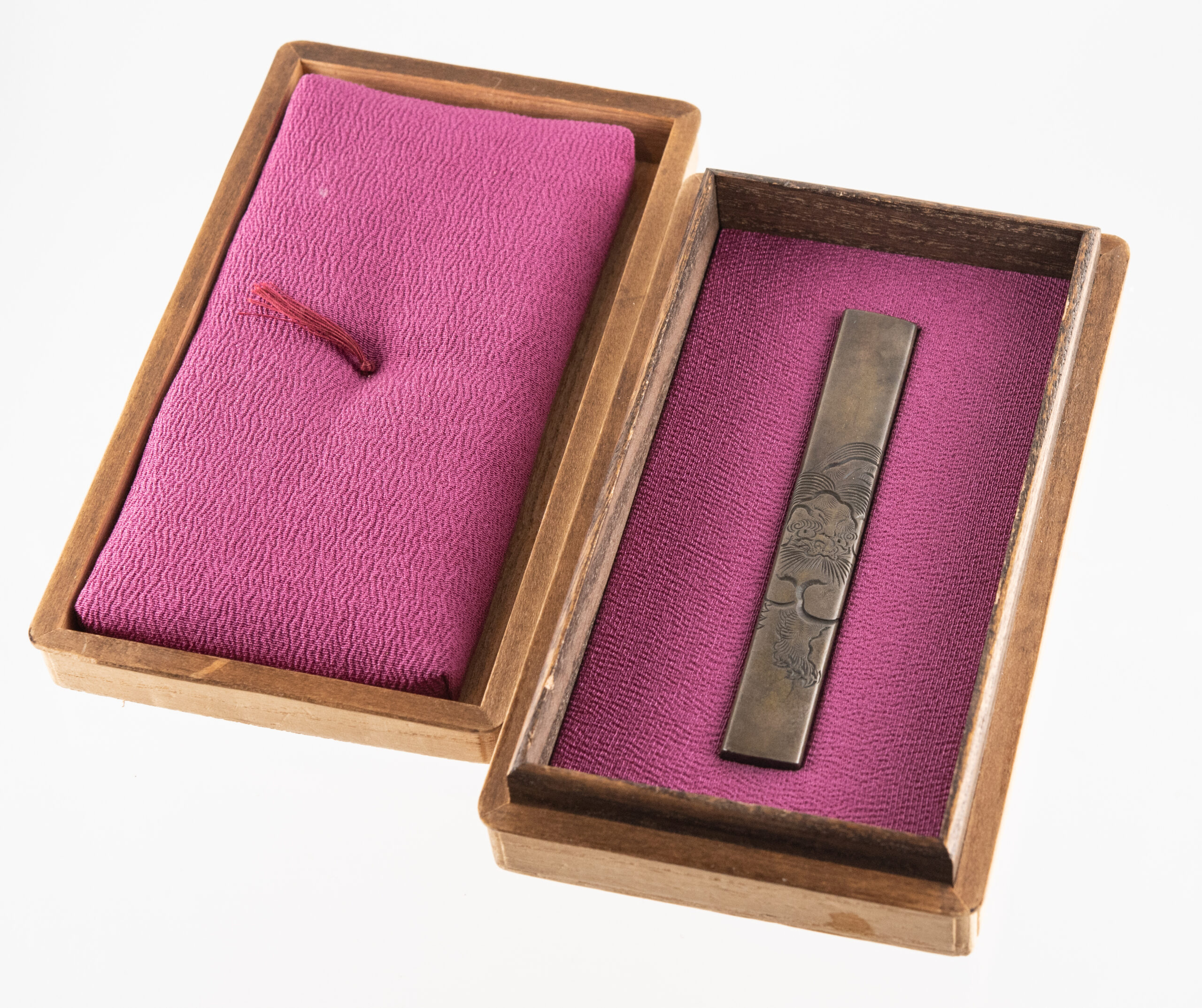
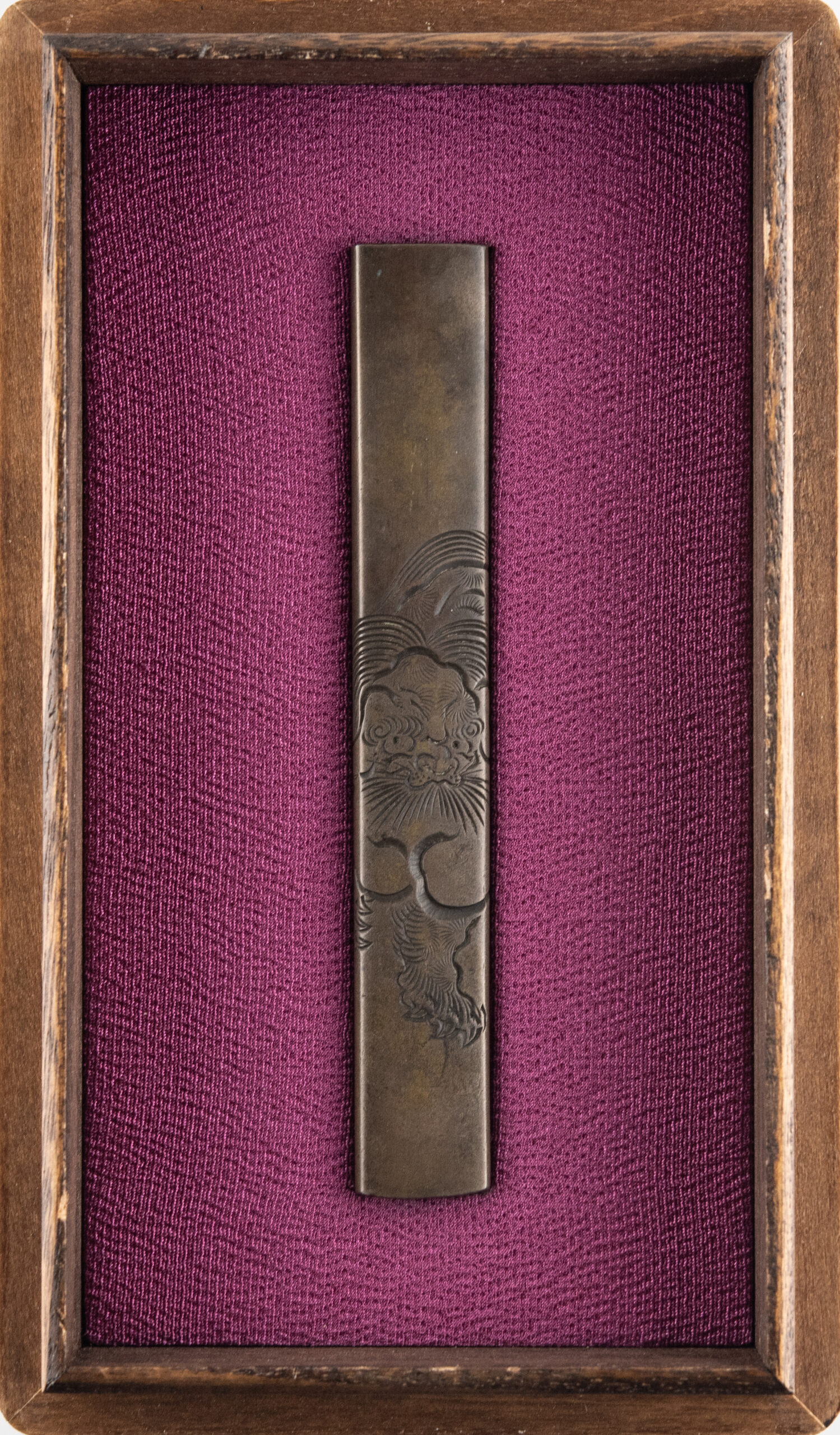
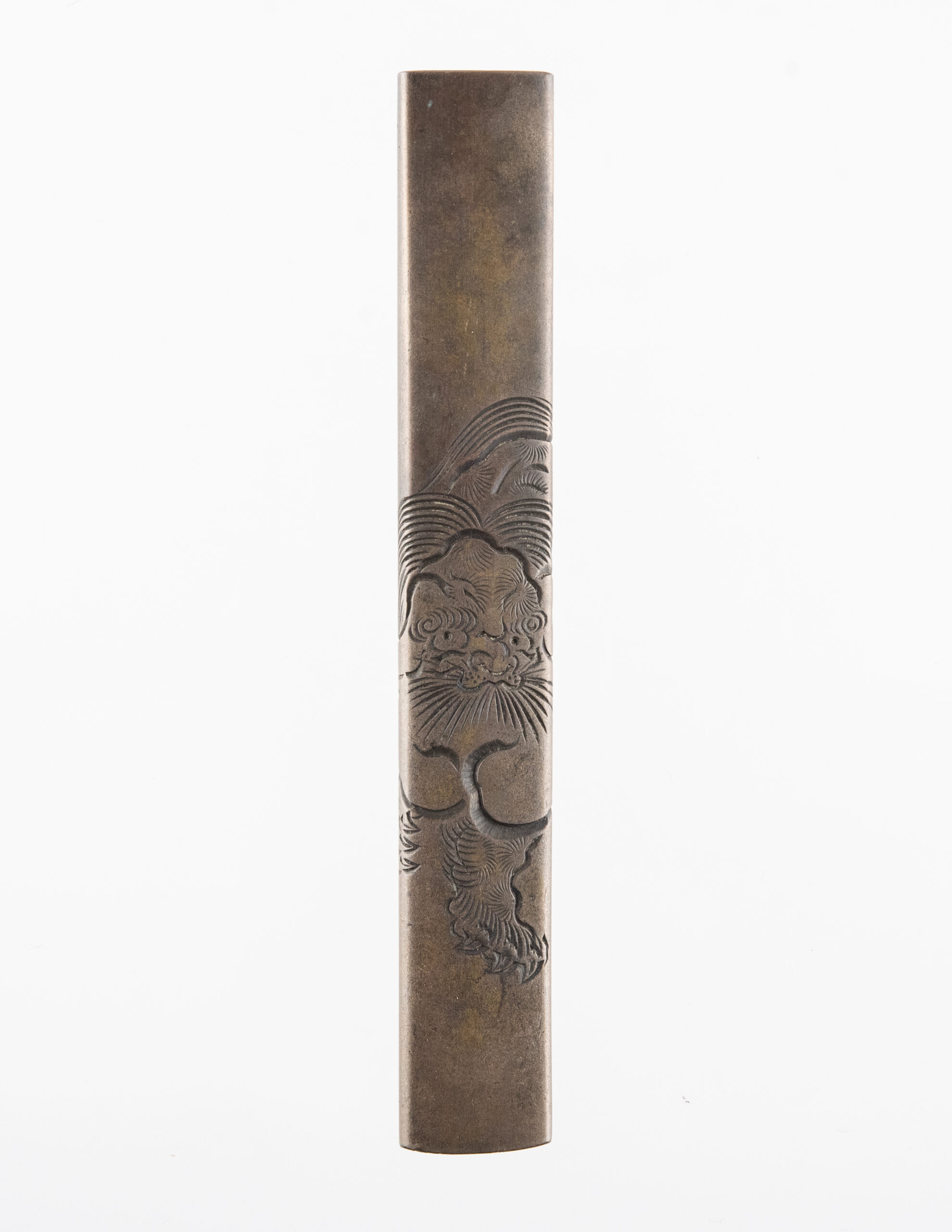
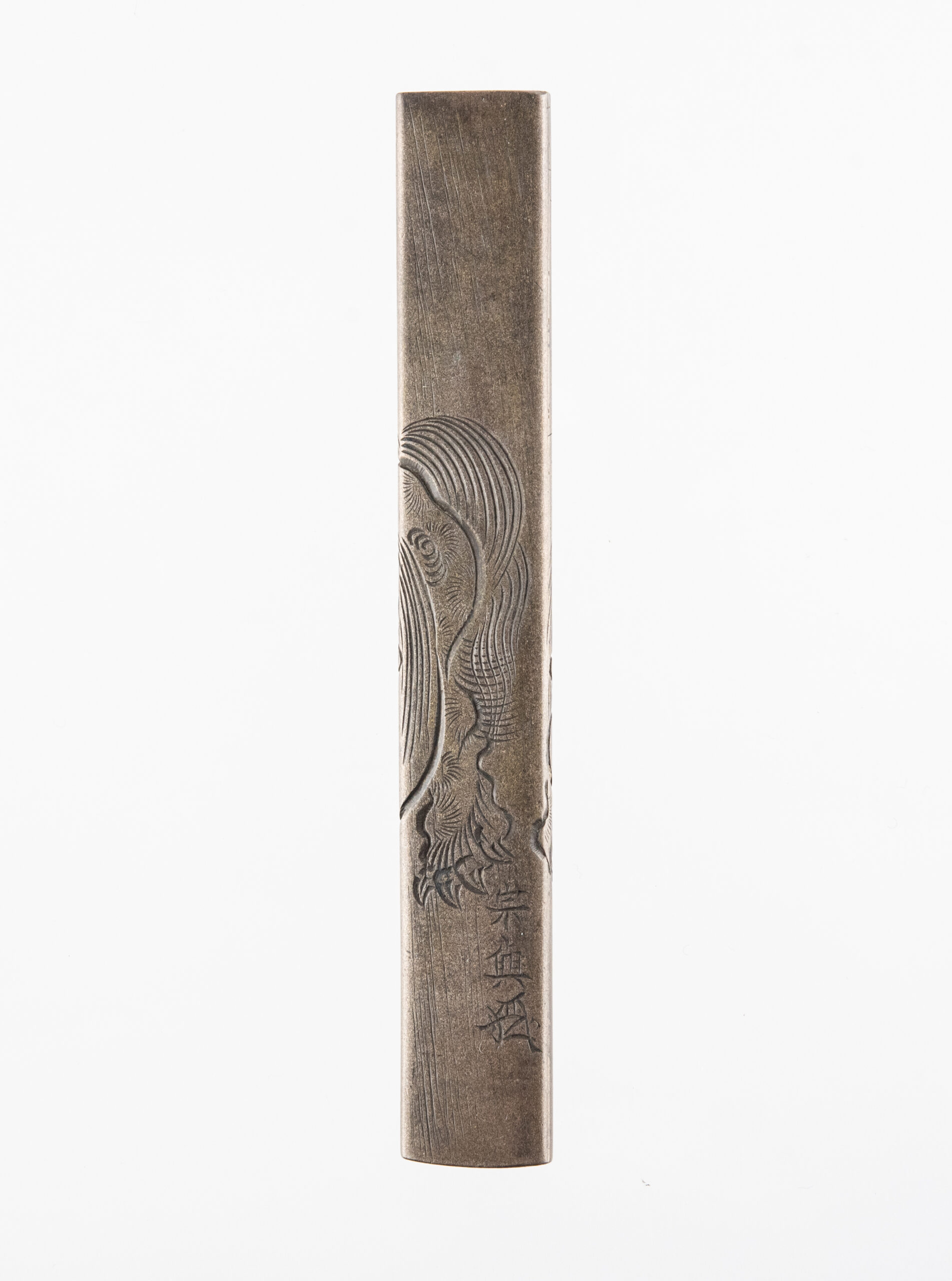
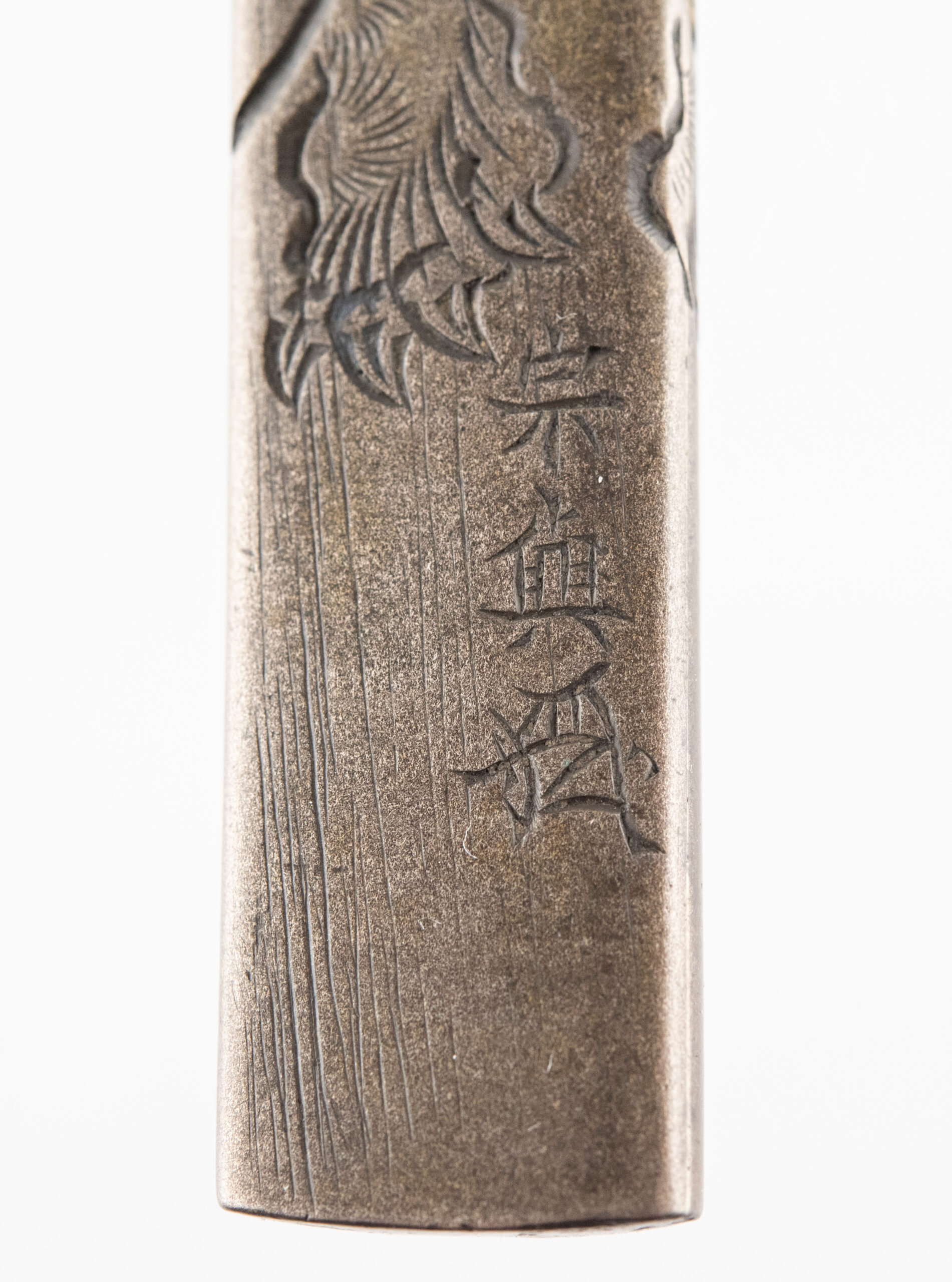
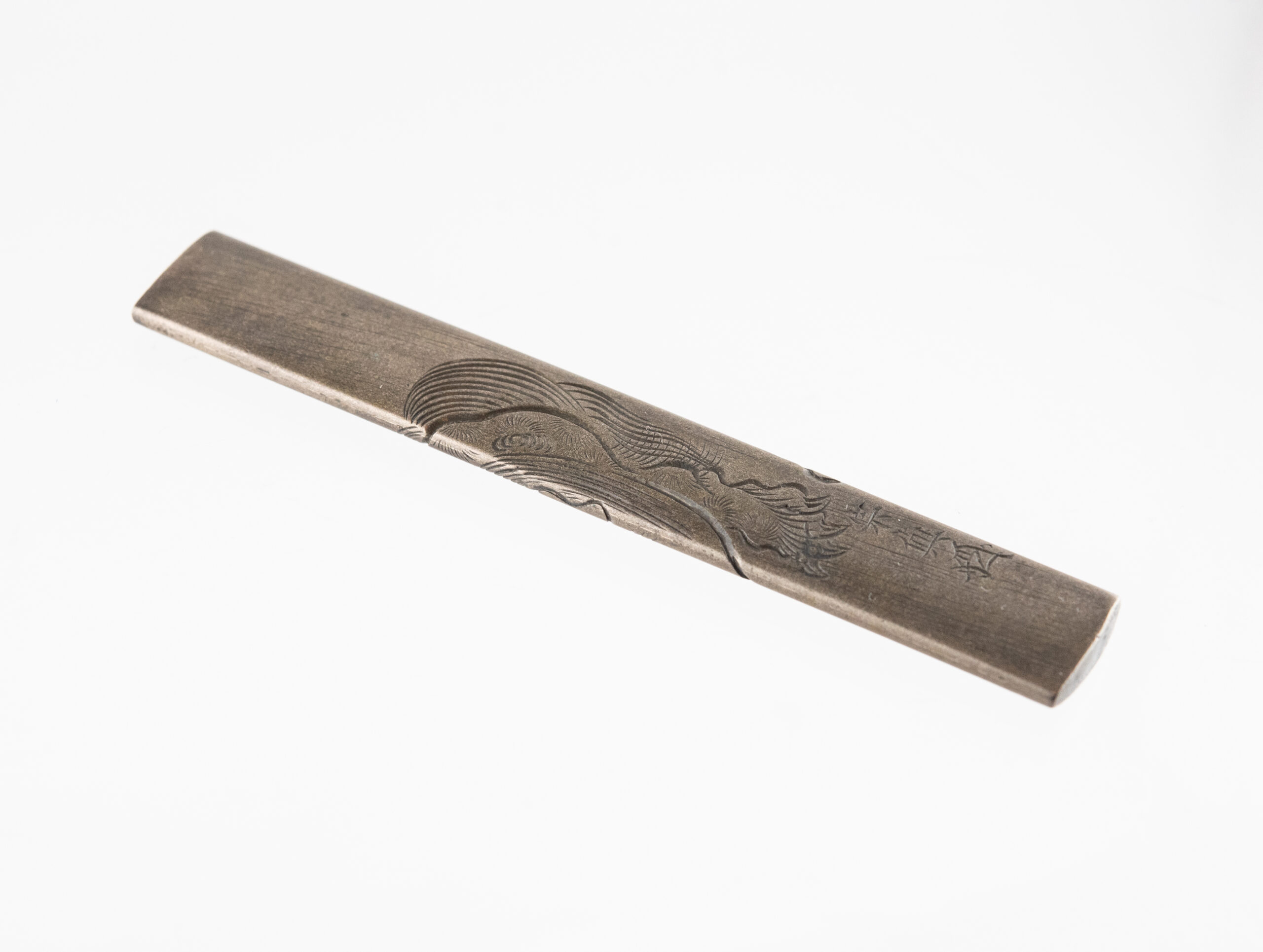
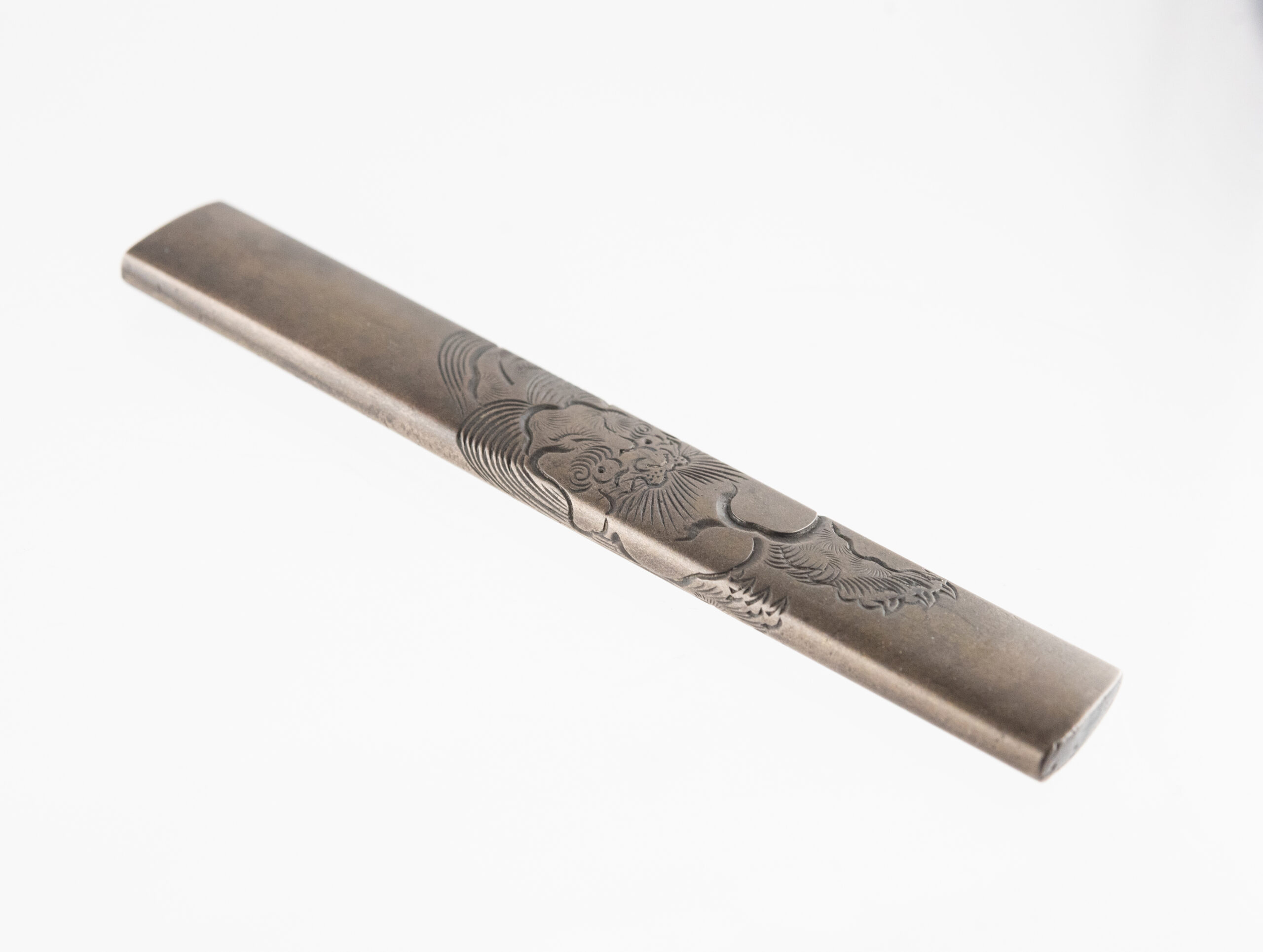
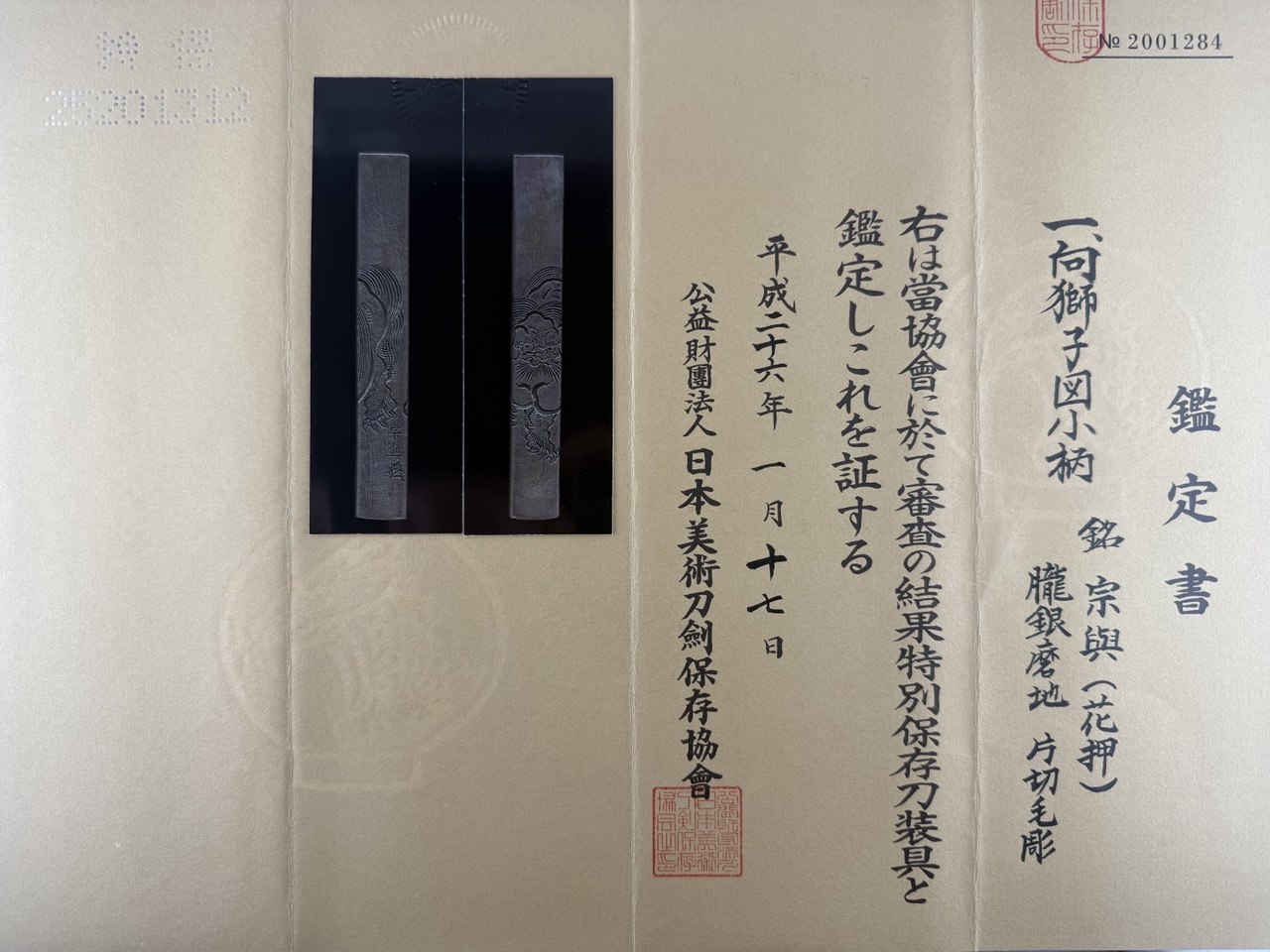
This superb Kozuka is a work by Yokoya Soyo (1700–1779), the fourth master of the Yokoya main line and successor to the celebrated Yokoya Somin. The reverse bears the signature Soyo with kao. The NBTHK awarded the piece Tokubetsu Hozon certification.
Workmanship and Design
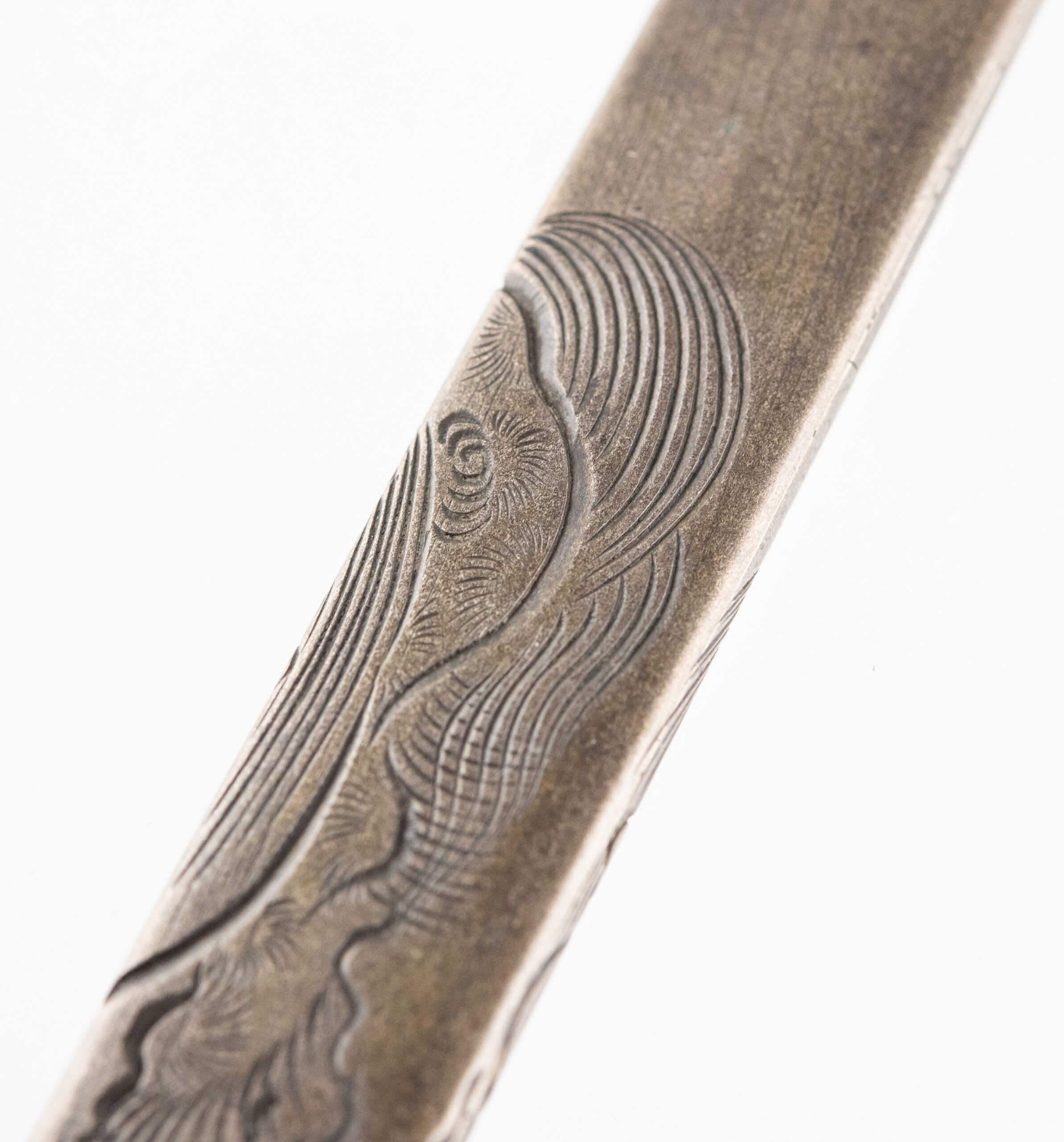
The Kozuka is made entirely of shibuichi and survives in very fine condition. Its rich patina ranges from dark grey to subtle brown tones. The reverse displays extremely fine diagonal surface lines running from the upper left toward the lower right, providing a restrained textural contrast to the polished character of the metal.
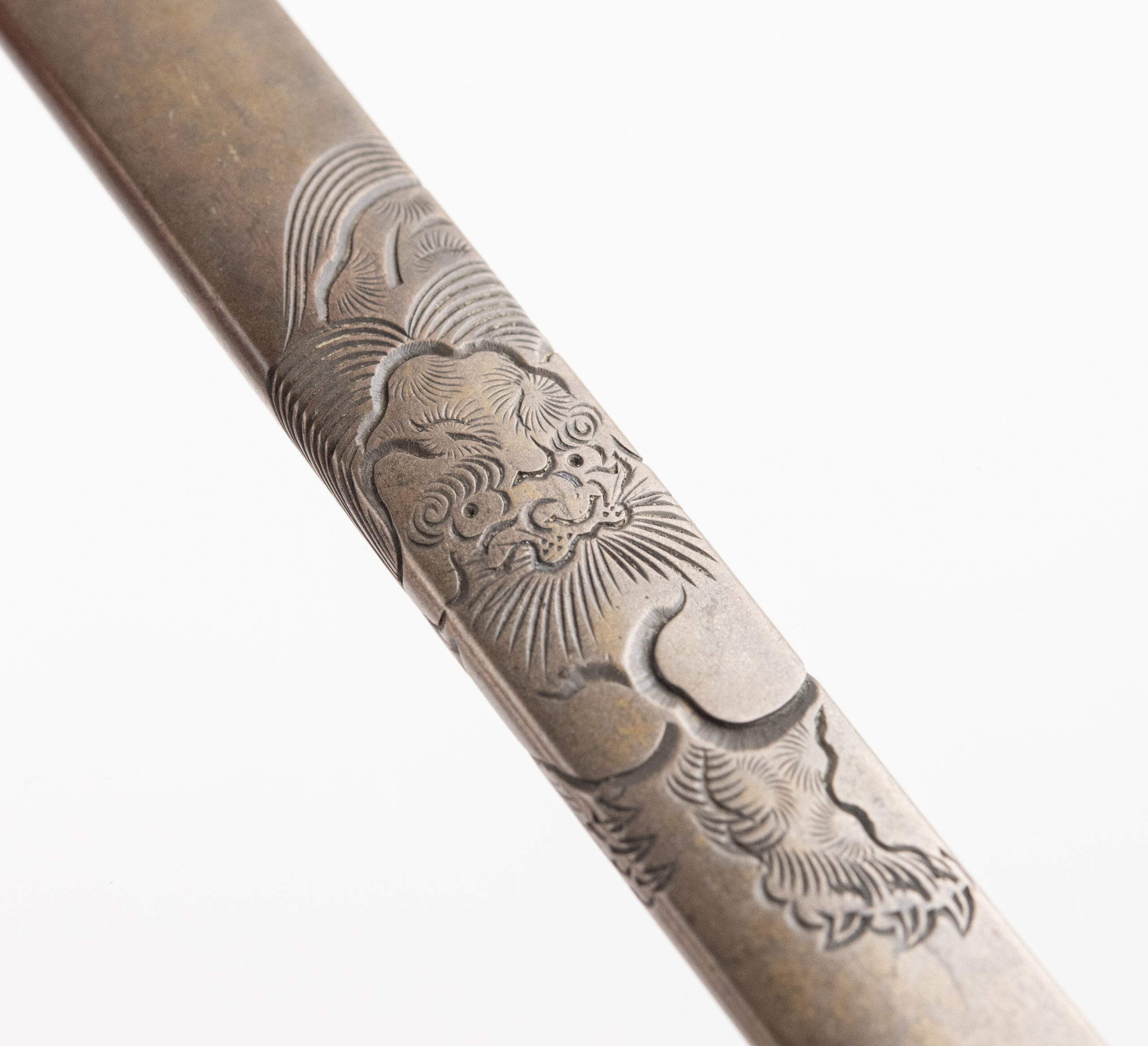
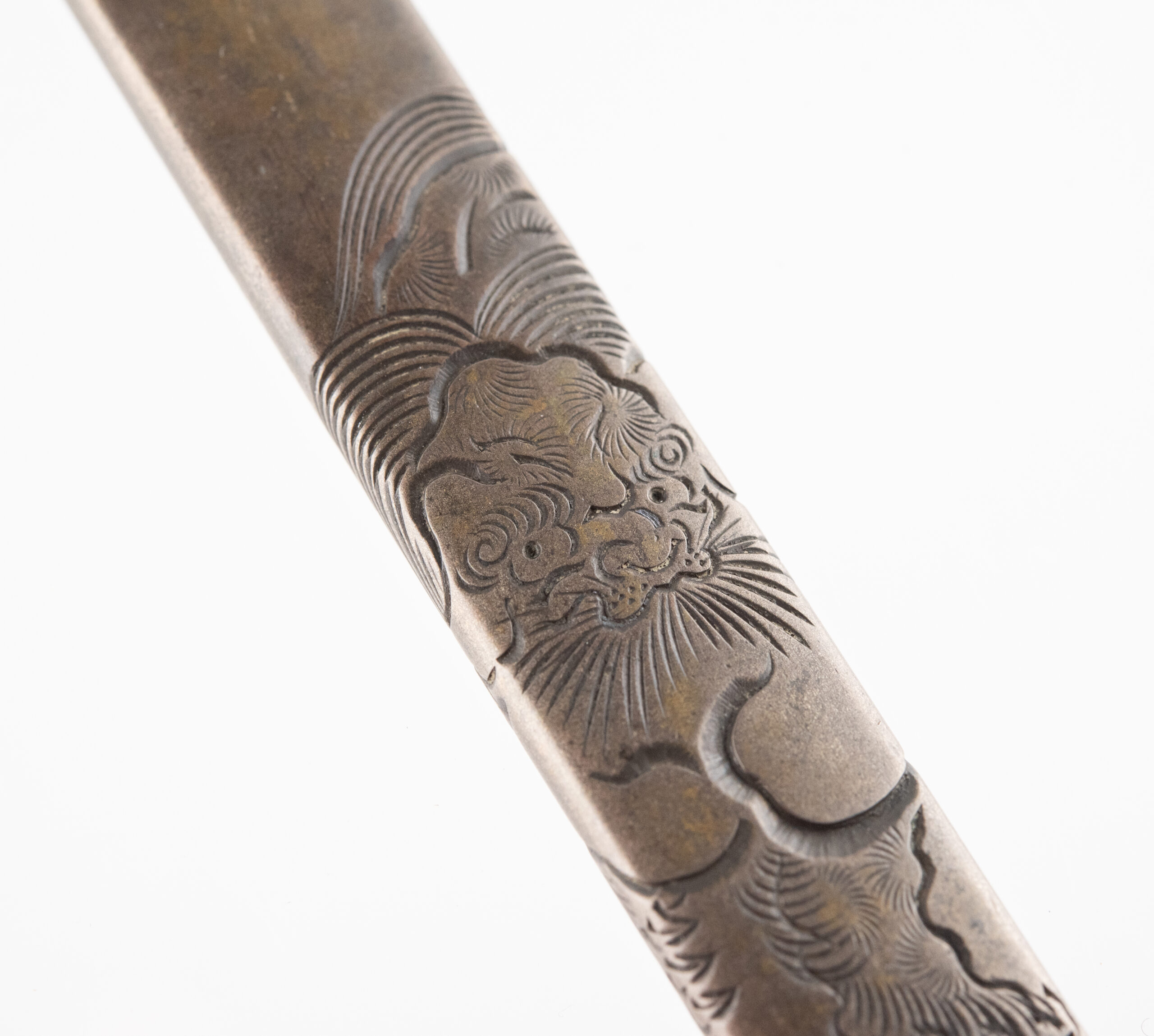
The design depicts a shishi, one of the characteristic subjects associated with the Yokoya school. Soyo carved the animal in accomplished katakiribori, using the expressive, calligraphic cutting for which the Yokoya tradition became famous.
The composition makes particularly effective use of the three-dimensional form of the Kozuka. Rather than confining the shishi to the front, the animal continues around the side of the Kozuka, with its hind leg and hindquarters appearing on the reverse. This wraparound treatment gives the design movement and spatial depth.
About Yokoya Soyo
Yokoya Soyo (1700–1779) was the fourth master of the Yokoya main line and the second artist to use the name Soyo. Born in Edo as the second son of Yokoya Soju, he was adopted by Yokoya Somin and succeeded him as head of the Yokoya family after Somin’s death in 1733, when Soyo was 34 years old. He retired from the headship in 1766.
The Yokoya school played a central role in the development of machibori metalwork. Its artists transformed techniques rooted in the Goto tradition into a freer and more pictorial style. Katakiribori became one of the school’s defining techniques, and Soyo is regarded as one of the important masters who continued the artistic tradition established by Somin.
Details
Artist: Yokoya Soyo (1700–1779)
Generation: 3rd Yokoya master / 2nd Soyo
Period: Edo period, 18th century
Signature: Soyo with kao
Certificate: NBTHK Tokubetsu Hozon
Material: Shibuichi
Technique: Katakiribori
Motif: Shishi
Length: 91.6 mm / 3.61 in
Width: 13.8 mm / 0.54 in
Thickness: 4.3–4.4 mm / 0.17 in
この素晴らしい小柄は、横谷宗與(1700–1779)の作です。宗與は横谷本家の四代目であり、名工として名高い横谷宗珉の後継者です。裏面には「宗與」と花押の銘があります。本作は日本美術刀剣保存協会(NBTHK)より特別保存刀装具の認定を受けています。
作風と意匠
小柄は総四分一製で、非常に良好な状態を保っています。豊かな色合いのある古色は、濃い灰色からほのかな褐色まで微妙な変化を見せています。裏面には、左上から右下へ向かって極めて細かな斜めの線が施されており、滑らかな金属面に対して控えめながら美しい質感の変化を与えています。
図柄は、横谷派を代表する題材の一つである獅子です。宗與は、横谷派が得意とした表情豊かで書画的な片切彫を用い、巧みに獅子を彫り表しています。
特に注目すべき点は、小柄の立体的な形状を巧みに活かした構図です。獅子を表面だけに収めるのではなく、その姿は小柄の側面を回り込み、後脚と腰の部分が裏面にまで続いています。このように表裏を連続させた表現によって、図柄に動きと空間的な奥行きが生まれています。
横谷宗與について
横谷宗與(1700–1779)は横谷本家の四代目であり、「宗與」の名を用いた二代目の金工です。江戸において横谷宗壽の次男として生まれ、横谷宗珉の養子となりました。1733年に宗珉が没した後、34歳で横谷家を継ぎ、1766年に家督を退きました。
横谷派は町彫金工の発展において中心的な役割を果たしました。その金工たちは、後藤家の伝統に根ざした技法を、より自由で絵画的な作風へと発展させました。片切彫は横谷派を代表する技法の一つとなり、宗與は宗珉によって確立された芸術的伝統を受け継いだ重要な名工の一人とされています。
作品詳細
作者:横谷宗與(1700–1779)
代別:横谷家三代・二代宗與
時代:江戸時代・18世紀
銘:宗與 花押
鑑定書:NBTHK 特別保存刀装具
材質:四分一
技法:片切彫
図柄:獅子
長さ:91.6 mm / 3.61 in
幅:13.8 mm / 0.54 in
厚さ:4.3–4.4 mm / 0.17 in