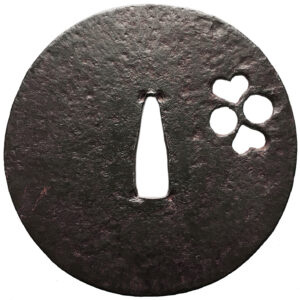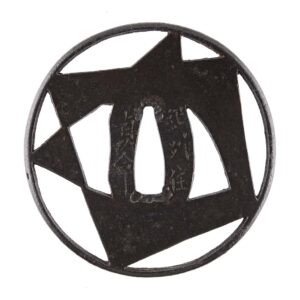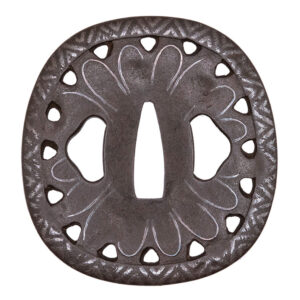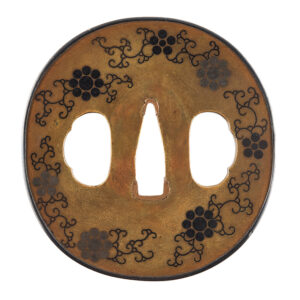
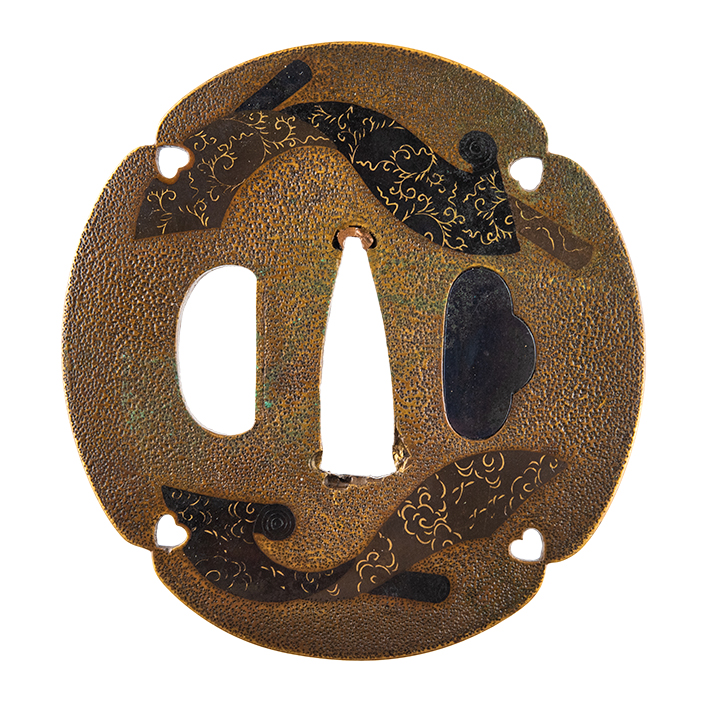
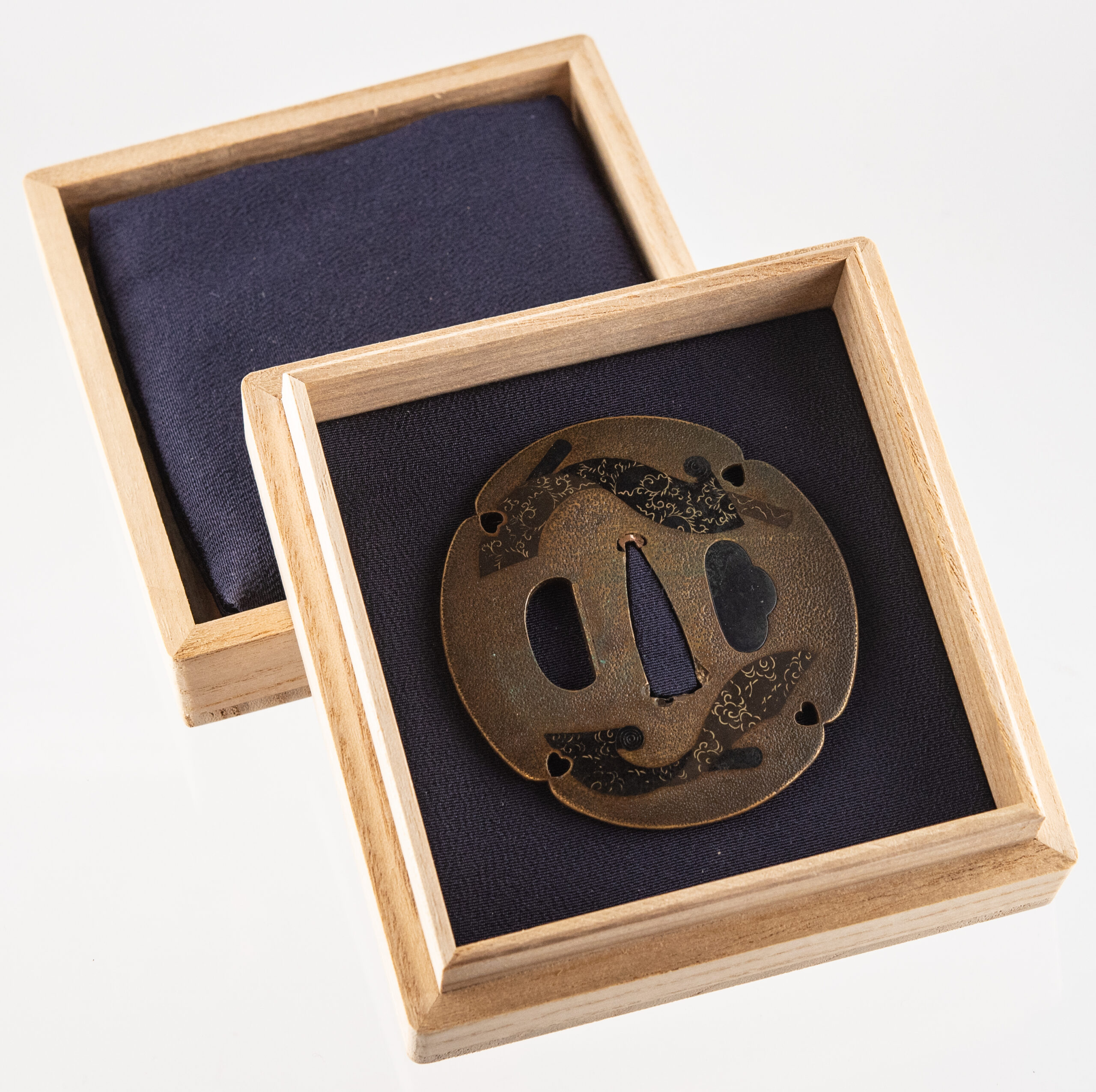
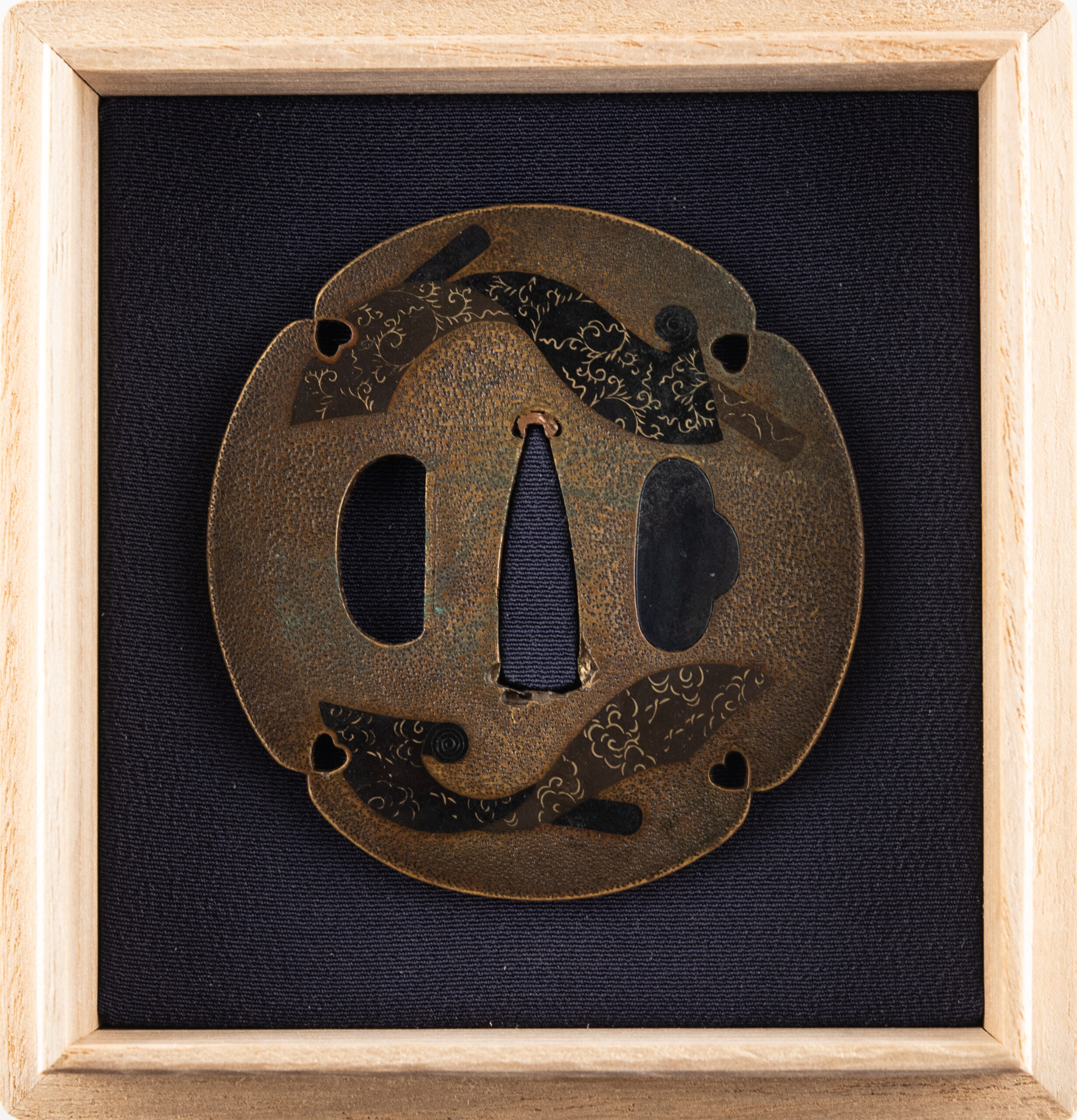
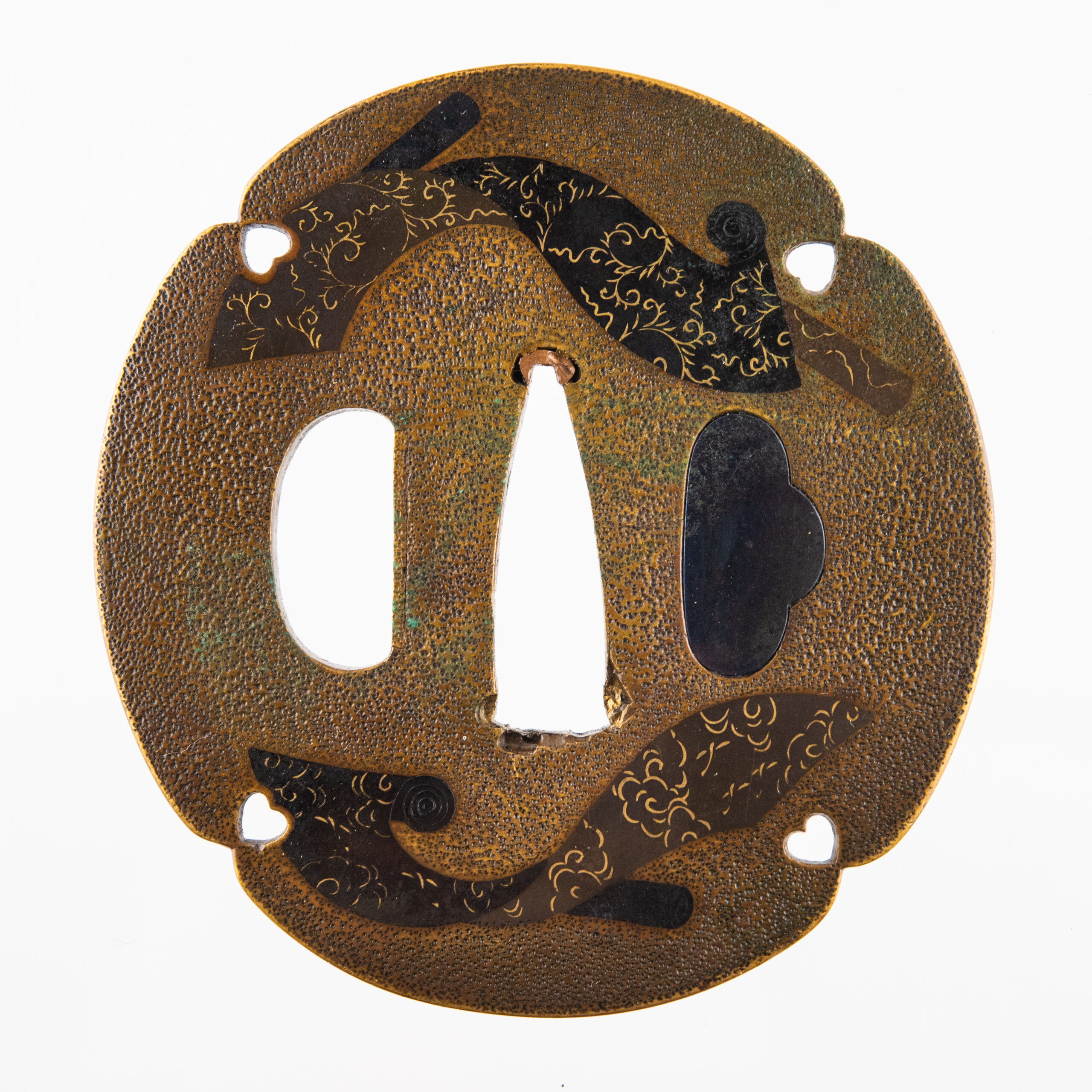
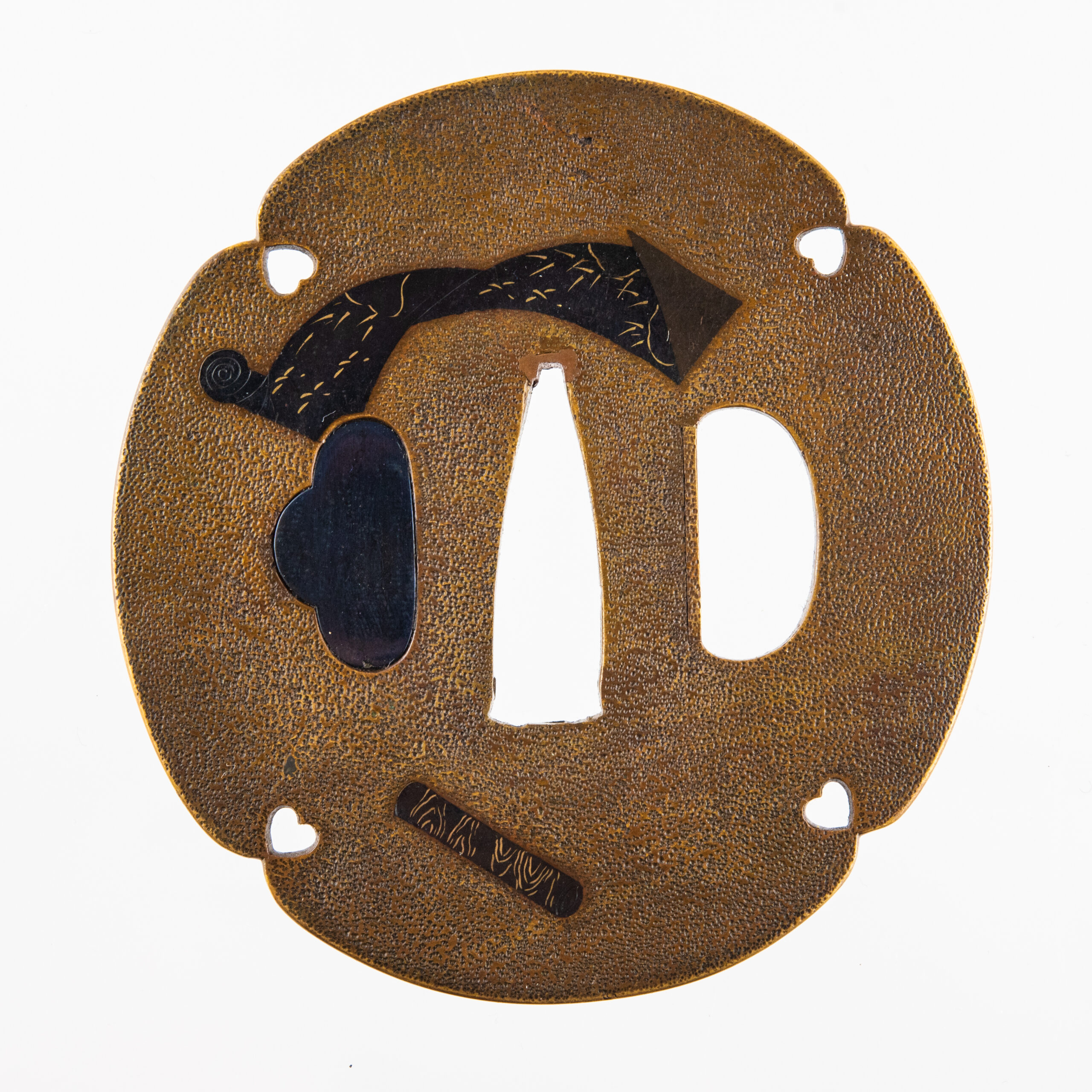
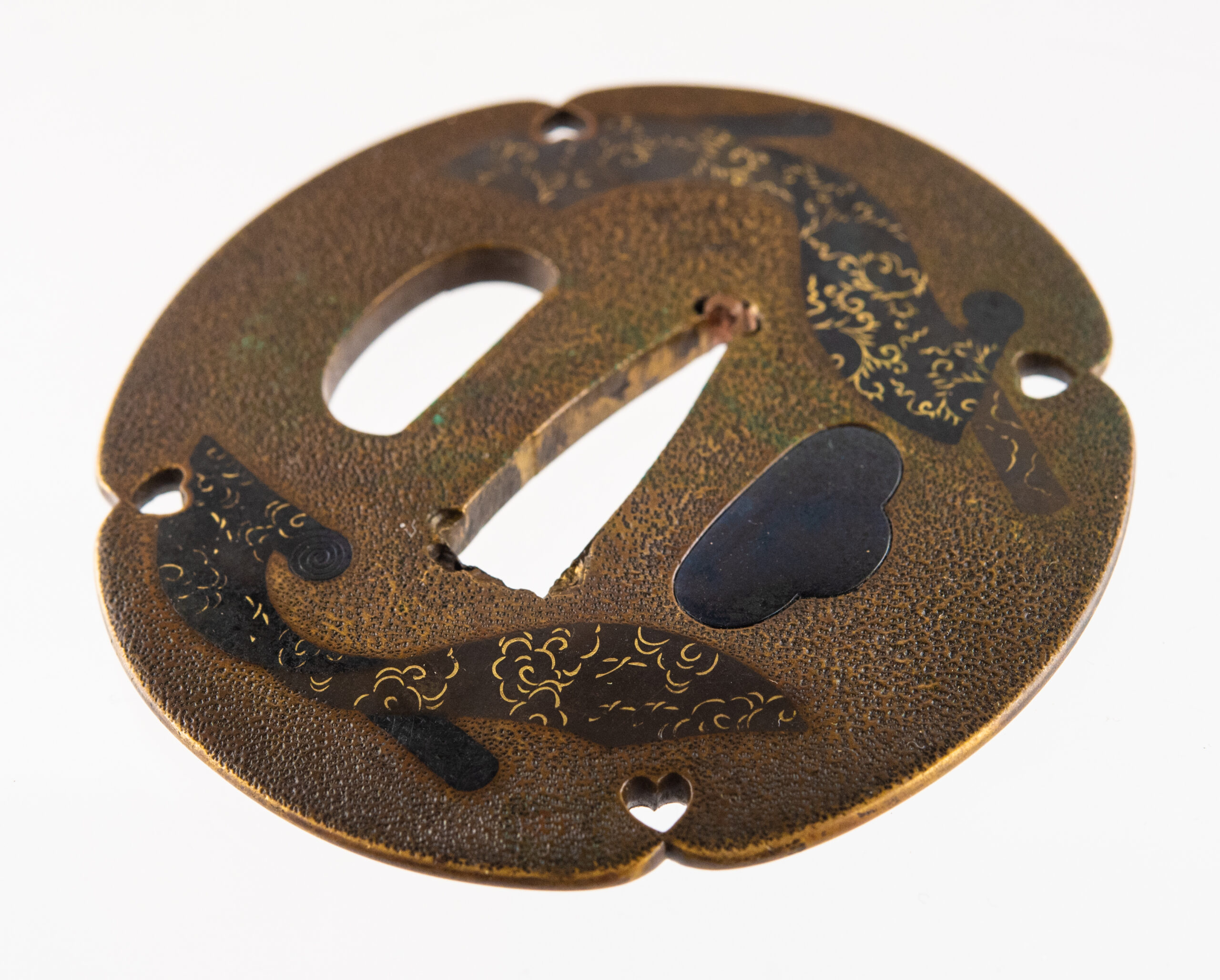
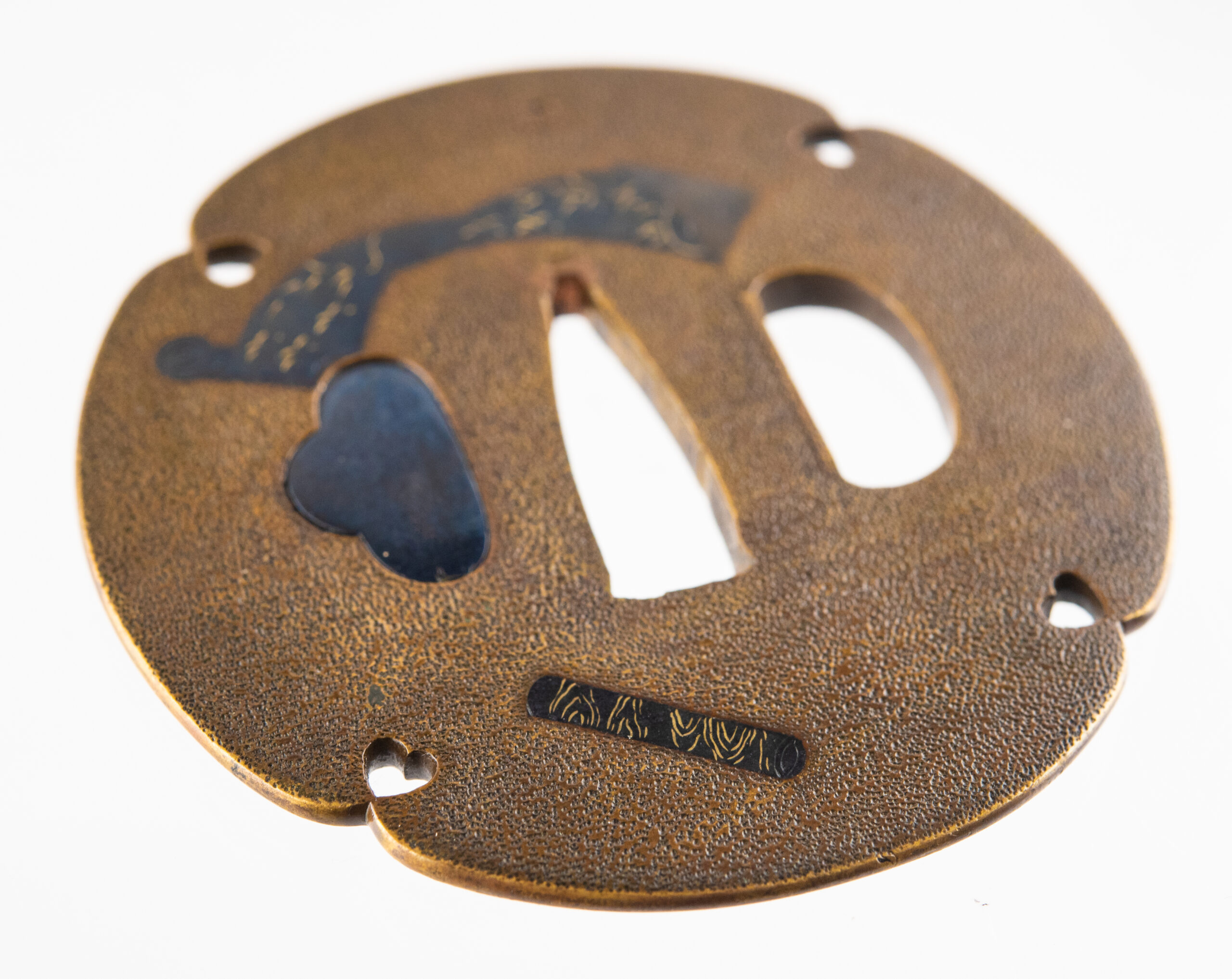
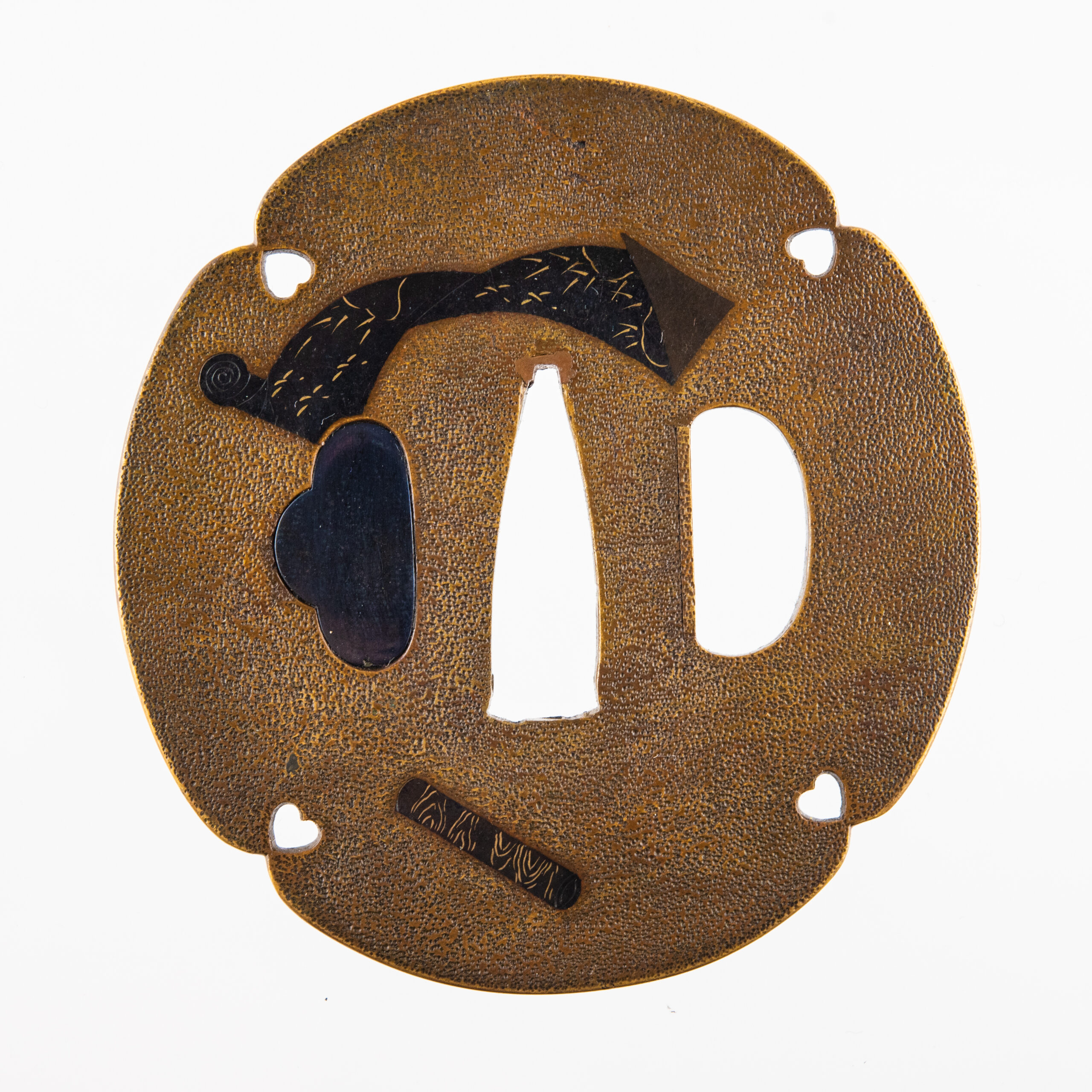
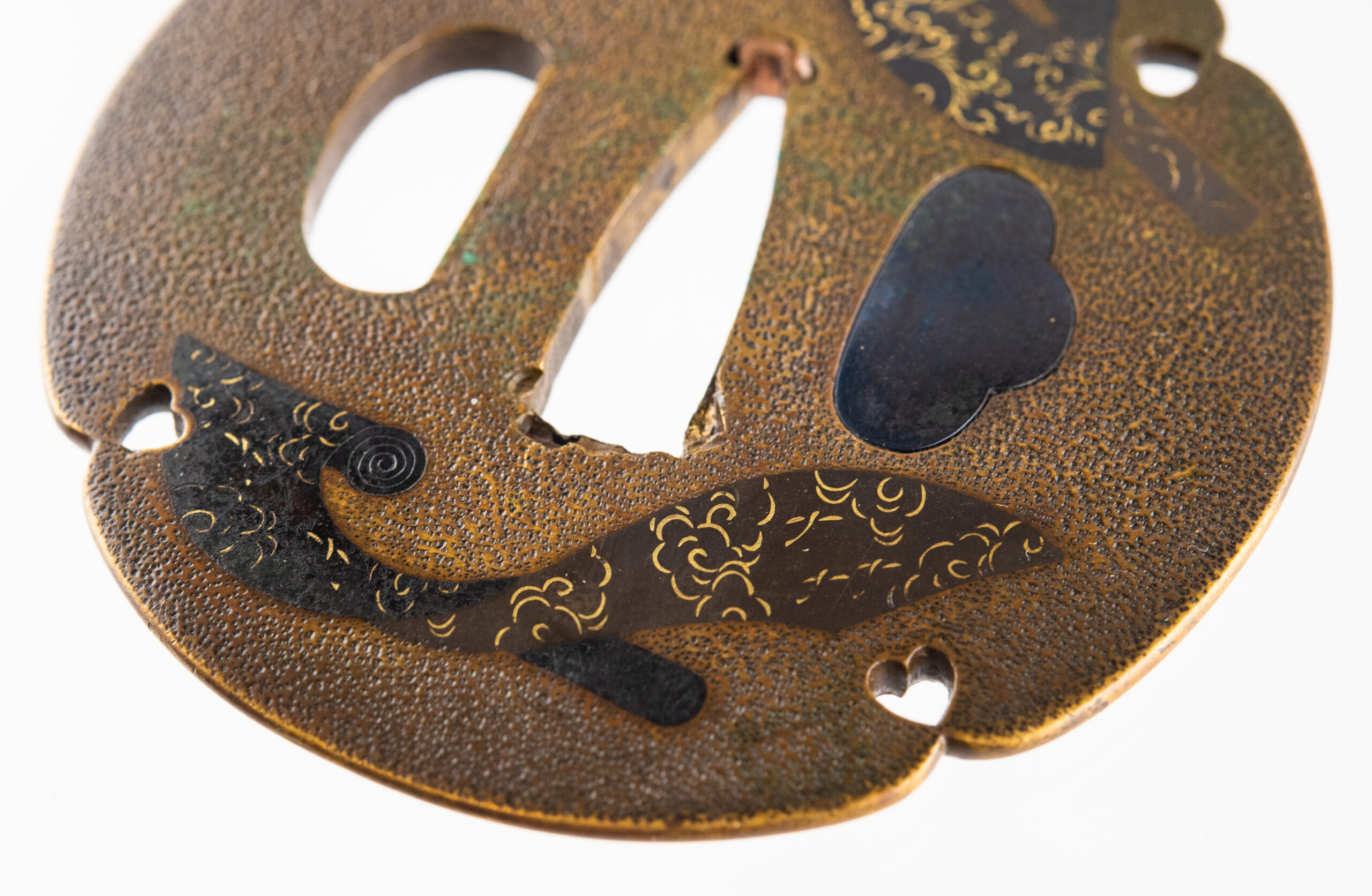
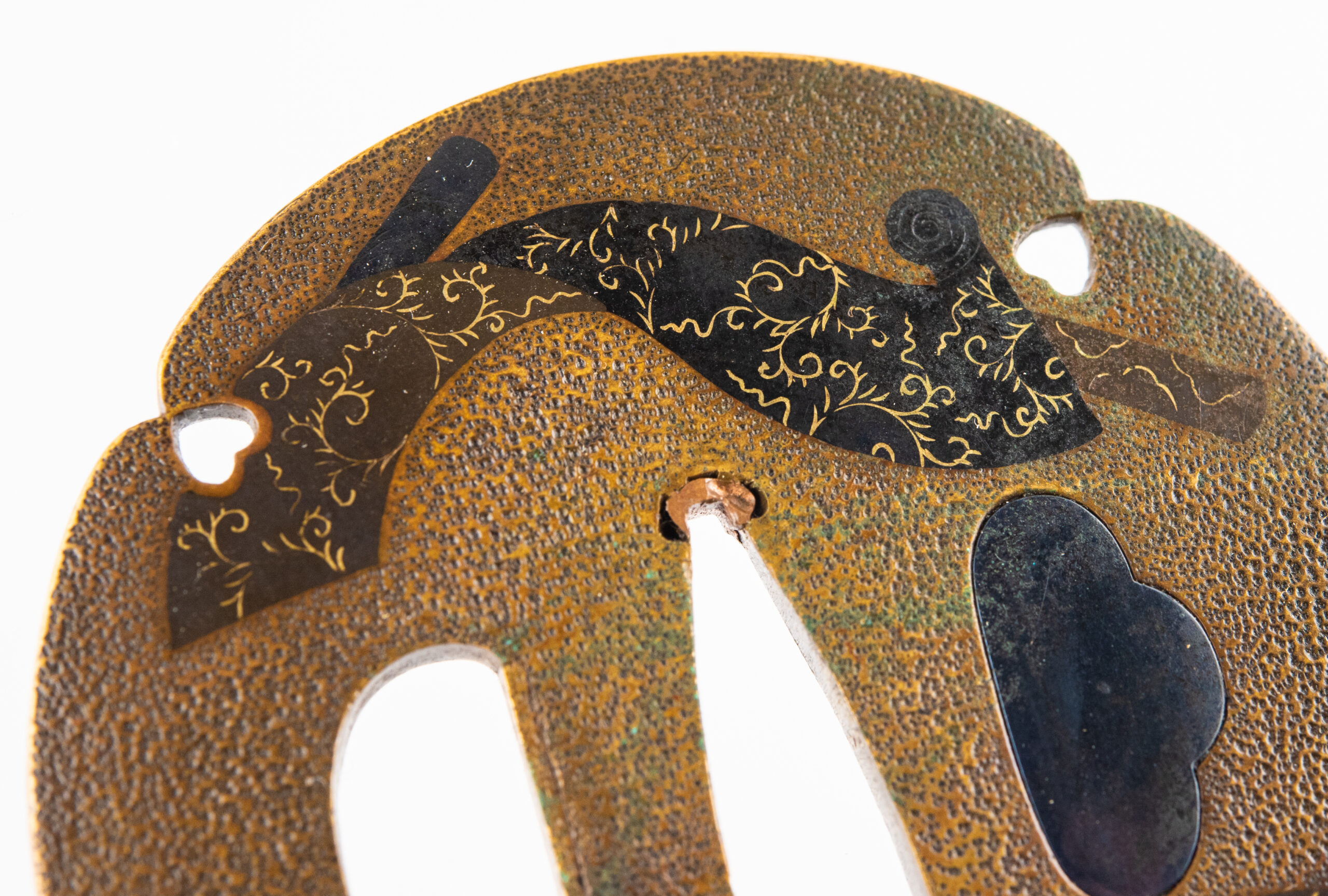
This unusual Tsuba probably dates from the middle Edo period and can most plausibly be associated with the Umetada tradition. Certain aspects of its workmanship also resemble Kaga Zogan, however, so an attribution to an unusual Kaga work cannot be entirely excluded.
Workmanship and Design
The plate is made of sentoku and has developed a deep dark greenish-brown patina. Its outline appears almost circular at first glance, but it is essentially mokogata. Small indentations at the upper left, upper right, lower right and lower left articulate the four lobes. Small inome-like forms accent these recesses and give the outline a character reminiscent of older Tachi Tsuba.
Dense tsuchime covers the entire sentoku surface. The numerous small rounded hammer marks create a subtly rough texture and give the plate a lively, hand-worked appearance.
The cross-section has a lens-like profile. It measures 4 mm at the seppa-dai and gradually thins toward the rim, where it measures approximately 1.8 mm.
Both sides show rolled textiles, possibly rolls of patterned silk or brocade. The visible front faces of the rolls are rendered in shakudo, while their reverse sides are sentoku. This restrained change of alloy creates a subtle color contrast against the dark patinated ground.
Extremely fine gold decoration forms the patterns on the textiles. The gold appears within very shallow engraved or recessed lines. The appearance reflects a gilding process in which gold applied by keshikomi zogan remained in the recessed design after the surrounding surface was finished.
Attribution
The sentoku plate, tsuchime surface, alloy contrasts and treatment of the gold decoration point most strongly toward the Umetada tradition of the middle Edo period. At the same time, the materials and decorative approach show notable similarities to Kaga Zogan work. The piece may therefore represent an unusual Kaga Zogan Tsuba, although Umetada remains the more plausible attribution.
Details
Period: Middle Edo period
Attribution: Umetada tradition; possibly Kaga Zogan
Material: Sentoku with shakudo decoration and gold details
Surface: Tsuchime
Shape: Mokogata with inome-like recesses
Motif: Patterned textile or brocade rolls
Length: 70.4 mm / 2.77 in
Width: 66.4 mm / 2.61 in
Thickness at seppa-dai: 4 mm / 0.16 in
Thickness at rim: approx. 1.8 mm / 0.07 in
Comes with a custom made Kiri box
この珍しい鍔は、おそらく江戸時代中期の作と考えられ、最も妥当な帰属としては埋忠系が挙げられます。ただし、その作風の一部には加賀象嵌との類似点も見られるため、加賀における異色の作である可能性も完全には否定できません。
作風と意匠
地鉄は宣徳で、深みのある暗い緑褐色の美しい古色を呈しています。外形は一見するとほぼ円形に見えますが、基本的には木瓜形です。左上、右上、右下、左下の四か所に小さな窪みを設けることで、木瓜形の四つの張り出しを表しています。さらに、これらの窪みには小さな猪目風の形が添えられており、古式の太刀鍔を思わせる趣のある輪郭となっています。
宣徳地の全面には密に槌目が施されています。無数の小さな丸みを帯びた槌跡が、わずかに粗い質感を生み出し、地に生き生きとした手仕事ならではの表情を与えています。
断面はレンズ状を呈しています。切羽台では厚さ4 mmあり、耳に向かって徐々に薄くなり、耳際では約1.8 mmとなっています。
表裏には、巻かれた織物が表されています。文様を施した絹織物、あるいは錦の反物を表現したものと思われます。巻物の表側として見える部分には赤銅が用いられ、裏側には宣徳が用いられています。この控えめな異金属の使い分けによって、暗く古色を帯びた地に繊細な色彩の対比が生まれています。
織物の文様は、極めて精緻な金の装飾によって表されています。金は、ごく浅く彫られた、あるいは窪ませた線の中に施されています。その外観から、消込象嵌によって施された金が、周囲の表面を仕上げた後も窪んだ文様部分に残るという技法が用いられたものと考えられます。
帰属
宣徳地、槌目を施した表面、異金属による色彩の対比、そして金の装飾技法などを総合すると、江戸時代中期の埋忠系の作と見るのが最も妥当と思われます。一方で、素材の選択や装飾表現には加賀象嵌の作例と共通する特徴も認められます。そのため、本作が加賀象嵌の異色作である可能性も考えられますが、現時点では埋忠系への帰属がより有力と考えられます。
作品詳細
時代:江戸時代中期
帰属:埋忠系、加賀象嵌の可能性あり
材質:宣徳地、赤銅装飾、金装飾
地:槌目地
形状:猪目風の括れを伴う木瓜形
図柄:裂地または錦の巻物
縦:70.4 mm / 2.77 in
横:66.4 mm / 2.61 in
切羽台厚:4 mm / 0.16 in
耳厚:約1.8 mm / 0.07 in