Iwama School Tiger Kozuka
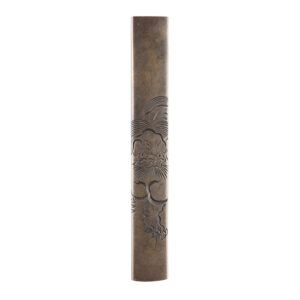
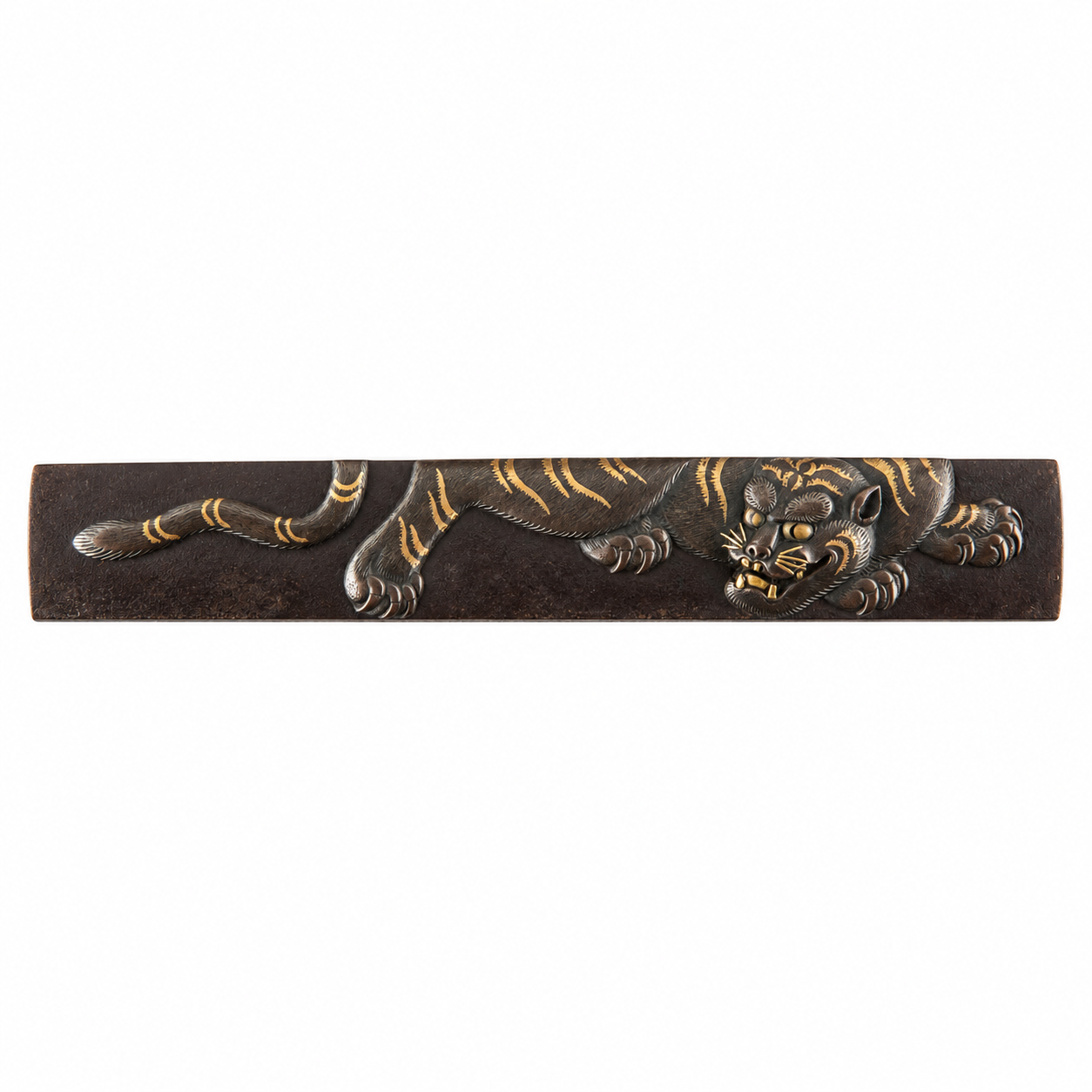
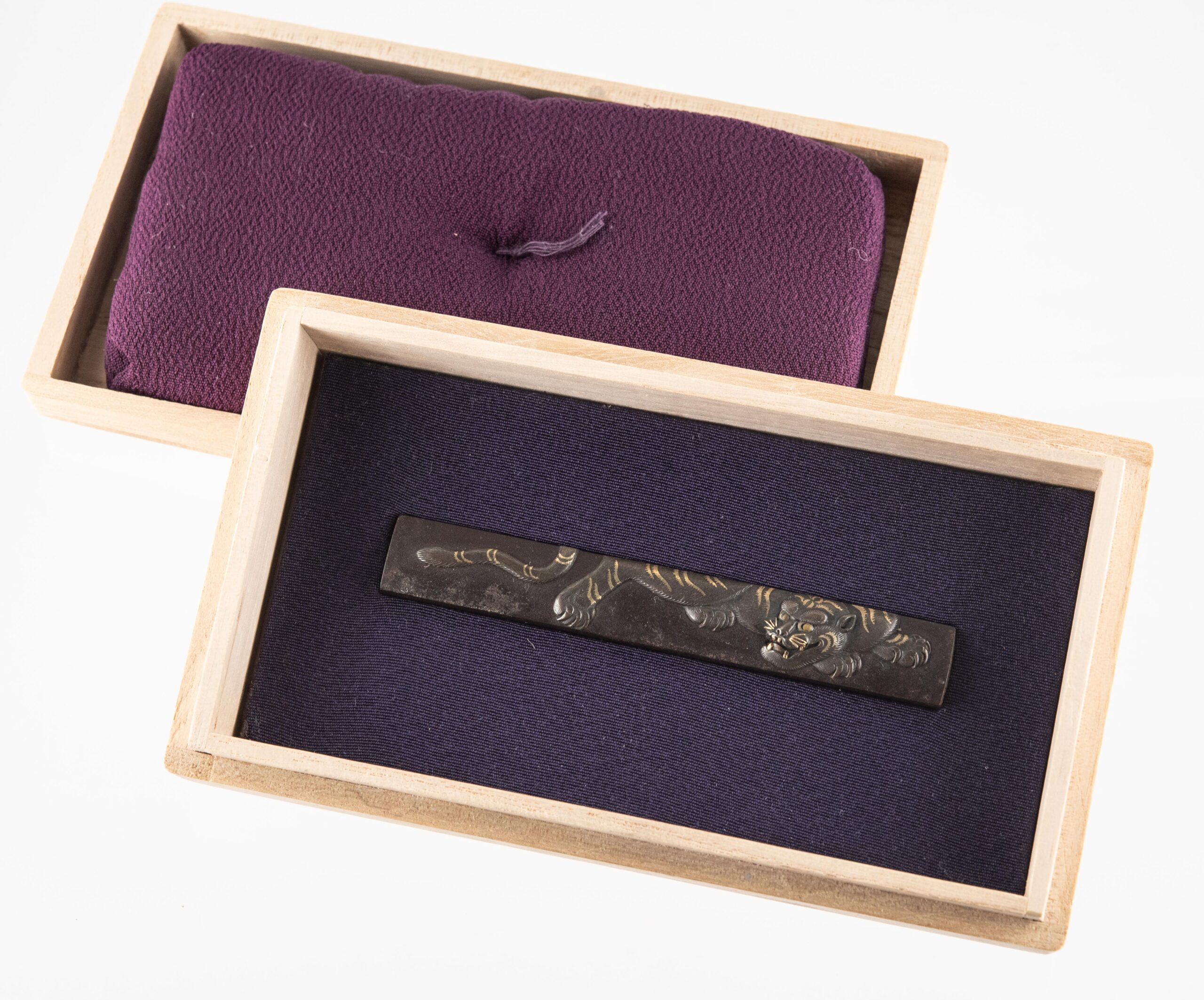
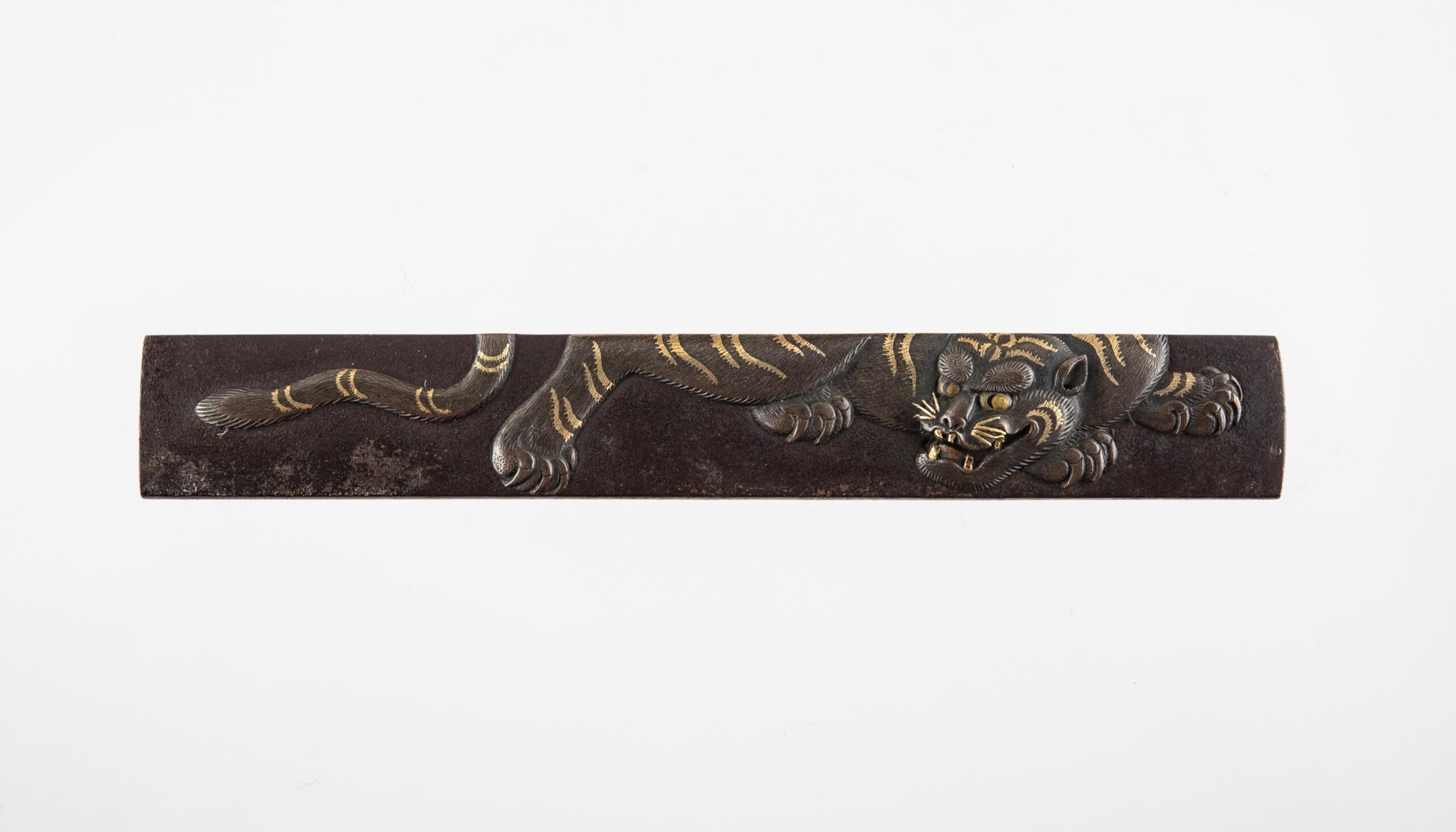
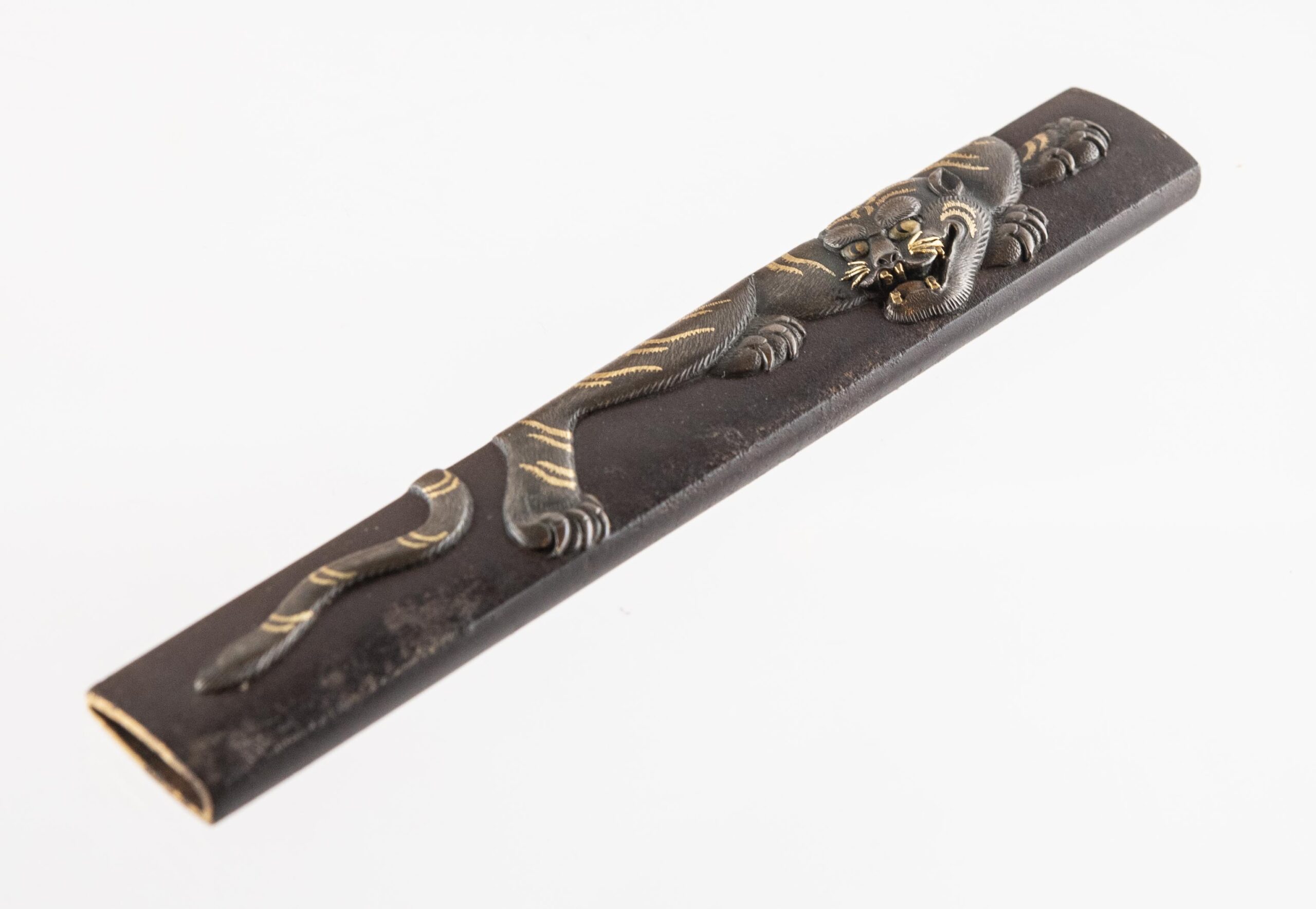
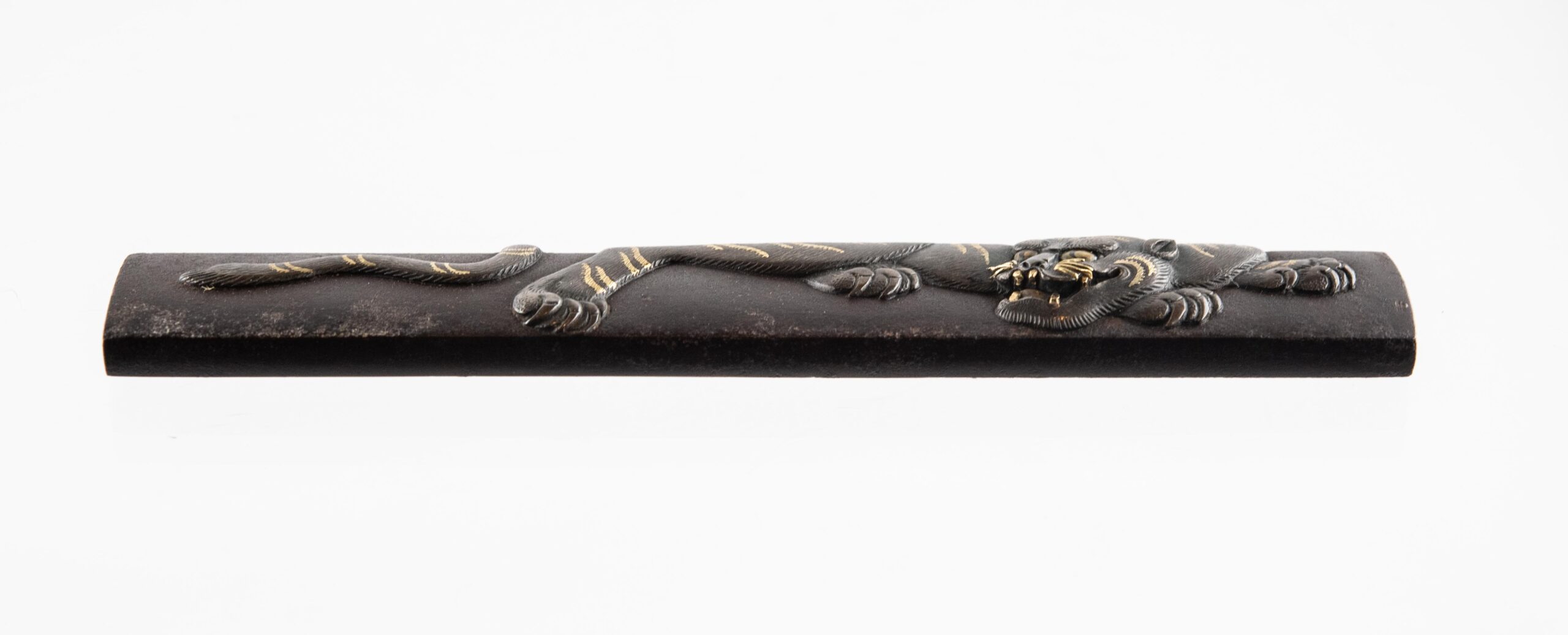
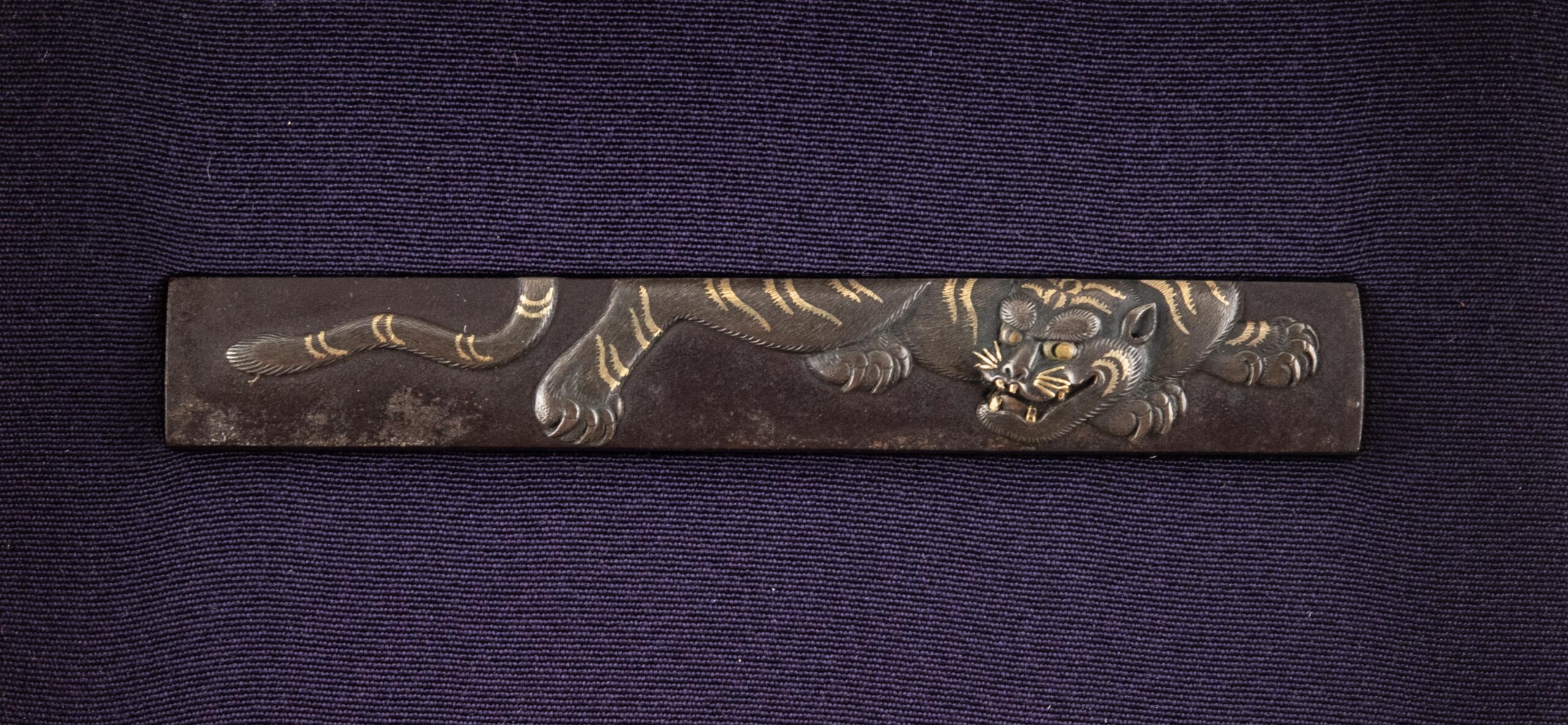
This striking iron Kozuka depicts a tiger crouching low in an aggressive posture, its head turned to one side and its mouth open to reveal the teeth. The NBTHK attributes the piece to the Iwama school and has issued a Hozon certificate. The individual maker remains unidentified.
Multicolored Metalwork
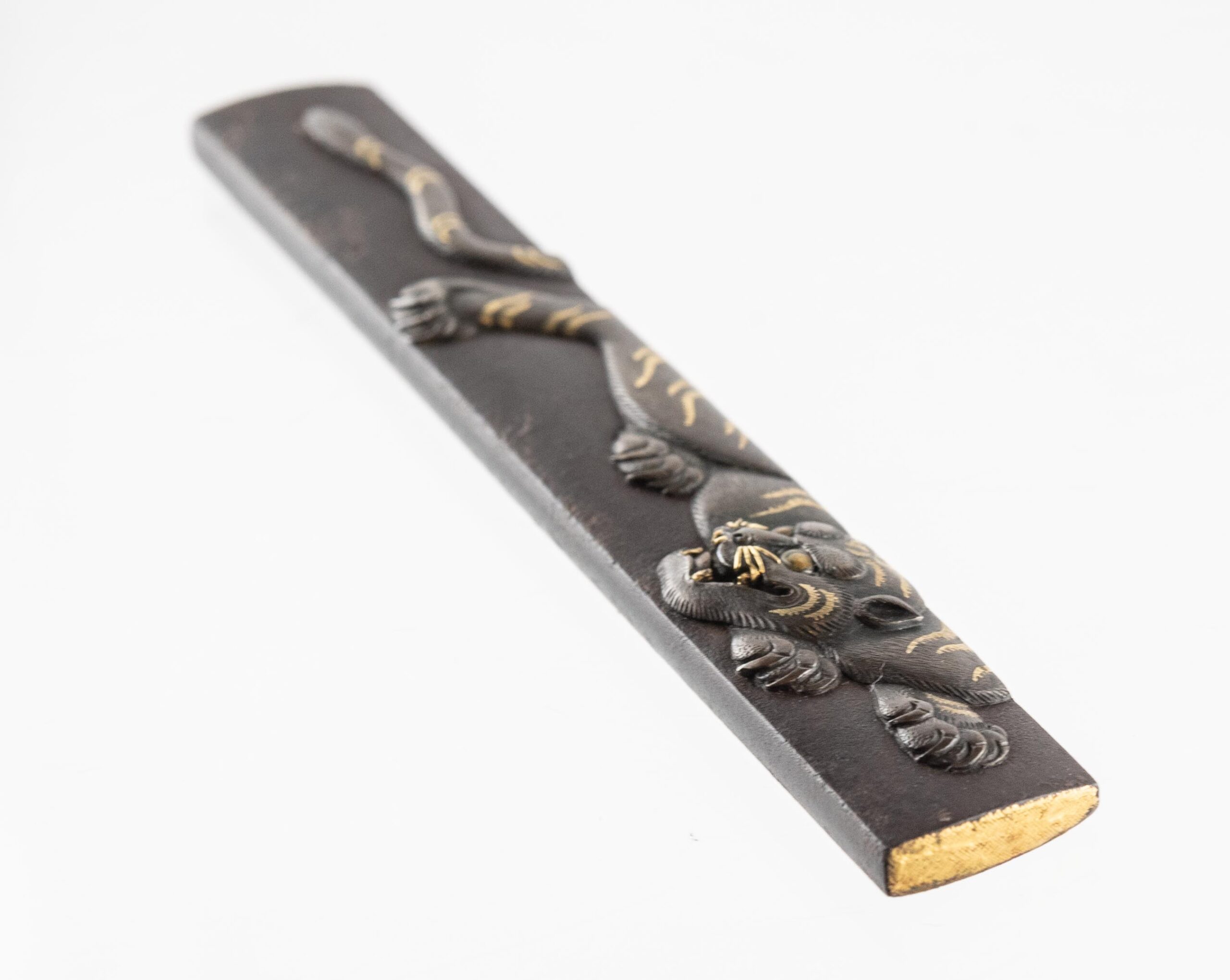
The tiger extends along almost the entire length of the iron body. Its form is executed in shibuichi high relief (takabori). Gold defines the tiger’s stripes and eyes, while shakudo creates the pupils. Copper highlights the tongue and silver forms the claws. The combination of contrasting alloys gives the animal exceptional liveliness.
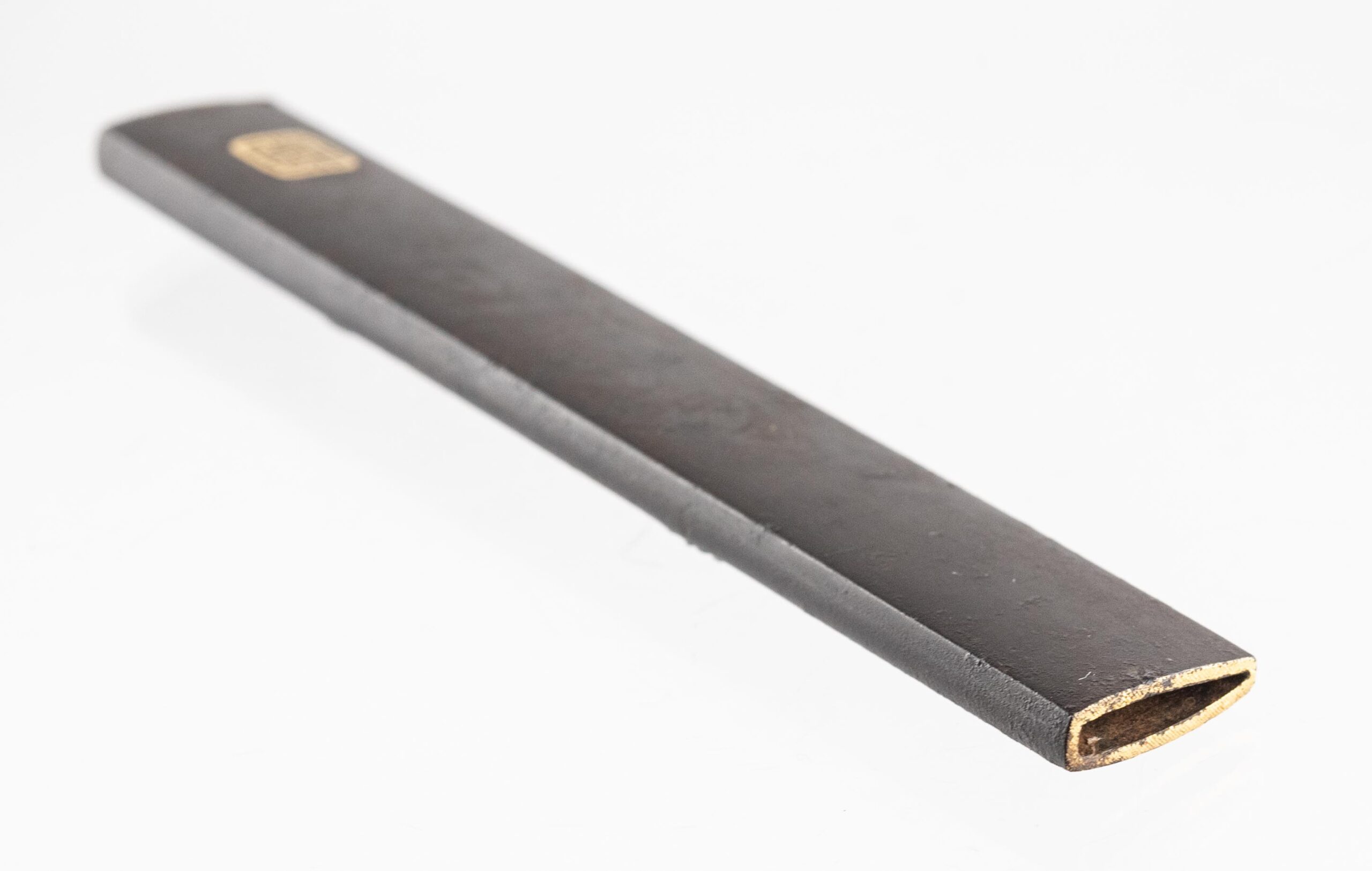
At the opening (koiguchi) and at the opposite end, fine gold zogan decoration, apparently applied as thin gold foil, provides additional accents to the iron ground.
Gold Seal and Iwama Attribution
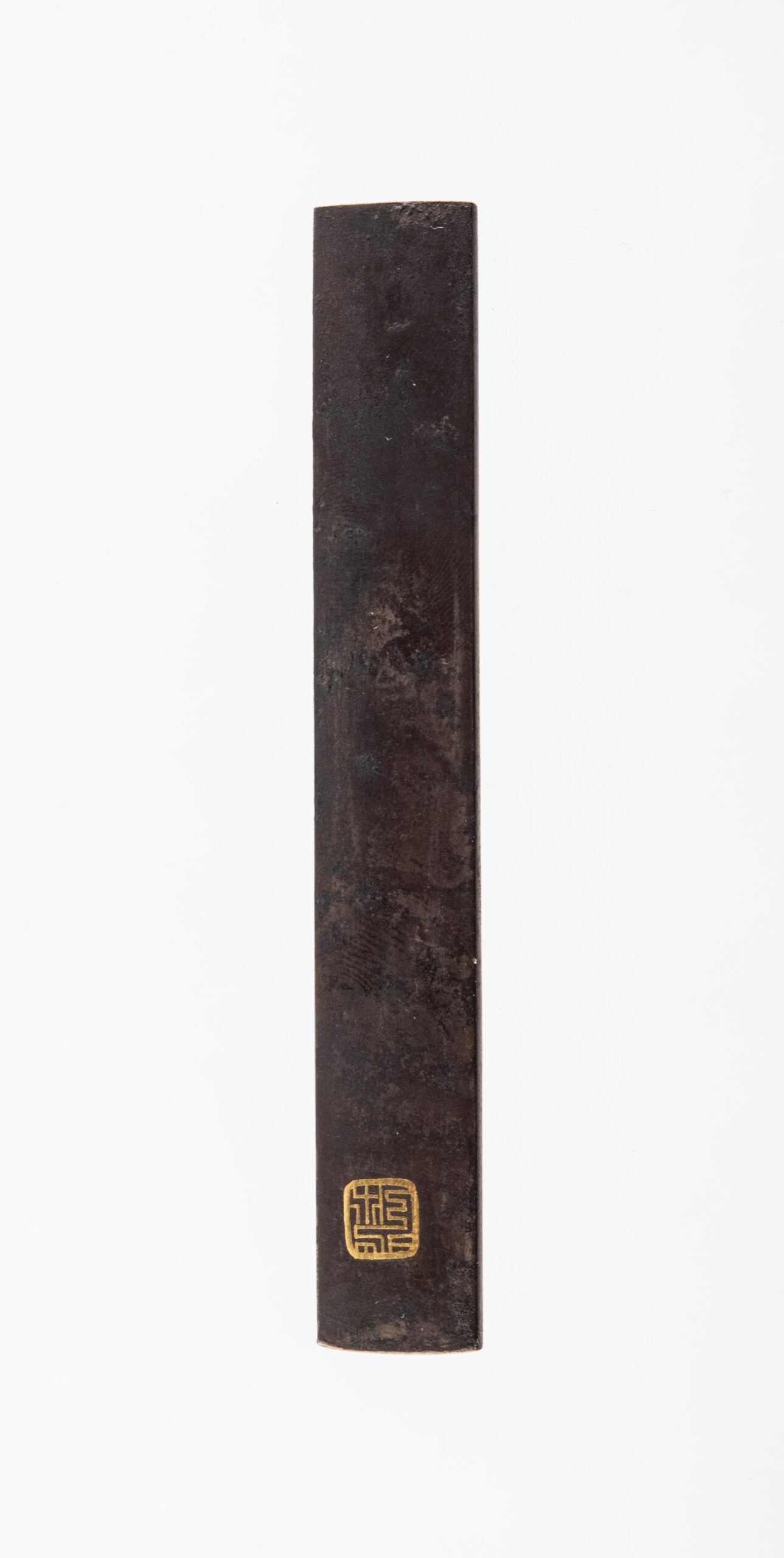
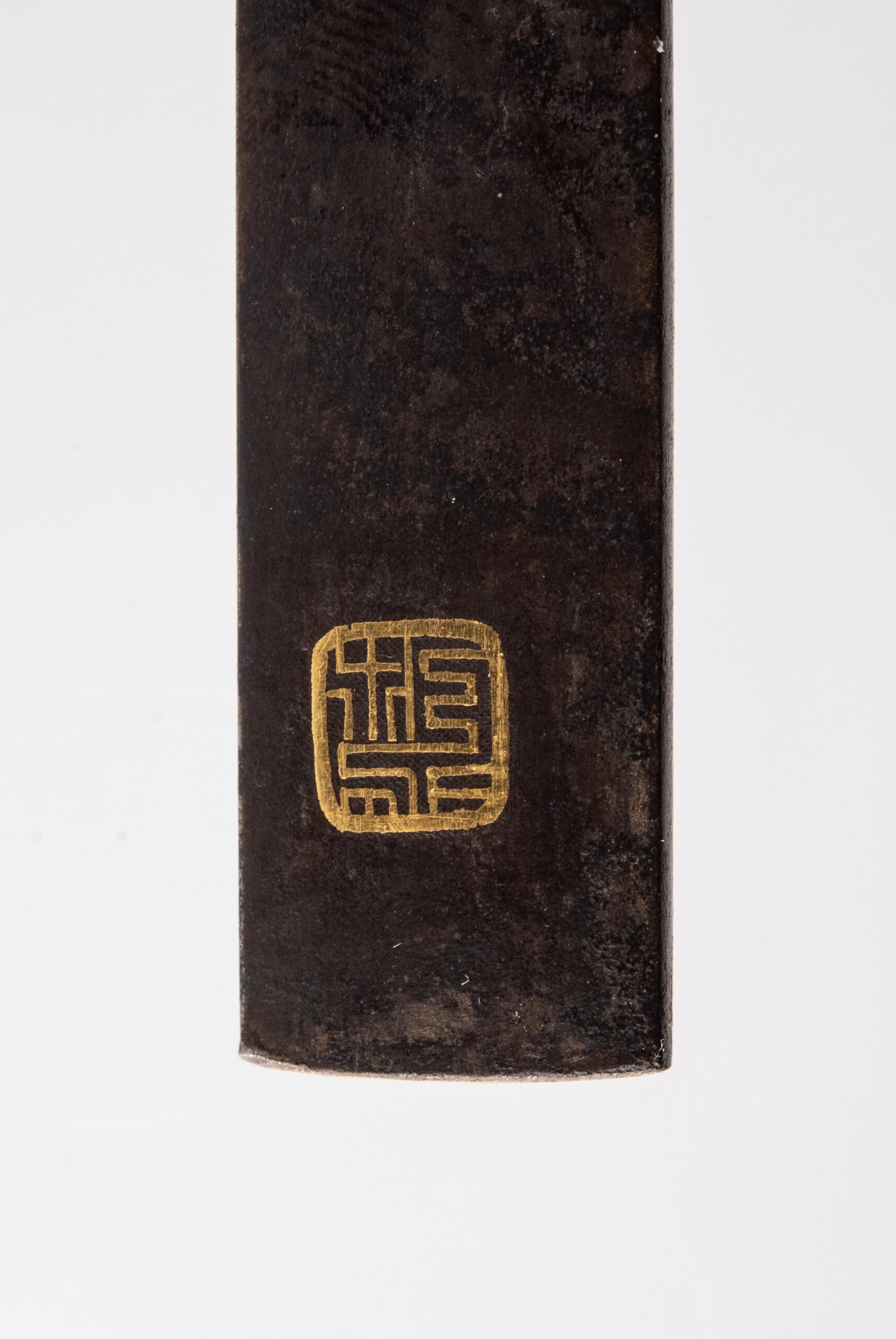
The reverse carries a seal executed in gold. Although this feature is an important part of the work, the maker cannot be identified securely from the available information. The NBTHK Hozon attribution identifies the school as Iwama rather than naming an individual master.
The Iwama School (岩間派) was an influential school of Japanese sword fittings artists that emerged in Edo during the late 18th century as an offshoot of the renowned Hamano School. Its founder, Iwama Masayoshi (岩間政盧, 1764–1837), was born in Edo and began his artistic training at the age of twelve under Hamano Naoyuki. He later studied under Hamano Nobuyuki, the third-generation master of the main Hamano lineage, developing a sophisticated approach to metal carving. Masayoshi combined the artistic traditions of Nara Toshinaga, Hamano Shōzui, and Hamano Naoyuki with more expressive and contemporary interpretations, establishing a distinctive style within the Hamano tradition. His craftsmanship and artistic innovations earned him considerable recognition. His successor was Iwama Nobuyuki (岩間信随, 1789–1842), originally named Yonezawa Yonekichi, who studied under Masayoshi and was subsequently adopted into the Iwama family. Another distinguished artist was Iwama Nobuyoshi (岩間信慮, 1803–1878), originally from Hamamatsu in Tōtōmi Province, who trained under both Masayoshi and Nobuyuki and achieved the prestigious Buddhist honorary ranks of Hōgen and Hokkyō. The third-generation master of the main Iwama lineage was Iwama Katsuyuki (岩間勝随), originally from the Kuroha family, who became Nobuyuki’s student and son-in-law. Katsuyuki inherited the artistic name Jufūdō from his master, demonstrating the continuity of the school’s artistic traditions through successive generations. Through the achievements of Masayoshi, Nobuyuki, Nobuyoshi, and Katsuyuki, the Iwama School established an important place in the history of Japanese decorative sword fittings during the late Edo period.
Details
Attribution: Iwama school
Certificate: NBTHK Hozon
Material: Iron, shibuichi, gold, shakudo, copper and silver
Technique: Takabori and gold zogan
Motif: Crouching tiger
Reverse: Gold seal
Length: 95 mm / 3.74 in
Width: 14 mm / 0.55 in
Thickness: 4.4 mm / 0.17 in
岩間派 虎図小柄
鉄地に虎を大胆に表した小柄です。虎は身を低く伏せて攻撃に備え、頭を横へ向けて口を開き、歯を見せています。NBTHK保存刀装具鑑定書では岩間派と極められていますが、具体的な作者は特定されていません。
多彩な金属による虎の表現
虎は小柄のほぼ全長にわたり、四分一の高彫で表されています。縞模様と目には金、瞳には赤銅、舌には銅、爪には銀を用い、複数の金属の色彩を巧みに組み合わせています。低く身構えた姿勢と開いた口が、緊迫感のある表情を生み出しています。
小柄の開口部および反対側の端には、薄い金箔状の金を用いたと見られる繊細な金象嵌装飾があります。
金印と岩間派の極め
裏面には金で表した印があります。ただし、この印だけで作者を確定することはできません。NBTHKの保存刀装具鑑定書は個人名ではなく岩間派への帰属を示しています。
岩間派は、18世紀後半の江戸で、著名な浜野派から分かれて成立した、日本の刀装具金工における有力な流派である。開祖の岩間政盧(1764–1837)は江戸に生まれ、12歳のときに浜野直随のもとで金工の修業を始めた。その後、浜野派本家三代目の浜野矩随に師事し、高度な彫金技術を身につけた。政盧は奈良利寿、浜野章随、浜野直随の芸術的伝統を受け継ぎながら、より表現豊かで時代に即した解釈を加え、浜野派の系統の中に独自の作風を確立した。その優れた技量と芸術的革新によって、高い評価を得た。
政盧の後継者は岩間信随(1789–1842)で、旧名を米沢米吉といい、政盧に師事した後、岩間家の養子となった。また、優れた金工師の一人に岩間信慮(1803–1878)がいる。遠江国浜松の出身で、政盧と信随の両者に師事し、法眼および法橋という名誉ある僧位を授けられた。
岩間派本家の三代目を継いだのは岩間勝随で、旧姓は黒羽であった。信随の弟子となり、後にその娘婿となった。勝随は師から寿楓堂の号を受け継ぎ、歴代にわたる岩間派の芸術的伝統の継承を示している。
政盧、信随、信慮、勝随らの功績によって、岩間派は江戸時代後期の日本の刀装具金工史において重要な地位を確立した。
作品詳細
極め:岩間派
鑑定書:NBTHK 保存刀装具
材質:鉄、四分一、金、赤銅、銅、銀
技法:高彫、金象嵌
図柄:虎
裏面:金印
長さ:95 mm / 3.74 in
幅:14 mm / 0.55 in
厚さ:4.4 mm / 0.17 in